Report highlights Ireland's lack of requirement to inform police of planned protests
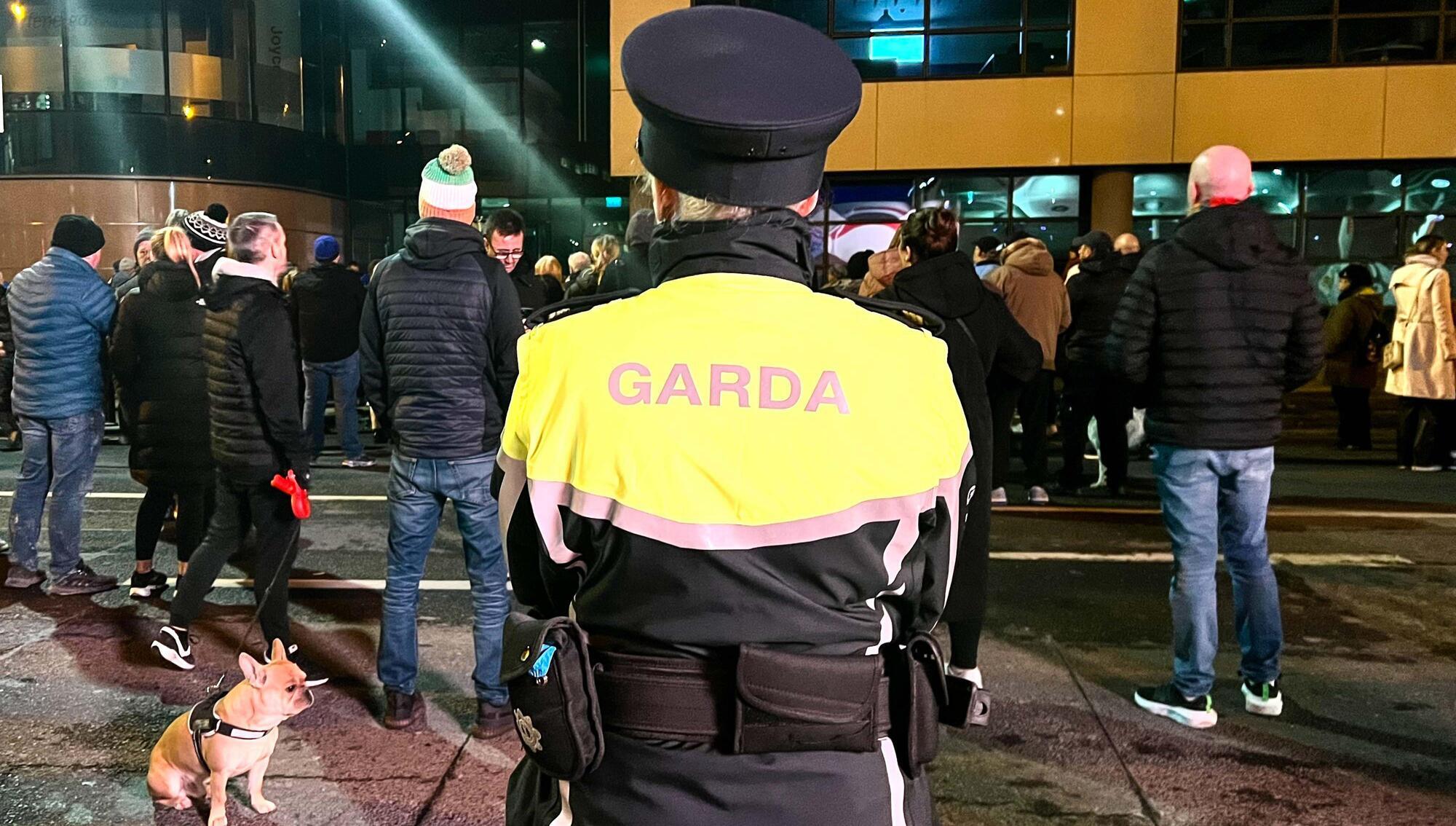
A Garda presence along Dublin's East Wall last year as locals and others gathered to protest against the moving of refugees into an old ESB building. Picture: Leah Farrell / RollingNews.ie
Ireland is the only state out of 21 European countries studied where authorities do not have to be informed of a planned protest, it has emerged.
While those organising protests can decide to notify gardaí if they want to, it is completely voluntary.
This means that gardaí typically have to rely on social media posts and other forms of intelligence to keep informed of protests, including ones that could potentially threaten violence, intimidation, or criminal damage — or attract counter protests.
New research by Amnesty International said notification requirements constitute an “interference with the right of peaceful assembly” and said that some countries — Belgium, Luxembourg, Sweden, and Switzerland — even operate an “authorisation regime” for at least some types of protests.
The report said at least seven countries can apply administrative sanctions to groups if they do not notify authorities, and that 12 countries — including France, Germany, the Netherlands, and the UK — can apply criminal sanctions.
Nine countries have legal provisions allowing police to disperse protests where organisers had not notified authorities.
Eight countries prohibit protests in certain areas, such as in the vicinity of government buildings and parliaments, though it adds that three other countries, including Ireland, can designate certain areas (such as outside Leinster House) a protest-free zone.
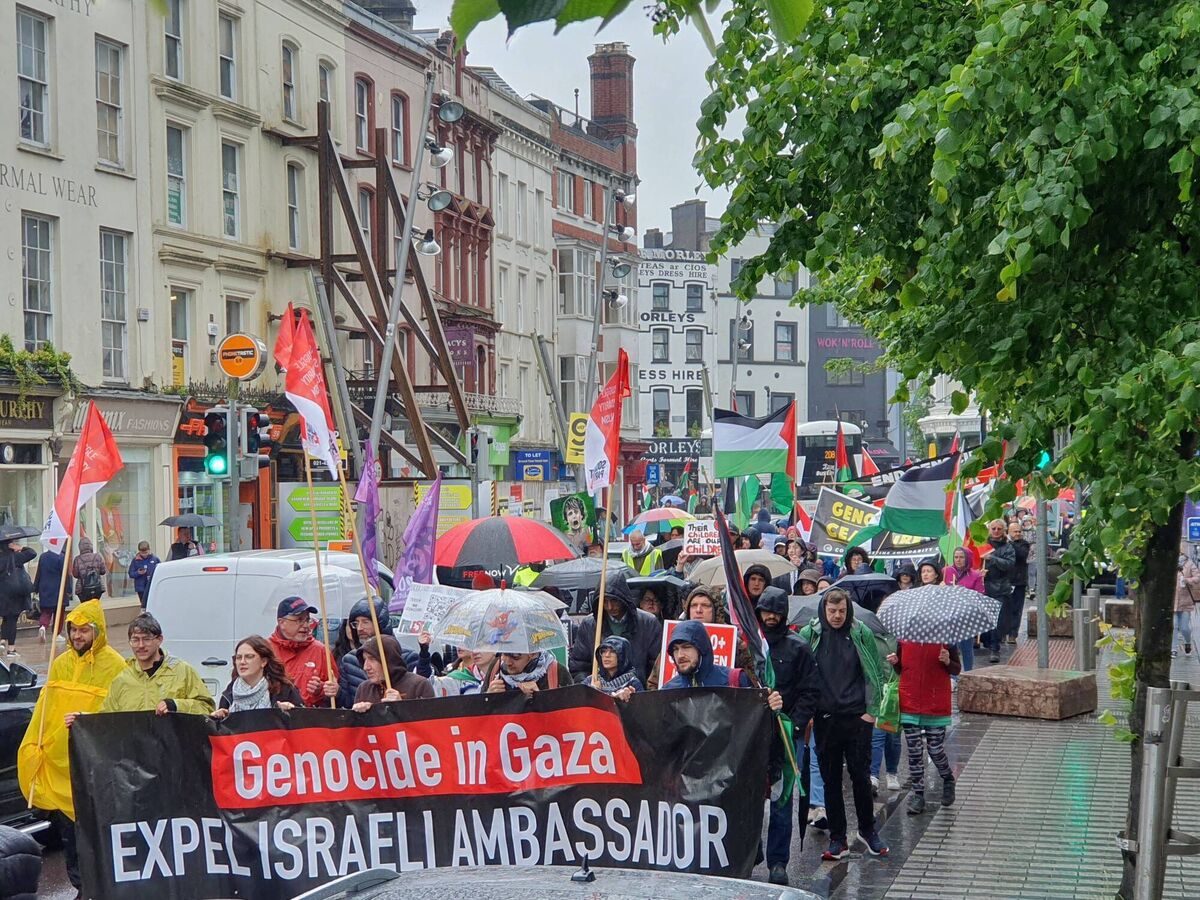
The Amnesty report said it has identified “a worrying pattern across Europe” where public assemblies expressing solidarity with Palestinian people have been banned and/or disproportionately restricted.
It said restrictions include a ban on certain chants, Palestinian flags, the keffiyeh garment, and other symbols. It identified this practice in 11 countries but not Ireland.
The report said less-than-lethal weapons have been used by police on protesters with “devastating” impact in nine countries. It cited bones and teeth being broken in France, Germany, and Italy; burns in Greece; loss of a hand in France; and loss of a testicle in Spain.
It cited seven countries where officers beat or kicked protesters already lying on the ground and offering no resistance, including France, Germany, and Spain.
Ireland was one of 10 countries where police used “stop and search” tactics on protesters before, during, and after protests, and was among many countries using video and photo surveillance of protesters.
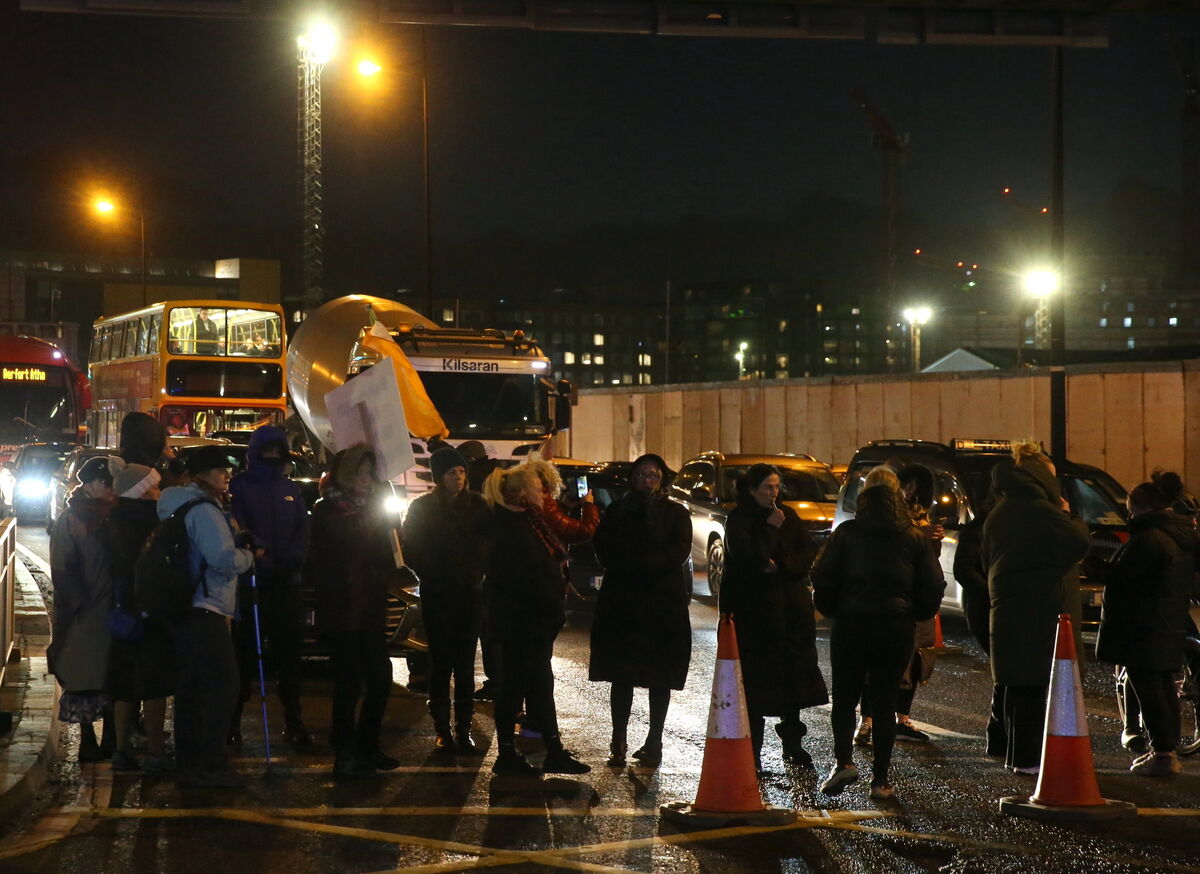
Relevant to discussions in Ireland about banning protesters from wearing balaclavas and other face coverings while engaged in protests, including outside politicians’ homes, the report said eight countries currently have a total or partial ban on face coverings in public spaces.


CONNECT WITH US TODAY



Be the first to know the latest news and updates