Cork nun who saved lives in two world wars honoured by French town
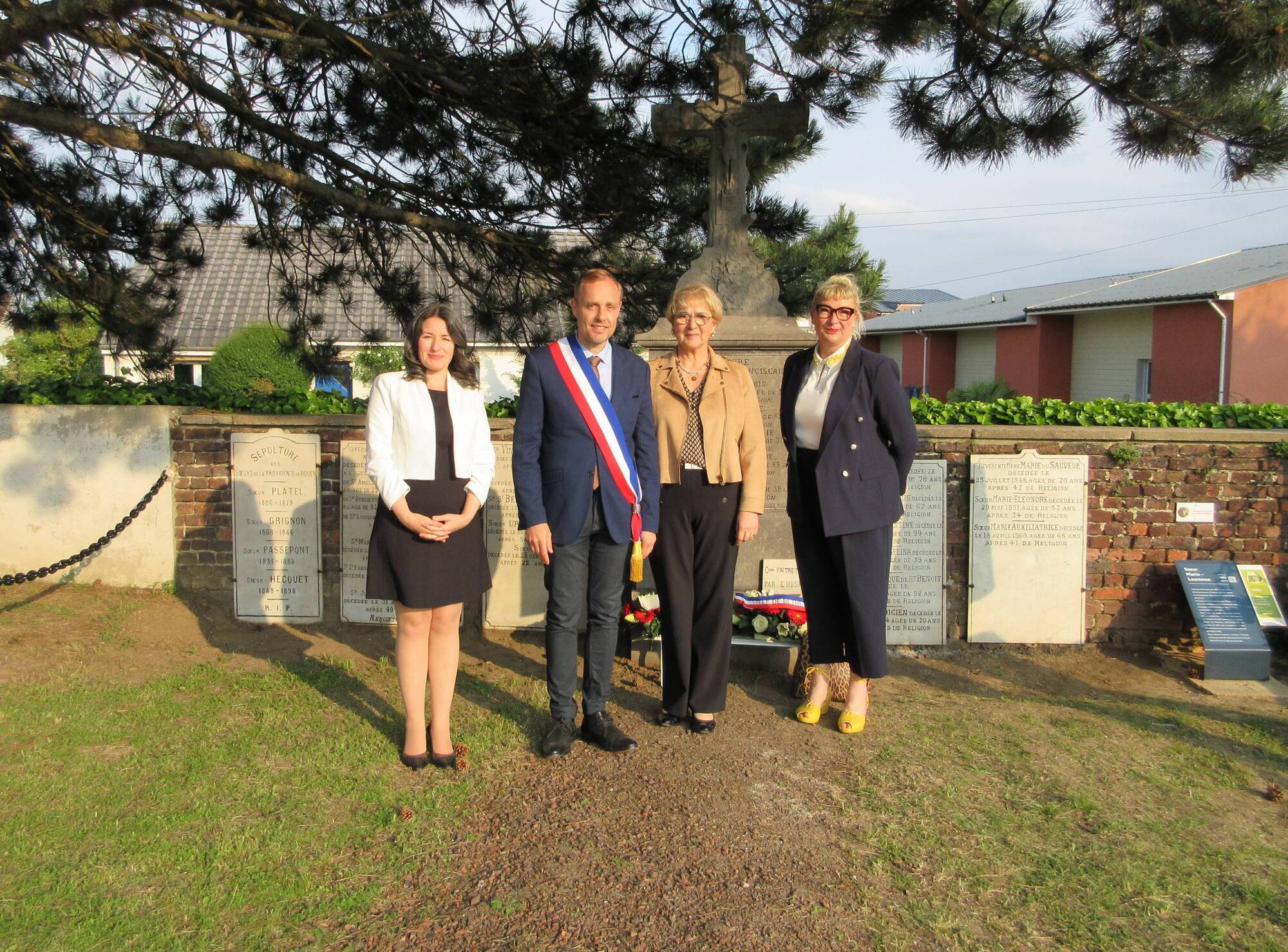
From left, Valérie David-McGonnell, Béthune mayor Olivier Gacquerre, deputy mayor Maryse Bertoux, and Sandrine Donchez in Béthune, where Cork nun Sr Marie Laurence was honoured. Pictures: Valérie David-McGonnell
A French town has honoured an Irish nun who “fought in the shadows” to save hundreds of lives during two world wars.
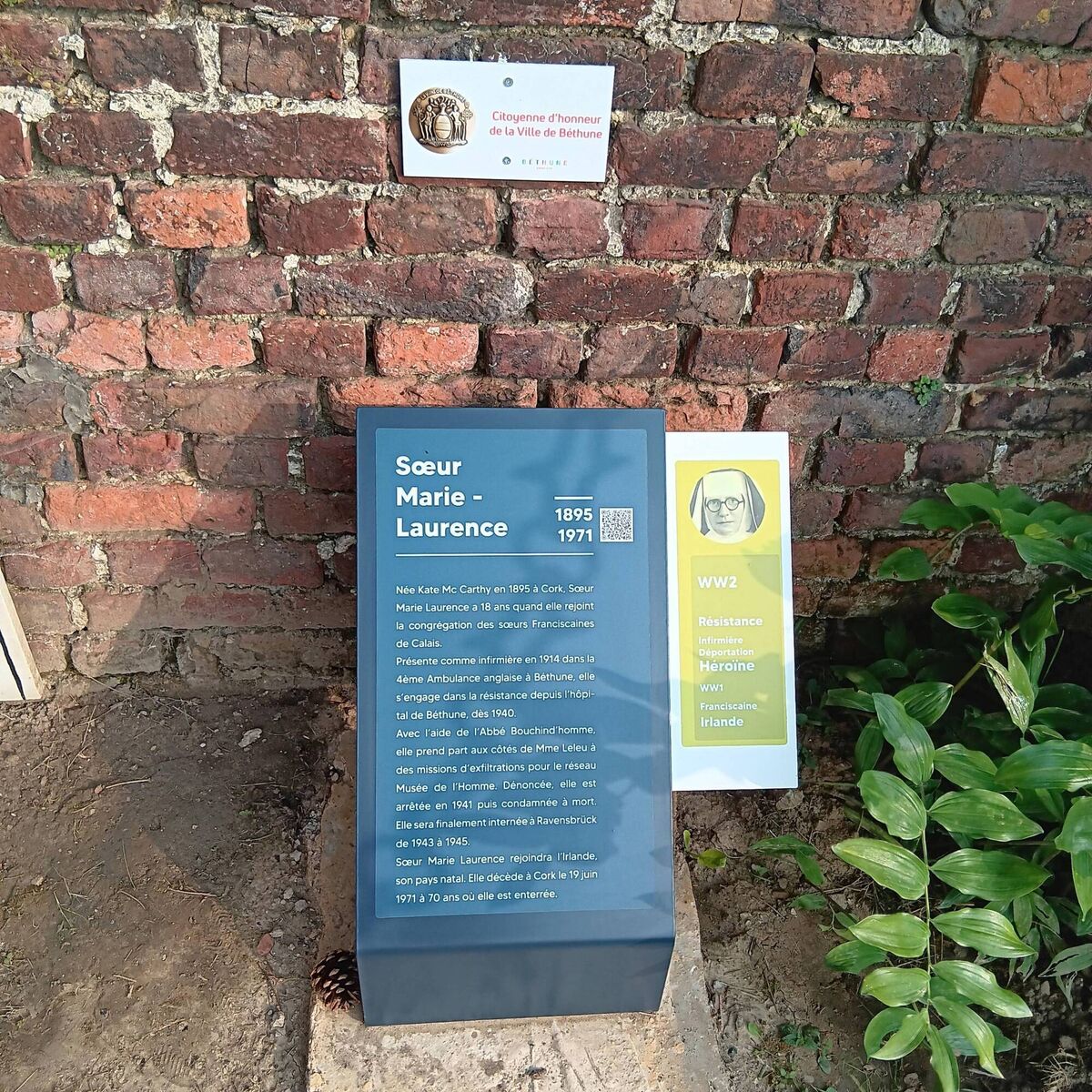
The authorities in Béthune in northern France unveiled a lectern and photograph in a quiet corner of the city’s northern cemetery to recognise Cork-born Sr Marie Laurence’s heroic role with the French Resistance.
She was among four remarkable French, Belgian and Irish women — including Sylvette Leleu, Louise Delestrez, and Françoise Beaurain, who all joined the French Resistance in Béthune during the Nazi occupation in the Second World War — who were honoured in the poignant ceremony.
Sr Marie Laurence’s niece, Loretto nun Sr Breda McCarthy, two grandnieces, Caitriona Hayes and Siobhan Sheils, and Valérie David-McGonnell, the President of Alliance Française de Cork, were among those who attended, along with Hannah E Twomey, Consul of Ireland to Paris.
“Although Sr Marie Laurence is buried in Saint Finbarr’s Cemetery in Cork, a commemorative lectern with her photograph and story now stands in the sisters’ plot in Béthune’s north cemetery,” Ms David-McGonnell said.
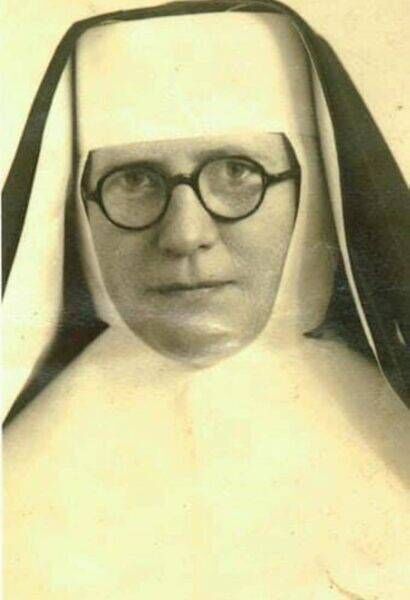
Born Kate McCarthy in Drimoleague, Co Cork, in December 1895, she received the name Sr Marie Laurence when she joined the order of the Franciscans in 1913, and was transferred to Calais, France, where she served as a nurse at the Béthune Hospital during the First World War.
After the Great War, she went to America, before returning to Béthune Hospital in 1940, where she nursed wounded soldiers and civilians.
She joined the Musée de l'Homme Resistance network that same year and helped about 120 Allied soldiers escape to England.
She was arrested by the Gestapo on June 18, 1941, imprisoned and interrogated for having passed on strategic maps to the Resistance.
She was held in different prisons from June 1941 until August 1942, including the notorious Ravensbrück women’s concentration camp.
Forced to do physical work with almost no food, her weight fell from 70kg to 27kg — about four stone — before the camp was liberated on April 30, 1945, two days after Hitler’s suicide. She and the other survivors were handed over to the Red Cross.
Following rehabilitation in Sweden and England, she returned to France a year later, where she was personally decorated for her bravery by General Charles de Gaulle and later honoured by Winston Churchill.
She was also awarded several French medals, including the Médaille Commémorative Française de la Guerre 1939-1945 and the silver Médaille de la Reconnaissance Française.
After the war, Sr Marie Laurence returned to Ireland to live in the Honan Home Convent in Cork, where she was appointed mother superior. She died on June 21, 1971, and is buried in St Finbarr’s Cemetery on the city’s southside.
Ms David-McGonnell plans to rename classrooms at Alliance Française de Cork after outstanding Cork women with strong connections with France, Mary Elmes and Sr Marie Laurence, this autumn.

CONNECT WITH US TODAY



Be the first to know the latest news and updates