'The law doesn't recognise me as her mother': Parents call on Government to start surrogacy law
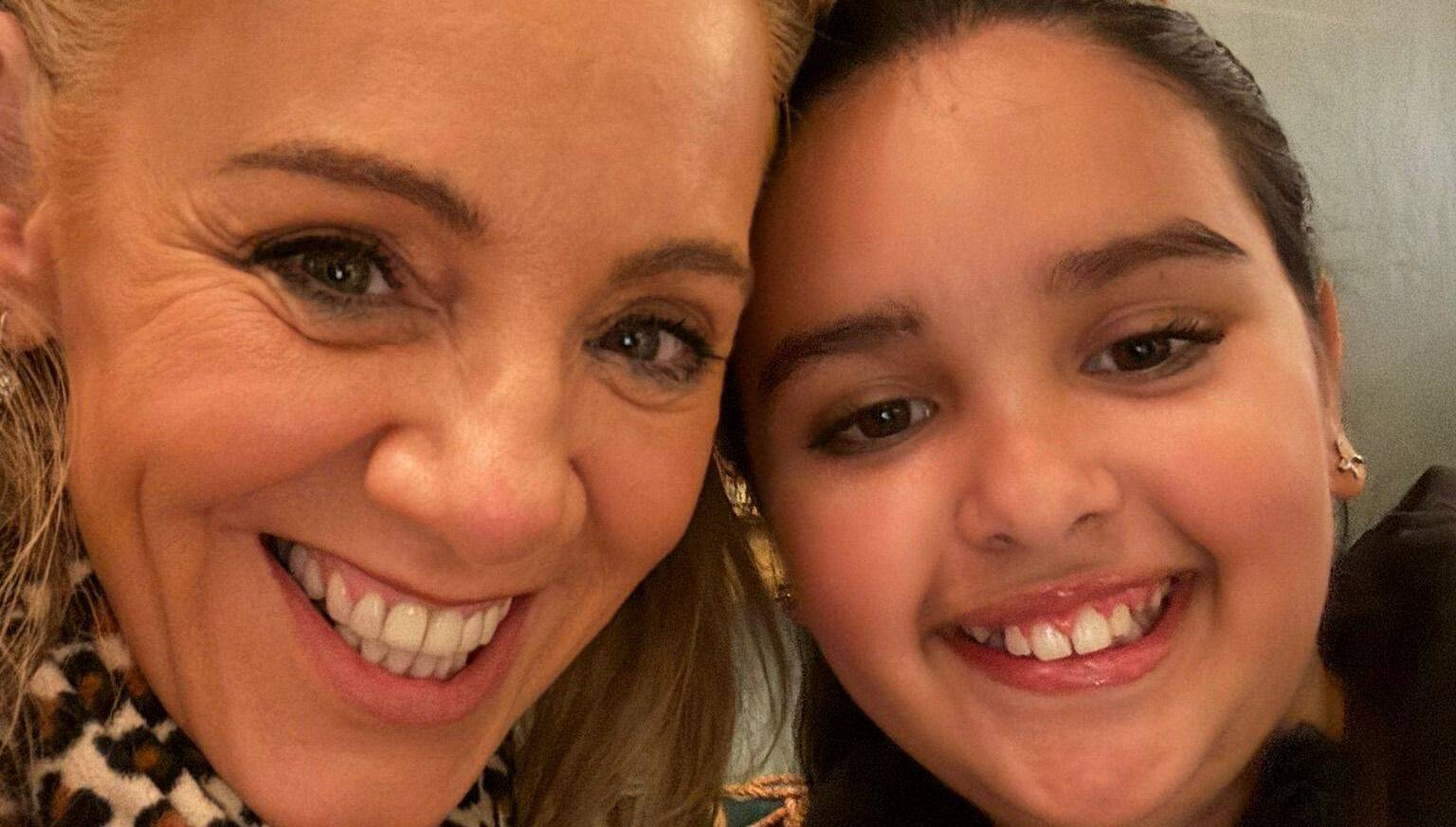
Former senator Mary Seery Kearney and her daughter Scarlett.
Children of surrogacy face daily injustice for “being born into a family the law has not yet caught up with”, with parents calling on the Government to address the urgent need to shore up the law.
Under Irish law, children do not have full legal recognition of their relationship with both parents, creating significant legal and practical challenges for families.
The Government had committed to deliver the Health (Assisted Human Reproduction) Act 2024. However, it is still not in force two years later.
At a briefing for Oireachtas members, parents with the advocacy group Irish Families Through Surrogacy will be calling for immediate action regarding the “legal vacuum” affecting their children.
As a former senator, Mary Seery Kearney helped pass the legislation. As a mother, she is still campaigning for laws to catch up with the reality of surrogacy with the IFTS.
After five miscarriages and 13 rounds of IVF, Ms Kearney looked at the option of surrogacy.
“When the Department of Justice published notes on what you needed for court for surrogacy, I realised normal people could access surrogacy, that it wasn't just something that very famous stars and the very rich did,” she told the .
After seeking legal advice, Ms Kearney and her husband looked online for surrogacy clinics. Their first experience was a “fairly horrible one”.
“We were told there was a pregnancy, and then we got an email that said ‘surrogate bled, pregnancy over’. We thought that was unbelievably heartless and lacking in any humanity,” she said.
The couple then looked at clinics in India, and in 2015, their daughter Scarlett was born. On Tuesday, the little girl turned 11. Every day, Ms Kearney fights to be recognised as her mother.
‘The law doesn’t recognise me as her mother. If I were to die and my husband predeceased me, my daughter would have to get a legal opinion written by a barrister.
“She would have to pay for a legal opinion to be produced to prove that I am her mother and that she has a right to inherit from my estate without the additional taxation of a legal stranger.
Ms Kearney said the legislation passed two years ago was “sitting there, ready to go”.
“It’s an everyday reality for our families, we live with this shadow hanging over us of what if in the event of, and what would we do, and how would we cope.”
Liam Aherne and his husband Jamie started their surrogacy journey in 2021.
“We're a same-sex couple, and we wanted to have a family of our own,” Liam said. “We decided to go through an agency in Cyprus. That took a while obviously, to research it all and be sure that we were happy with what we were doing.”
In June 2025, the couple had twin boys born through surrogacy.
Speaking of the legislation, he said: “Back then, everybody thought this was going to be fantastic news. The biological father is the only person who, in the eyes of the State, is the legal guardian. We’ve to wait two to three years before the second one of us can apply for guardianship. God forbid, if anything were to happen in that period of time, they’re parent-less in the eyes of the State."
Mr Aherne said the lack of legislation amplified the “taboo” regarding surrogacy.
“It’s something people aren’t fully aware of, something they’re not familiar with. It’s not something people come into contact with in their everyday lives, that lack of awareness doesn’t have people talking about it."