More than 160 asylum seekers moved from Grand Canal to new accommodation in Dublin
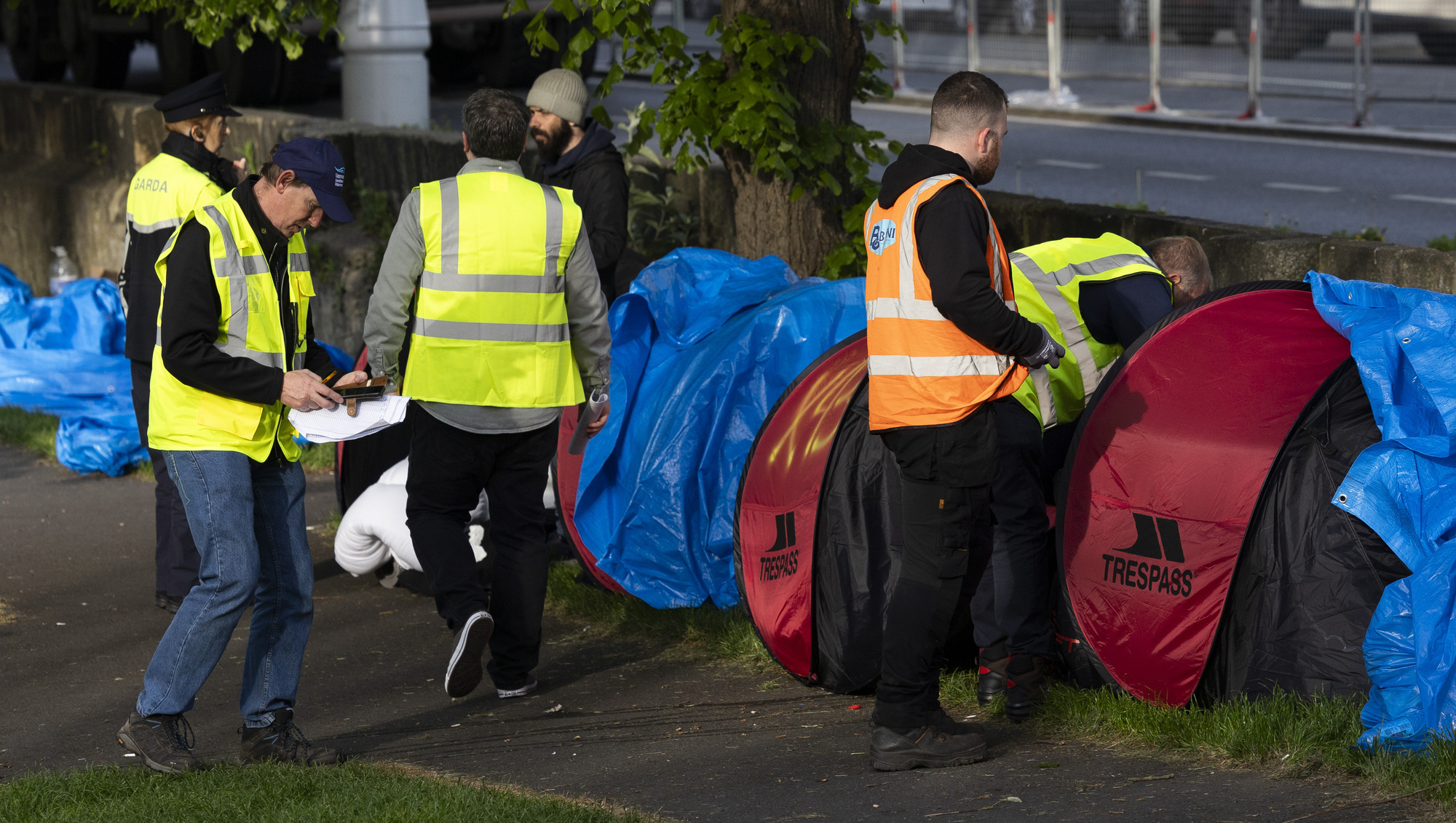
An early morning operation to remove tents which have been pitched by asylum seekers along a stretch of the Grand Canal, Dublin. Picture: Sam Boal/Collins Photos
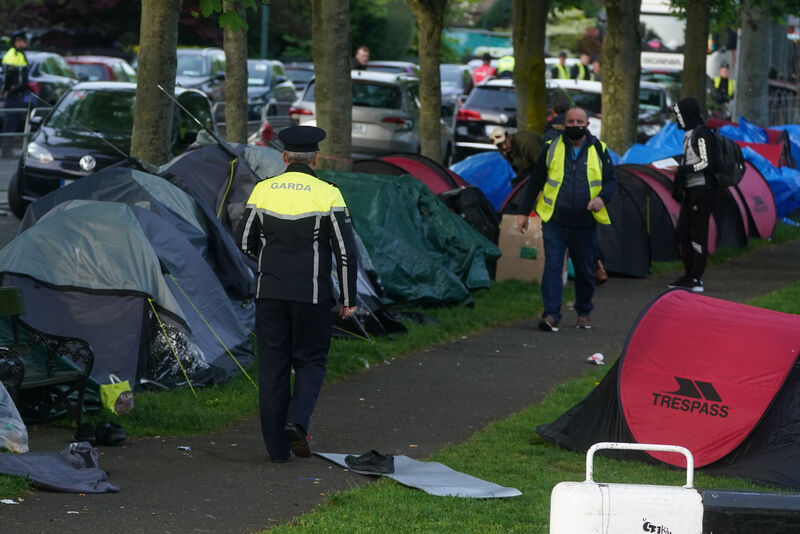
A makeshift migrant encampment has been cleared from Dublin’s Grand Canal following a multi-agency operation.
More than 100 tents had been erected along the waterway as the Government continues to fail to provide accommodation to all male asylum seekers.
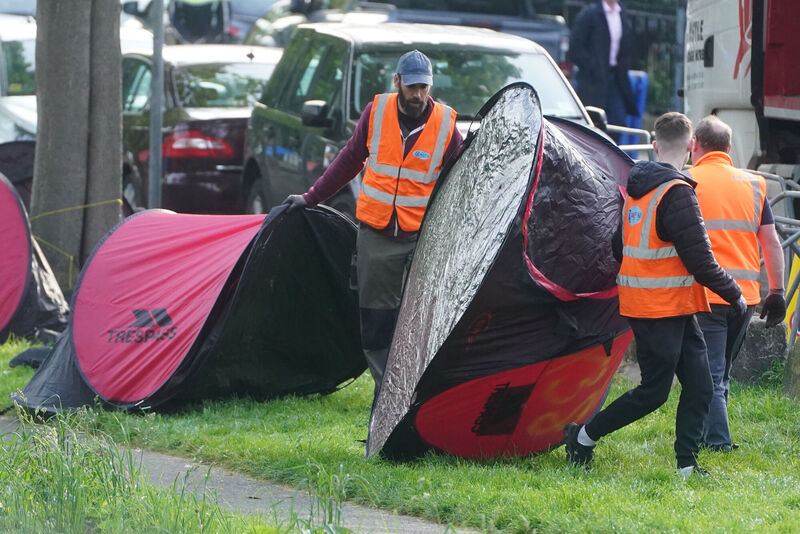
The operation began at approximately 6.30am and by shortly after 8am almost all the tents had been removed using a truck with a crane arm.
The asylum seekers, who had been living in the makeshift encampment, were told it was an offence to stay on the canal and that they would be taken by bus to official accommodation.
Many of the men lined up for the buses while their tents were marked before being disposed of for “health and safety reasons”.
Volunteers and a Safetynet mobile health unit also assisted the operation.
Some 163 individuals have been safely moved to Crooksling and the former Central Mental Hospital in Dundrum - 148 to Crooksling, and 15 to Dundrum.
Both sites have robust, weather-proof tents. They have toilets and showers, health services, indoor areas where food is provided, facilities to charge phones and personal devices, access to transport to and from Dublin City Centre, and 24-hour onsite security.
A statement from the Government said: "While accommodated at the sites in Crooksling and Dundrum, residents will receive the same supports as at other IPAS locations.
"This includes access to medical care via the HSE social inclusion outreach teams and medical card provision; IPAS customer services team clinics; onsite support from the provider’s staff; and psycho-social and integration support from NGO partners."
The encampment at the Grand Canal has been dismantled and the area is being cleaned by Waterways Ireland.
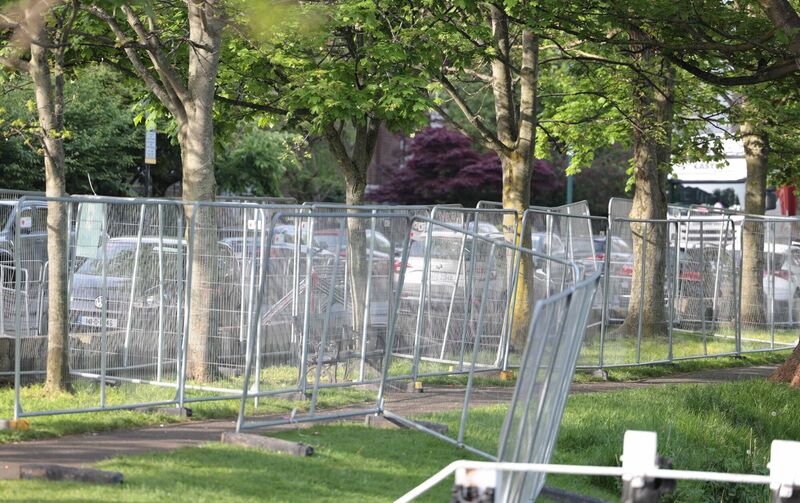
Fences have also been erected to prevent another encampment.
The Grand Canal encampment emerged shortly after more than 200 asylum seekers were cleared from a similar makeshift camp at the nearby International Protection Office in Mount Street last week.
The Government said Thursday morning’s operation involved the An Garda Siochána, Dublin City Council, the HSE, the Departments of Integration and Justice as well as Waterways Ireland.
After the tents were cleared, Taoiseach Simon Harris said the days of asylum seeker encampments “are gone”.
He said the alternative option for him as Taoiseach was to say the encampment was acceptable and to allow tents to gather in large numbers.
“The alternative option available to me as Taoiseach is to just say this is acceptable, this is grand, and it's not,” Mr Harris said.
“That we’d allow a situation to develop on Mount Street and stay there for weeks and months, that we’d allow a situation develop on Grand Canal and stay there for weeks and months.
“Those days are gone, those days are over. That’s not going to happen and the Government are absolutely united in relation to this.”
The Taoiseach said there needs to be a continual multi-agency response to the ongoing migration crisis.
“Sites need to be made available for tented accommodation with access to sanitation, as that’s how you respond to humanitarian emergencies. Not saying ‘we’re going to give over that pavement, that road or that part of the city’."
However, the Taoiseach said he was “not naïve” on this, saying that issues like encampments would crop up again in the future.
“The difference now is that those issues aren’t allowed to fester and go on, and on, and on. That’s the approach we’ll continue to take.”
On the sealing off of areas around Mount Street and the Grand Canal, Mr Harris said it would be on a “short-term” basis. He was unable to give a timeline as to how long they would be in place, saying that it would depend on the views of both Dublin City Council and gardaí.
Mr Harris said that there would no longer be a siloed approach to dealing with migration and that Departments and agencies would not be allowed to say “that’s not my issue”.
Labour party leader Ivana Bacik, who represents the Grand Canal area where international protection applicants were staying in tents, has welcomed the fact that alternative accommodation “appears to have been found”.
“I called on the Taoiseach yesterday to ensure that alternative and secure accommodation would be offered to those who've come here seeking refuge. And I do welcome the fact that it appears that such accommodation is now being found.
"It appears also from our volunteers who were here earlier, that the multi-agency operations were carried out with dignity and respect for individuals," she told RTÉ's Morning Ireland programme.
However, she believes that "there is likely to be more people arriving."
According to Ms Bacik, a "sense of central coordination" from Government would be "welcome indeed" and is "long overdue."
"It is the lack of that central coordination that has led to this rather piecemeal approach from seeing, people provided with tents effectively told to go and camp somewhere and then a build up of really inhumane conditions, and of course, a lack of security for those individuals.
"It is not sustainable for the individuals seeking refuge here who have fled war and persecution in so many cases, and nor is it sustainable for local communities," she said.
Ms Bacik said it was “vitally important” that there be a “good spread” of centres providing accommodation around the country.
She said it is “very important” that any empty State owned sites be utilised under a centrally coordinated system.
CONNECT WITH US TODAY



Be the first to know the latest news and updates