'Justice may yet be done': Stardust inquests hear closing submissions

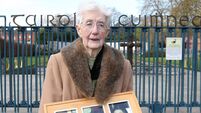
“There is no promised land for the families of these victims,” Sean Guerin, speaking for some of the families, said. File picture: David Young/PA Wire
“Justice may yet be done” for the 48 people who never came home from the Stardust nightclub and for their families, a jury has heard in powerful closing statements delivered on Friday.
Speaking for some of the families, Sean Guerin SC urged the jury to offer a “path out of the wilderness” four decades on and return a verdict of unlawful killing for each of those who died at these fresh inquests.
“There is no promised land for the families of these victims,” Mr Guerin said. “For as long as they live, they will live with their loss and their grief. But it may be, after all this time, and when they go to their rest, they can know why their children and their sisters and brothers never came home.”
His plea came during the series of closing submissions made by several barristers at the Stardust inquests, as they detailed a litany of failures related to the Stardust that they argued should lead the jury to conclude each of the young people was unlawfully killed.
This included the use of carpet tiles on the walls which breached the conditions of the planning permission and were a huge factor in the rapid spread of the fire, the lack of staff training of any kind in what to do in the event of a fire, and the “locking, chaining and obstructing” of emergency exit doors at a time when people desperately tried to flee the club.

Such was the lack of training for staff and awareness of fire extinguishers in the venue that one in the very area that the fire was first spotted went unused on the night.
“Why did so many die in this fire?” asked Bernard Condon SC, for the families. “What in the name of God was going on that this accumulation of circumstances turned [the Stardust] into a prison that people couldn't get out of?”
In the early hours of February 14, 1981, a fire rapidly spread through the Stardust club in north Dublin where 800 young people had gathered for a Valentine’s disco dancing competition. In all, 48 people lost their lives.
Families of victims had long campaigned for fresh inquiries into the deaths of their loved ones in the Stardust fire, saying they wanted to discover the truth of how they had died.
For over 100 days, the 13-person jury has listened to evidence from a wide variety of witnesses including patrons there on the night, staff members at the Stardust, first responders who rushed to the scene and experts in pathology and fire spread. Once the legal submissions end, the jury will be charged by the coroner before they retire to consider their final verdicts.
Friday marked the final submissions from the legal team representing most families of victims of the Stardust fire. Having begun her submission on Thursday afternoon, Brenda Campbell KC continued addressing the jury to begin the day.
Referencing the planning and construction process for the conversion of the old food factory into the Stardust complex, Ms Campbell said that it was allowed to open despite having carpet tiles on the walls that did not conform to the coverings allowed under the planning permission.
She also said that inspections of the Stardust by officials from Dublin Corporation, now Dublin City Council, repeatedly highlighted failings such as emergency exits obstructed. Just a few weeks before the fire, Dublin Corporation wrote to the management to say that unless they received assurances these issues would be addressed, they would take action.
“What value would Mr Butterly’s assurances be?” she said. “The answer comes in [manager Eamon Butterly’s] reply. He gave them his assurances. But those assurances were penned at a time we know the policy of chaining in the doors in the Stardust was not loosening. It was tightening.”
On the night itself, she said that the evidence shows that doors were locked, chained or obstructed when patrons tried to desperately flee the fire.
Ms Campbell said: “The condition of those doors was that they were locked, chained, obstructed and represented a very serious failure to take action. That much is clear. They made a substantial contribution to the 48 who never came home.
“Listen to the evidence of those who experienced it. Like Jimmy Fitzpatrick. Still bearing the visible scars of that fire.
Bernard Condon SC referenced the fire extinguisher that went unused in the west alcove where the fire was spotted. Showing the jury a photo of it, he said: “The tragedy of this was that there was a fire extinguisher in the west alcove. It was still there after the fire. It’s a cold moment when you think about it. It's a very challenging photo to look at and think of the what ifs.”
Mr Condon also referenced the evidence of the doormen at the Stardust, some of whom claimed they were able to leave through the exit doors without difficulty on the night. This is opposed by many patrons who described doors chained and obstructed.
He said the credibility of the doormen “was shot to bits”.
“The only fixed evidence was that the doors were locked when the night started,” he said. “There's no compelling evidence from anybody that they were unlocked. Where’s the evidence they were unlocked?”
He also referenced the Titanic in the sense that there were multiple factors that contributed to the loss of life on the ill-fated liner, and said there were numerous circumstances in this case.
When discussing the lack of fire training or fire drills at the premises, he also quoted former Man Utd and Ireland midfielder Roy Keane, who had said “fail to prepare, prepare to fail”.
On the issue of the wall coverings, shown to have contributed to the rapid spread of fire, Mr Condon said: “Carpet Tiles. On a wall. You don’t really need to go much further. On a wall. On all the walls.”
In Mr Guerin’s submission, he began by discussing each of the victims whose families he represents and said: “Why did none of them come home? Why will they not grow old as their mothers and their families have grown old waiting to find out how they died? You are here and we are all here because, as the coroner has told you, of an insufficiency of inquiry at the previous inquests.
Turning to how exactly the fire started, he urged the jury to “expunge forever from the record to suggest the fire was caused by arson”. The original Tribunal of Inquiry into the fire in 1981 found that the “probable” cause of the fire was arson, which angered victims and families and was struck from the record over two decades later.
Mr Guerin said the evidence in the case, along with the expert testimony, points to a fire having started in a hot press in the main bar. This was adjacent to the room where the fire was first spotted inside. He said this was the only option available that was supported by all the evidence the jury has heard.
“No one will say after the time you have to date spent and will have spent at the end, no one will say there has been an insufficiency of inquiry at these inquests,” he said.
“It has taken a very long time. Justice delayed may yet not be denied. Justice may yet be done.”
At the close of their statements, all of the counsel put forth strong statements to the jury to sum up their calls for a verdict of unlawful killing in this case.
Ms Campbell said: “Sunlight really is a powerful disinfectant. What happened here for those 48 young people has gone a long way to removing the stains, rumours, lies and mistakes that have haunted the families of the Stardust victims before even the embers of the fire burnt out.
“It’s over to you to write the last chapter. Your chapter is not about blame, responsibility. It must record the truth over how these young people died.”
Meanwhile, Mr Condon said: “The 48 who never came home. All across that place, lives were extinguished. People from our own city. A working-class background. Hard-working decent people who went out for a night out. Families have lived with that trauma for so long. They’ve come here to ask you why.”
The inquests continue next week.

BLACK FRIDAY
Already a subscriber? Sign in

CONNECT WITH US TODAY



Be the first to know the latest news and updates