Ketchup sachets and plastic wrapping on fruit and veg may be banned under new EU deal
Ketchup sachets and plastic wrapping on fruit and veg may be banned under new EU deal

On Monday, the European Council and representatives from the European Parliament reached a provisional political agreement on a proposal for a regulation on packaging and packaging waste that aims to tackle the increase in packaging waste generated in the EU.


Single-use sachets of ketchup in fast-food restaurants and plastic wrapping on fruit and vegetables could be done away with under a new EU deal reached this week.

On Monday, the European Council and representatives from the European Parliament reached a provisional political agreement on a proposal for a regulation on packaging and packaging waste that aims to tackle the increase in packaging waste generated in the EU.

Under the scheme, EU legislators have laid down an obligation for takeaway businesses to offer customers the possibility of bringing their own containers to be filled with cold or hot beverages or ready-prepared food, at no additional charge. On top of this, by 2030, takeaway activities must endeavour to offer 10% of products in packaging formats suitable for re-use. 

There will be a ban on single-use plastic packaging for indoor dining as well as single-use plastic sachets for condiments such as ketchup.

The deal agreed in Brussels strengthens the requirements for substances in packaging by introducing a restriction on food packaging containing per- and polyfluorinated alkyl substances (PFASs) above certain thresholds. This move could also see a change in packaging and how it is produced. 

CLIMATE & SUSTAINABILITY HUB

PFAs are often used in single-use paper-based packaging to give it plastic-like qualities like making it drip-proof and last week, the US Food and Drug Administration (FDA) announced that PFAs would be taken out of parts of the US food chain.

However, some concessions have been won by both industry and some member states, like Italy, with the ambition of the original European Commission proposal, which would have applied to all single-use packaging rather than just single-use plastic, being scaled back.

Green Party MEP for Ireland South, Grace O’Sullivan, described the deal as "a win for human health and the environment". “In the face of intense lobbying from the plastic and chemicals industries, and others who benefit from our single-use, throwaway culture, the EU has set more ambitious targets for reducing packaging waste, and increased the scope of many rules. 

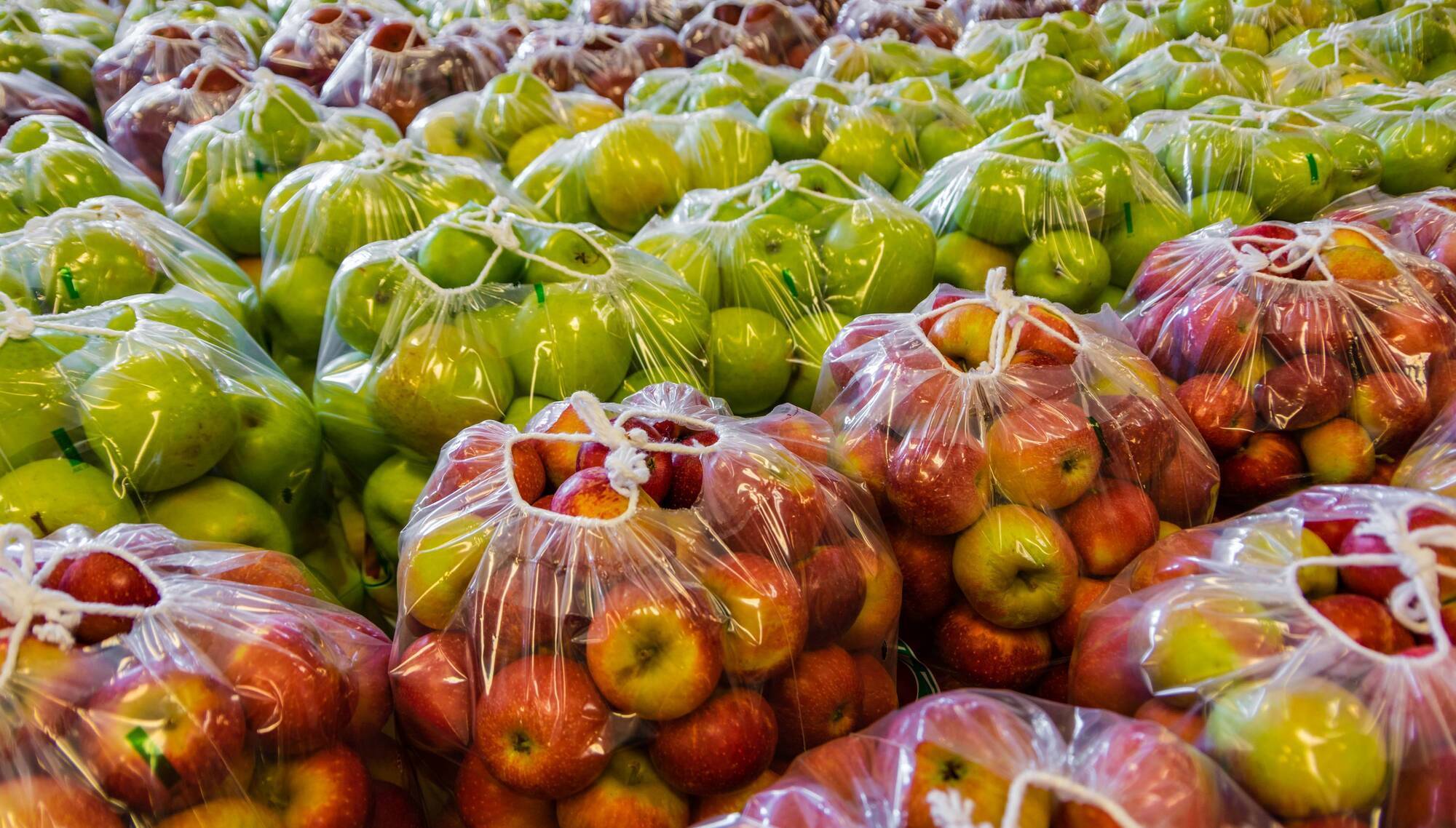
"Agreement has been reached that will see PFAS — harmful forever chemicals used in food packaging — banned within 18 months, a ban on plastic wrapping on fruit and veg, mandatory roll-out of deposit and return schemes across EU member states, and measures to tackle overpackaging, including a ban on oversized boxes and parcels being used for small items, and a ban on polystyrene in-fills in packaging.

“We will also see a return to reusable glass bottles for beverages such as beer, mineral water and soft drinks, thanks to mandatory reuse targets. While I believe that the European Commission’s original proposals were more ambitious in terms of scope, targets and timelines, I welcome this agreement as a positive step, and I’m looking forward to ratification by the European Parliament.”

The Renew Europe group, of which Fianna Fáil is a part, said the deal was welcome and would mean:

  • A packaging waste reduction target for all packaging materials : 5% by 2030, 10% by 2035 and 15% by 2040;
  • Mandatory recyclability of packaging by 2030;
  • A ban on single-use plastics in catering by 2030;
  • A maximum empty space rate of 50% in boxes.

Ireland generates more packaging waste per capita than any other country in the EU, with 246 kg of packaging per person per year. This includes, on average, over 74 kg of plastic, of which less than a third is recycled. 

Even though recycling rates have increased in the EU, the amount of waste generated from packaging is growing faster than the amount recycled. 

Over the past decade, the amount of packaging waste has increased by nearly 25% and is expected to increase by another 19% by 2030 if no action is taken. For plastic packaging waste, the expected increase is 46% by 2030.

x

More in this section

Lunchtime News

Newsletter

Get a lunch briefing straight to your inbox at noon daily. Also be the first to know with our occasional Breaking News emails.

Cookie Policy Privacy Policy Brand Safety FAQ Help Contact Us Terms and Conditions

© Examiner Echo Group Limited