Will there be another flight crisis after volcanic eruption in Iceland?
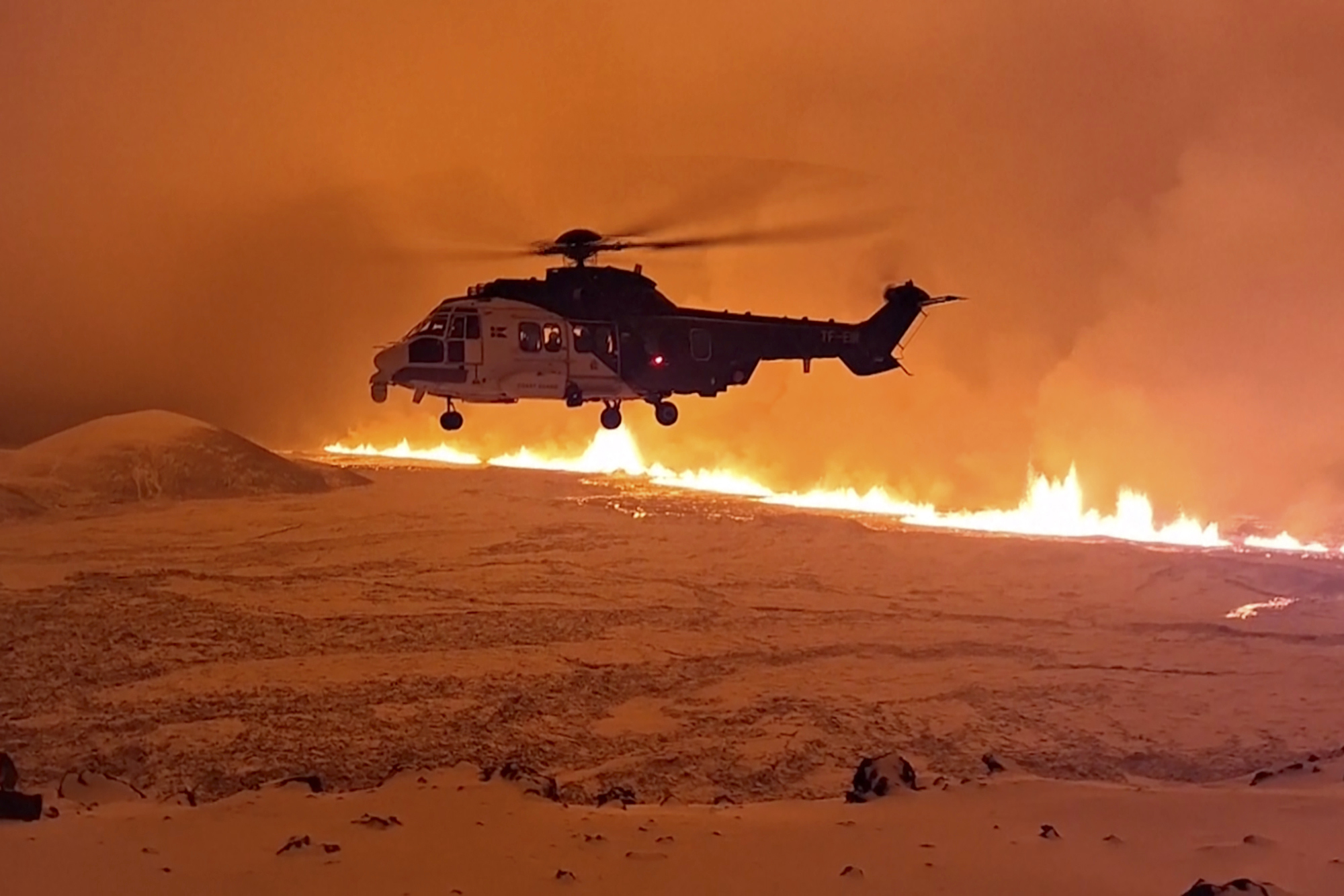
An Icelandic Coast Guard helicopter flying near magma running on a hill near Grindavik on Iceland's Reykjanes Peninsula. Picture: Icelandic Coast Guard via AP
The operator of Dublin Airport has said that all services to and from Iceland are operating as normal in the wake of an eruption near Reykjavík.
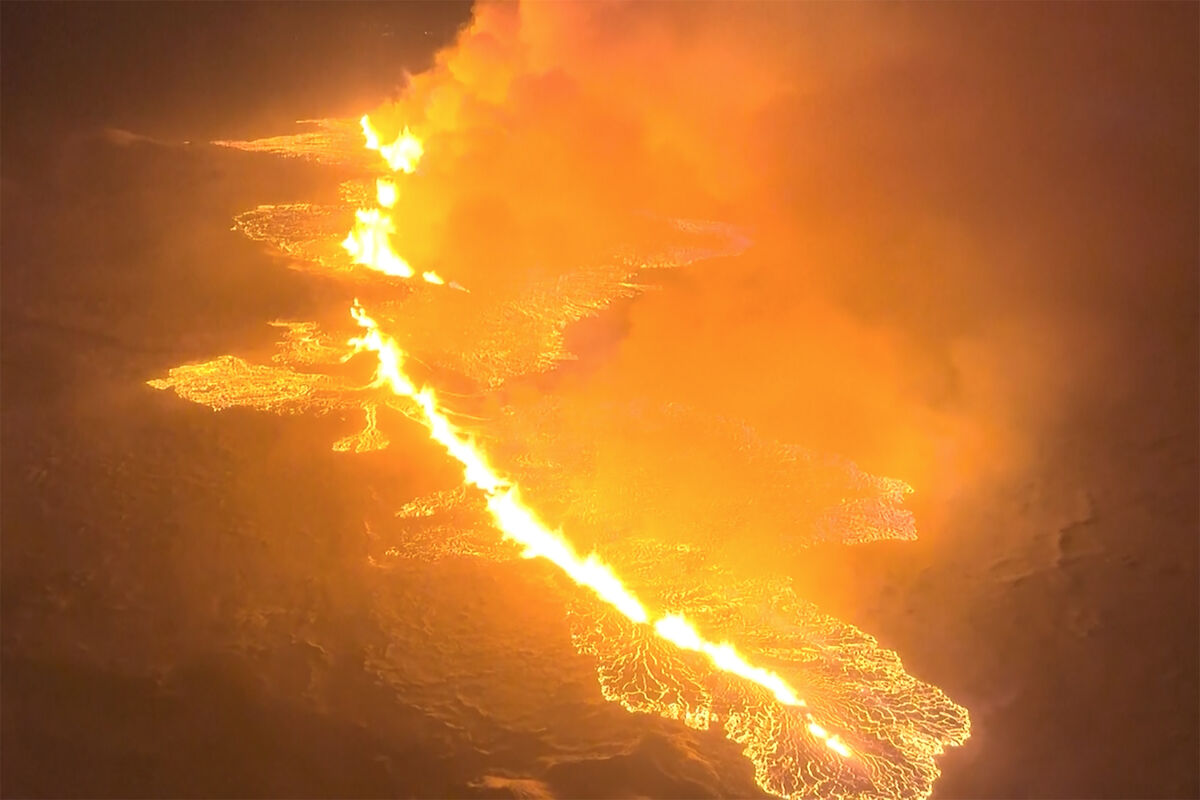
The eruption began northeast of the town of Grindavík on Monday evening, leading to fears of a repeat of the infamous travel chaos in 2010 which saw flights cancelled and thousands stranded across Europe.
Back then, the eruptions at Eyjafjallajökull caused an ash cloud to rise and spread which caused the closure of the European airspace for five days.
However, Icelandic officials say that there are no concerns about a repeat event at the moment.
A spokesperson for the Icelandic foreign minister Bjarni Benediktsson told the : "There are no disruptions to flights to and from Iceland and international flight corridors remain open.
"This eruption follows intense seismic activity over the past few weeks and is classified as a fissure eruption (often referred to as Icelandic-type).
"Iceland’s authorities are well prepared for seismic events which occur regularly as a feature of our country’s natural geography."
The government added that the volcanic eruption "does not present a threat to life".
Daa media relations manager Graeme McQueen said that all services between Dublin Airport and Keflavik International Airport in Reykjavík were on schedule.
He said: "Flights between Dublin Airport and Keflavik International Airport are operating as normal, with all services between the two airports today currently on schedule.
"The team at daa remain in close contact with our counterparts in Iceland regarding the situation.
"As always, passengers seeking information regarding specific flights should contact their airline directly."
One expert added that volcanic eruption is unlikely to impact air travel.
“There is currently no threat to the airspace from this eruption, especially to flights further than Iceland,” Sam Mitchell, a research associate in volcanology at the University of Bristol, told .
“Any changes to air traffic to air traffic may be restrained to Keflavik if there are changes in wind direction or outputs of gas and fine ash,” he said, noting that “this is a very different eruption to that of Eyjafjallajokull in 2010 where a large explosive eruption under a glacier produced a very large cloud and very fine ash in the atmosphere when the wind direction was pointing towards mainland Europe”.
This is the fourth eruption since 2021 in the same area in Iceland, and the largest so far with an initial fissure opening of 4 km.
Grindavík had already been evacuated on November 10 as a precaution after several days of seismic activity, with 3,400 people being disrupted as a result.

CONNECT WITH US TODAY



Be the first to know the latest news and updates