In pictures: Volcano erupts in Iceland turning the sky orange
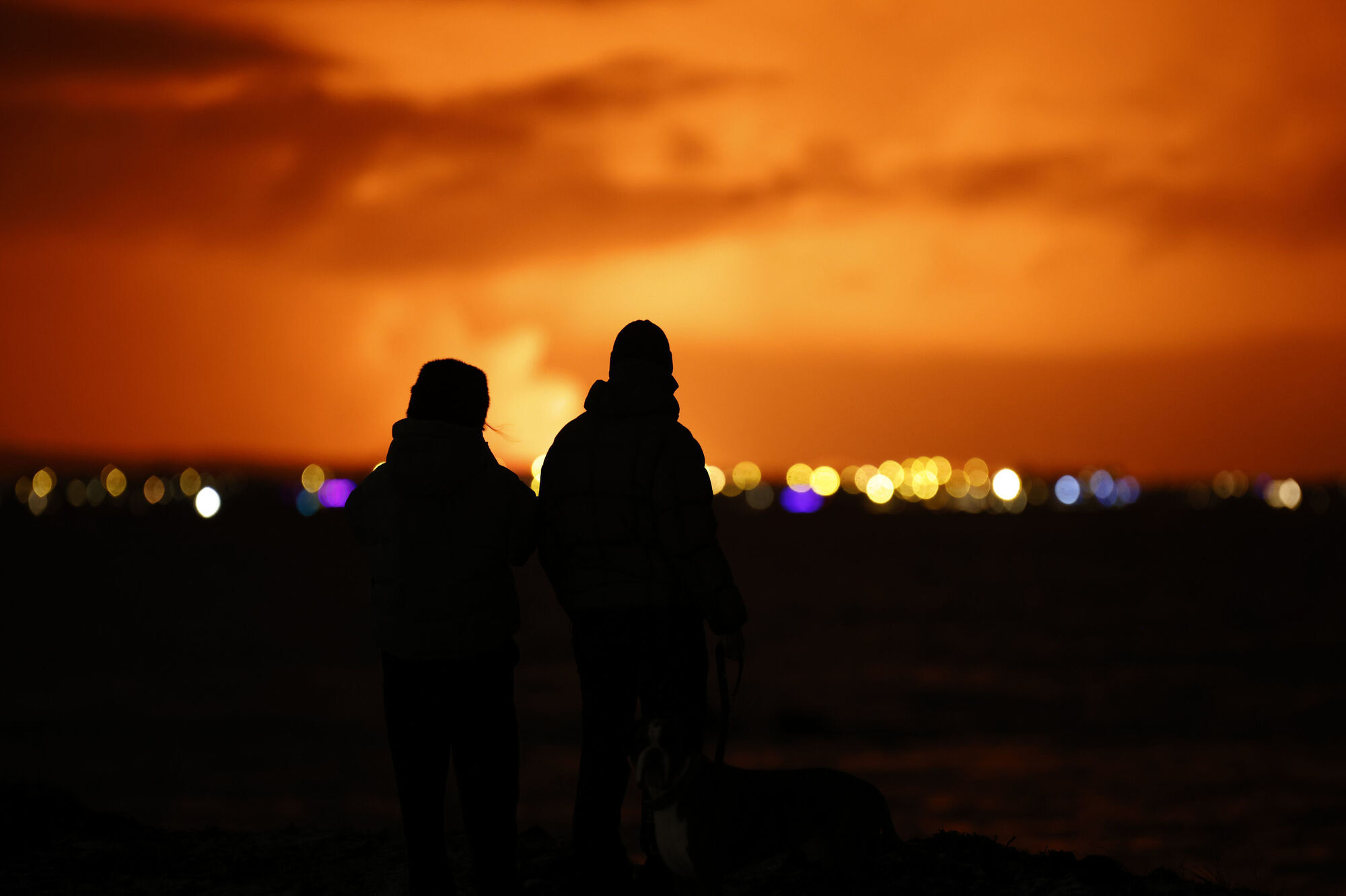
People watch as the night sky is illuminated caused by the eruption of a volcano on the Reykjanes Peninsula. Picture: AP Photo/Brynjar Gunnarsson
A volcanic eruption started on Monday night on Iceland’s Reykjanes Peninsula, turning the sky orange and prompting the civil defence to be put on high alert.
The eruption appears to have occurred about 2.4 miles from the town of Grindavik, the Icelandic meteorological office said.
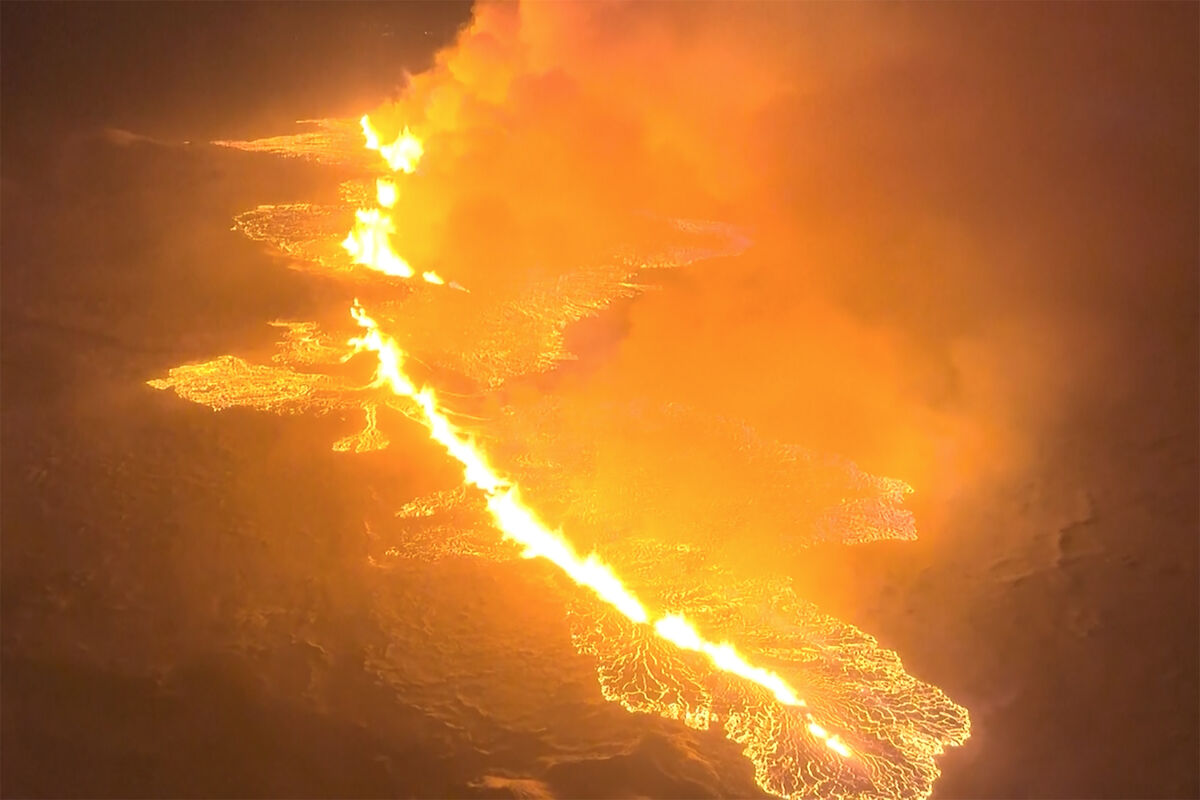
Grainy webcam video showed the moment of the eruption as a flash of light illuminating the sky at 10.17pm local time.
As the eruption spread, magma, or semi-molten rock, could be seen spewing along the ridge of a hill.
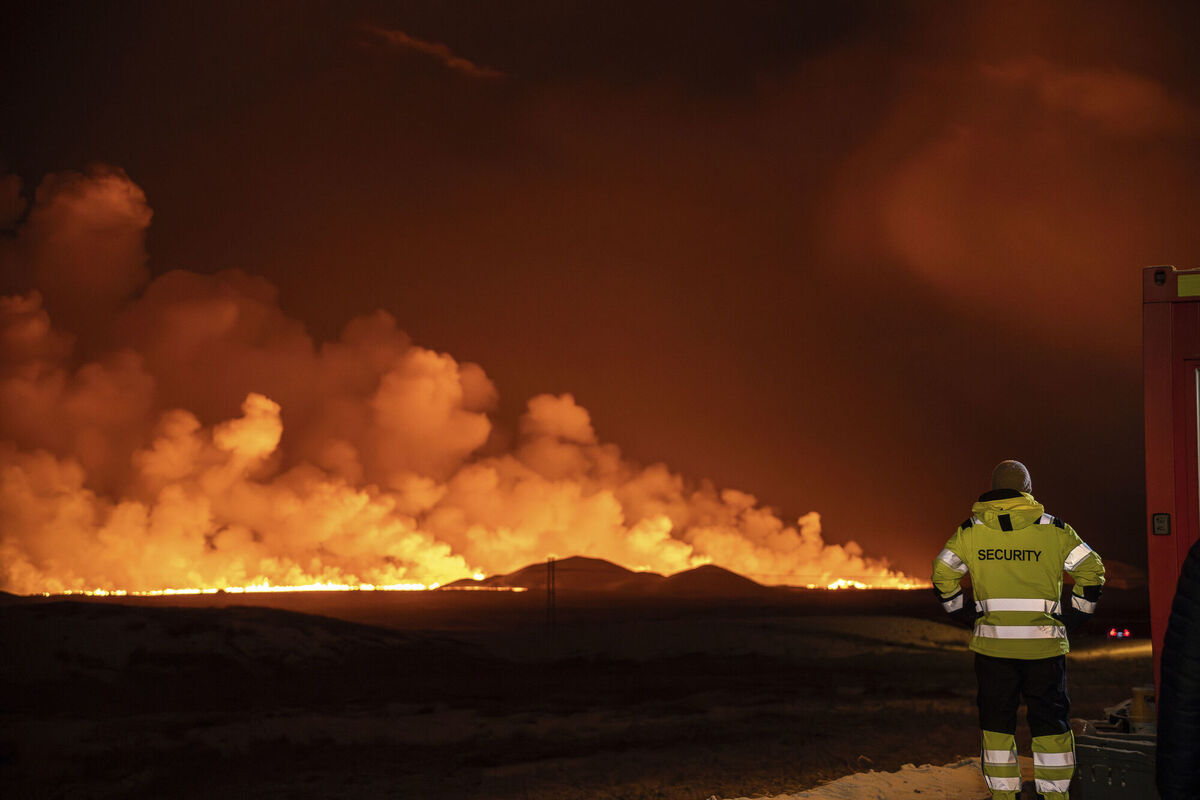
Vidir Reynisson, head of Iceland’s civil protection and emergency management, told the Icelandic public broadcaster RUV: “The magma flow seems to be at least a hundred cubic meters per second, maybe more.
“So this would be considered a big eruption in this area at least.”
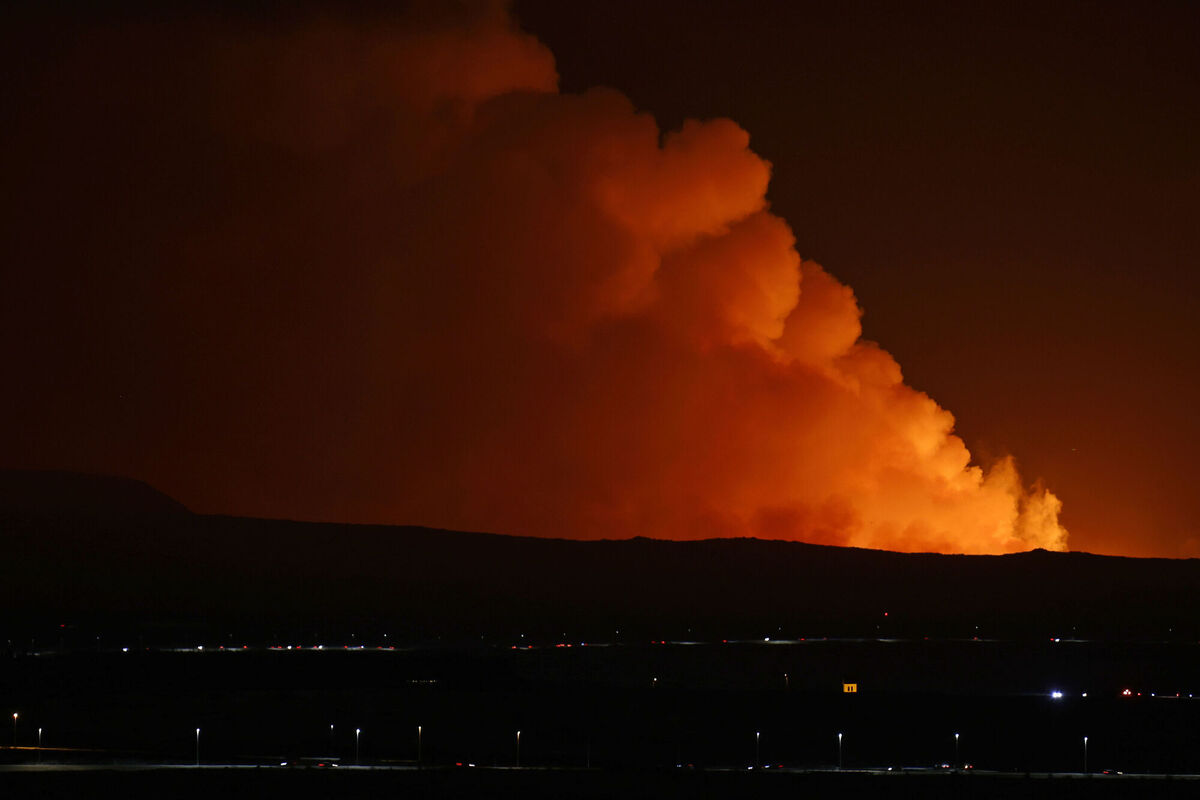
In November, police evacuated the town of Grindavik after strong seismic activity in the area damaged homes and raised fears of an imminent eruption.
Iceland sits above a volcanic hot spot in the North Atlantic and averages an eruption every four to five years.
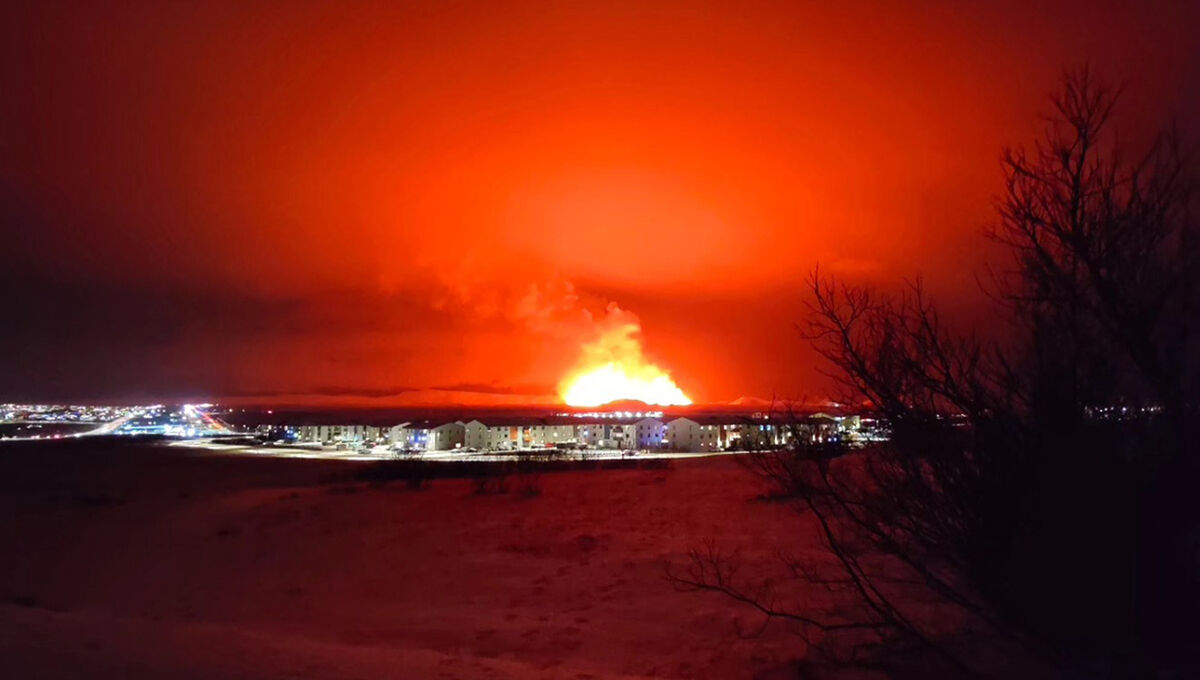
The most disruptive in recent times was the 2010 eruption of the Eyjafjallajokull volcano, which spewed huge clouds of ash into the atmosphere and grounded flights across Europe for days because of fears ash could damage airplane engines.
Scientists say a new eruption would likely produce lava but not an ash cloud.
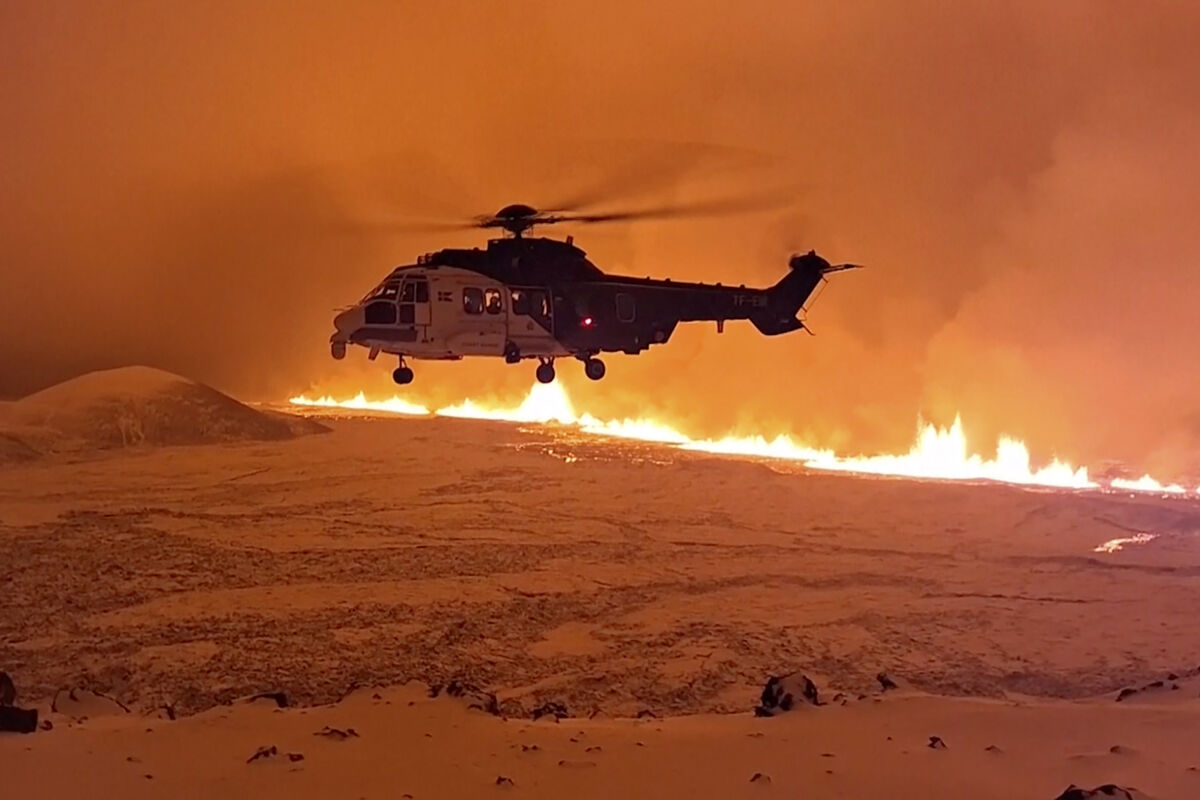
A coast guard helicopter will attempt to confirm the exact location — and size — of the eruption.
Grindavik, a fishing town of 3,400, sits on the Reykjanes Peninsula, about 31 miles southwest of the capital, Reykjavik and not far from Keflavik Airport, Iceland’s main facility for international flights.
CONNECT WITH US TODAY



Be the first to know the latest news and updates