Cork-based garda sergeant awarded €65,000 for discrimination after eye injury
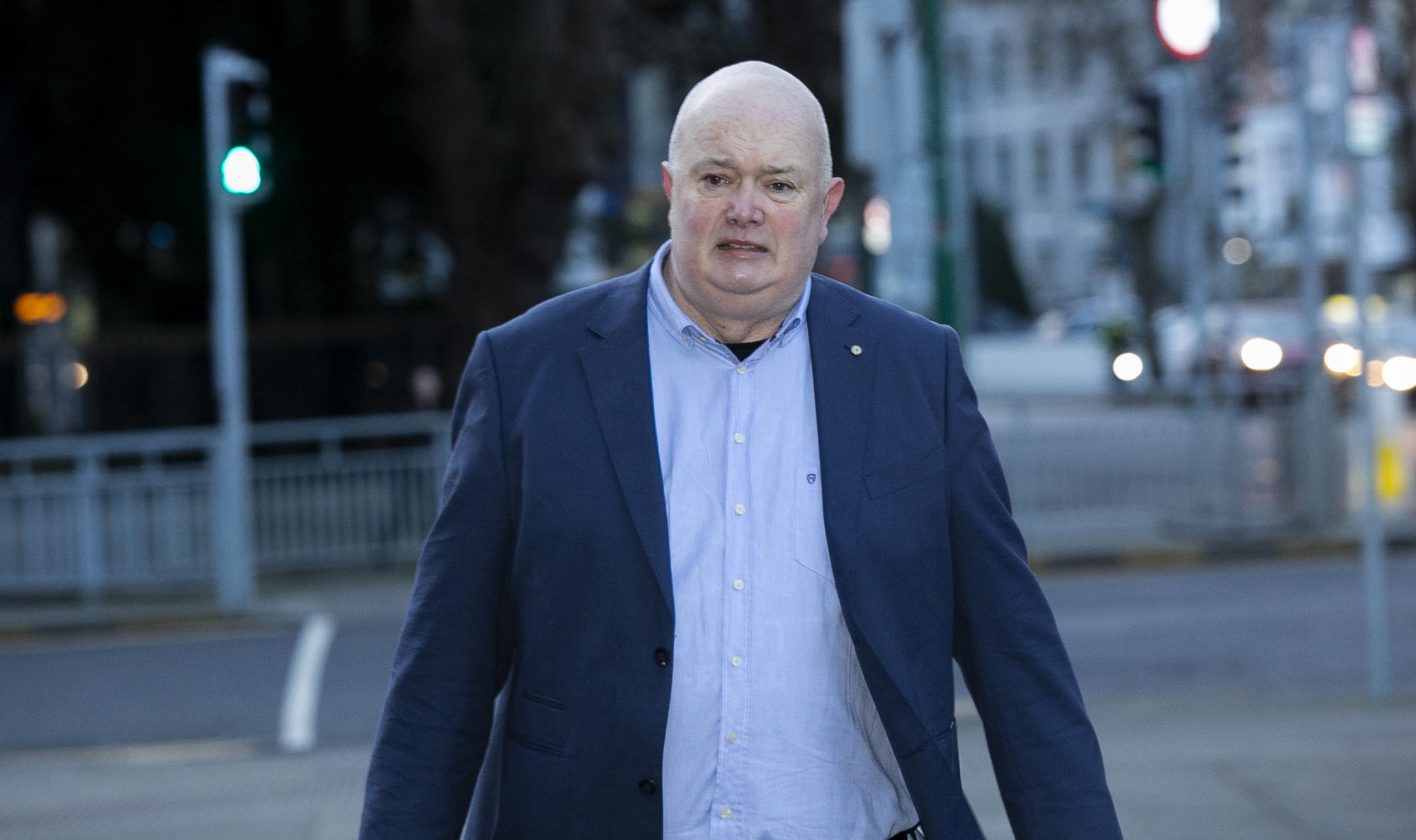
The Workplace Relations Commission found that An Garda Síochána discriminated against 'highly respected and valued’ member Sgt David Haughney. File picture
An Garda Síochána has been ordered to pay €65,000 compensation to a Co Cork-based garda sergeant for discriminating against him on the grounds of disability.
This follows Workplace Relations Commission (WRC) adjudicator Jim Dolan finding that An Garda Síochána discriminated against ‘highly respected and valued’ member Sgt David Haughney for failing to provide him with ‘reasonable accommodation’ for a disability under the Employment Equality Act.
Sgt Haughney’s disability arose after he was a victim of a criminal assault in December 2014 where he lost 70% vision in his left eye.
Mr Dolan said the impact of the assault had life-changing effects on Sgt Haughney who joined the force in 1990.
In his findings, Mr Dolan said the discrimination against Sgt Haughney by failing to give him reasonable accommodation for his disability went further than this.
Mr Dolan said on his first return to work, accommodations were provided to Sgt Haughney by three different superintendents.
However, Mr Dolan found that these accommodations were withdrawn by Supt Adrian Gamble at Midleton Garda Station on the second return to work and Mr Dolan commented that “treating similar situations differently can give rise to discrimination”.
Mr Dolan said that although not legally required to do so, Supt Gamble should have consulted with Sgt Haughney before deciding what he could and could not do.
In addition to road policing duties, Sgt Haughney was a public order instructor, a handcuffs instructor, a Tac advisor, and an evidence gatherer.
He also co-ordinated and developed training programmes.
After being deemed fit to return to duties in November 2015, Sgt Haughney continued to be involved in the training programmes and was subsequently appointed as a public order trainer.
Sgt Haughney continued with the support of his then superintendents, John Quilter and Eamon O’Neill, to carry out his responsibilities and duties with the same degree of competence as before the December 2014 assault.
In April 2019, he underwent a further operation on his left eye concerning a detached retina, which resulted in him being absent from work for four months.
On his return to work in a meeting in October 2019, Supt Gamble referred to a report from the chief medical officer which stated that Sgt Haughney should be restricted to non-confrontational duties.
As a result, Sgt Haughney was informed that he was no longer permitted to engage in any driving and training or to present himself in public in uniform.
This is the point at which the alleged discrimination commenced and on October 6, 2019, Sgt Haughney was moved to a traffic office which effectively confined him to an isolated office, separate from the main building and his colleagues.
The degree of isolation from colleagues and regular duties had a significant impact on Sgt Haughney’s health and well-being.
Sgt Haughney was represented in the case by Michael Hegarty and Siobhan Lafferty of Reddy Charlton Solicitors and they alleged that Supt Gamble repeatedly prevented Sgt Haughney from engaging in any meaningful role in the force allegedly under the guise of his concern for Sgt Haughney’s welfare.
Sgt Haughney was absent from work on sick leave due to work-related stress from July 18, 2020, to January 22, 2021, as a result of the impact the discrimination was having on him.
He transferred to Ballincollig Garda Station in September 2021 which is an additional 68km round trip from his home on the understanding that he would be allowed to carry out public order training and related duties.
His legal representatives argued that their client’s role had been reduced to that of a ceremonial role because he was not allowed to take part in any meaningful role, including training for which is highly qualified.
This was despite the fact that Sgt Haughney had made several attempts to return to duties in line with medical recommendations which have been denied resulting in ongoing distress and hardship to his well-being.
At the hearing, Sgt Haughney’s wife Denise Coleman, who is also a member of the force, provided “some useful information” about the extent of his efforts to become fit enough to return to his work.
Giving evidence on behalf of Sgt Haughney, retired garda inspector Owen Healy described Sgt Haughney as one of the most experienced gardaí in the region of Kerry, Cork, and Limerick.
Also giving evidence on behalf of Sgt Haughney, retired garda inspector Joseph O’Connor had attended the October 2019 return to work meeting between Supt Gamble and Sgt Haughney and described Supt Gamble’s attitude as ‘hostile’ and thought it was going to become confrontational on the part of Supt Gamble.
In denying the discrimination, An Garda Síochána stated that Sgt Haughney’s commitment to his duties has been unwavering and he is to be only commended for this.
An Garda Síochána argued that the duties to which Sgt Haughney was assigned were duties that were entirely consistent with the occupational health advice that Sgt Haughney was to undertake strictly non-confrontational duties.
Represented by Declan Harmon (instructed by Lorraine Williams, Chief State Solicitor's Office), An Garda Síochána further submitted that Supt Gamble, as the local manager, had full regard to every aspect of the matter and assigned Sgt Haughney to strictly non-confrontational duties that were meaningful, operationally important, and fully consistent with duties that a person of Sgt Haughney’s rank would be expected to perform.
An Garda Síochána also denied that Sgt Haughney was located in an isolated office at Midleton Garda Station.
In evidence, Richard Quigley from the Office of the Chief Medical Officer under cross-examination from Mr Dolan replied ‘yes’ when asked were the conditions the same for Sgt Haughney’s return to work in December 2015 and August 2019.
An Garda Síochána has been contacted for comment on the ruling and on whether it intends to appeal the outcome to the Labour Court.