Museum in race against time to turn back the clocks
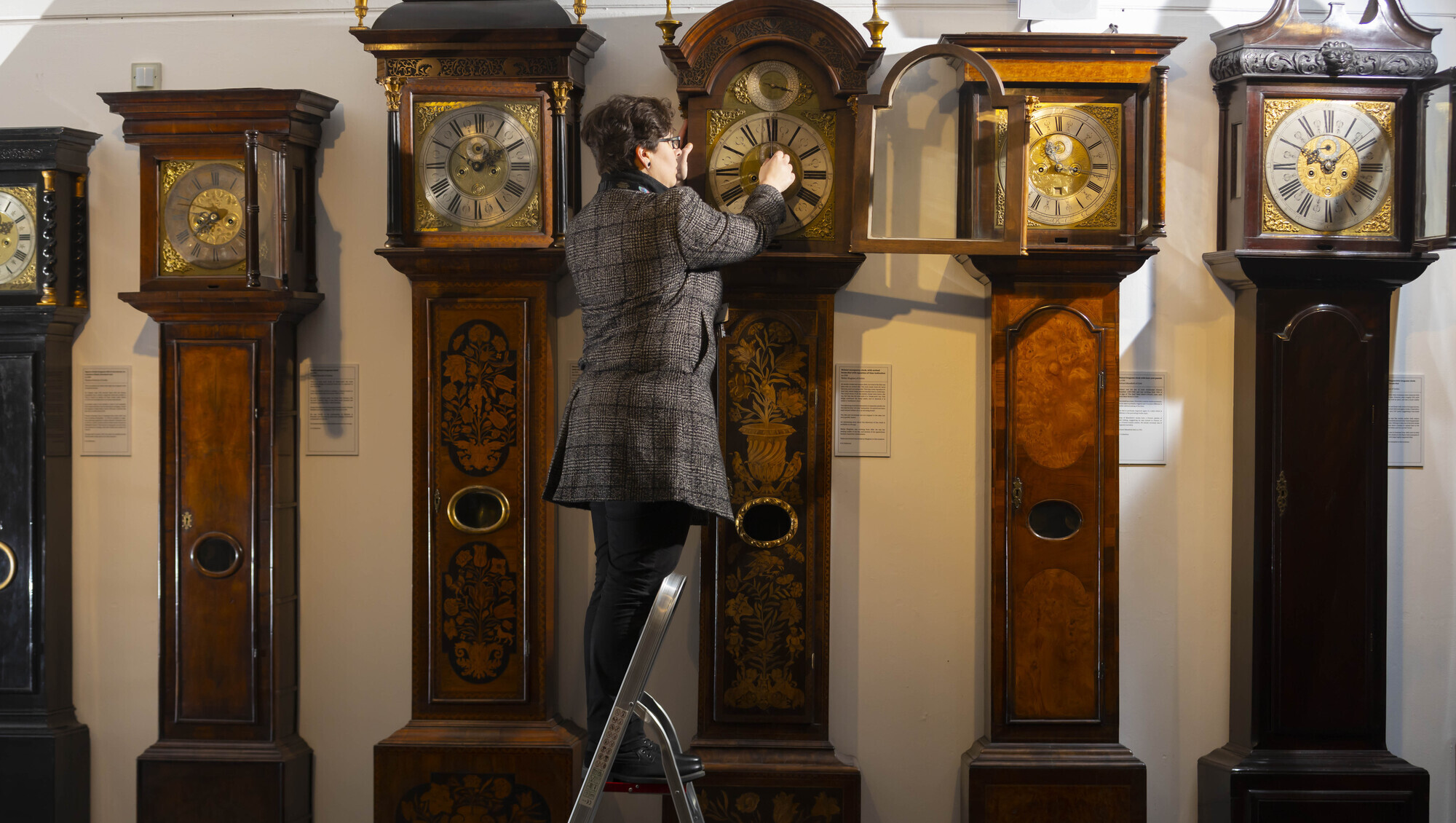
Laura Nugent, volunteer programme coordinator for the Museum of Time. Picture: Patrick Browne
The clocks going back on Sunday might be a nightmare for some, with darkness set to increasingly engulf the nation for the majority of the day — for those who relish a lie in at least.
But it could be worse, we gain an hour and we are not left figuring out how to turn back time on radios, phones, and clocks, technology does it for us and we soon learn to live with and decipher the incorrect time in our cars.
The same can’t be said for the Museum of Time in Waterford, where some 40 clocks out of about 1,000 will have to be rewound — an intense and delicate operation that takes hours.
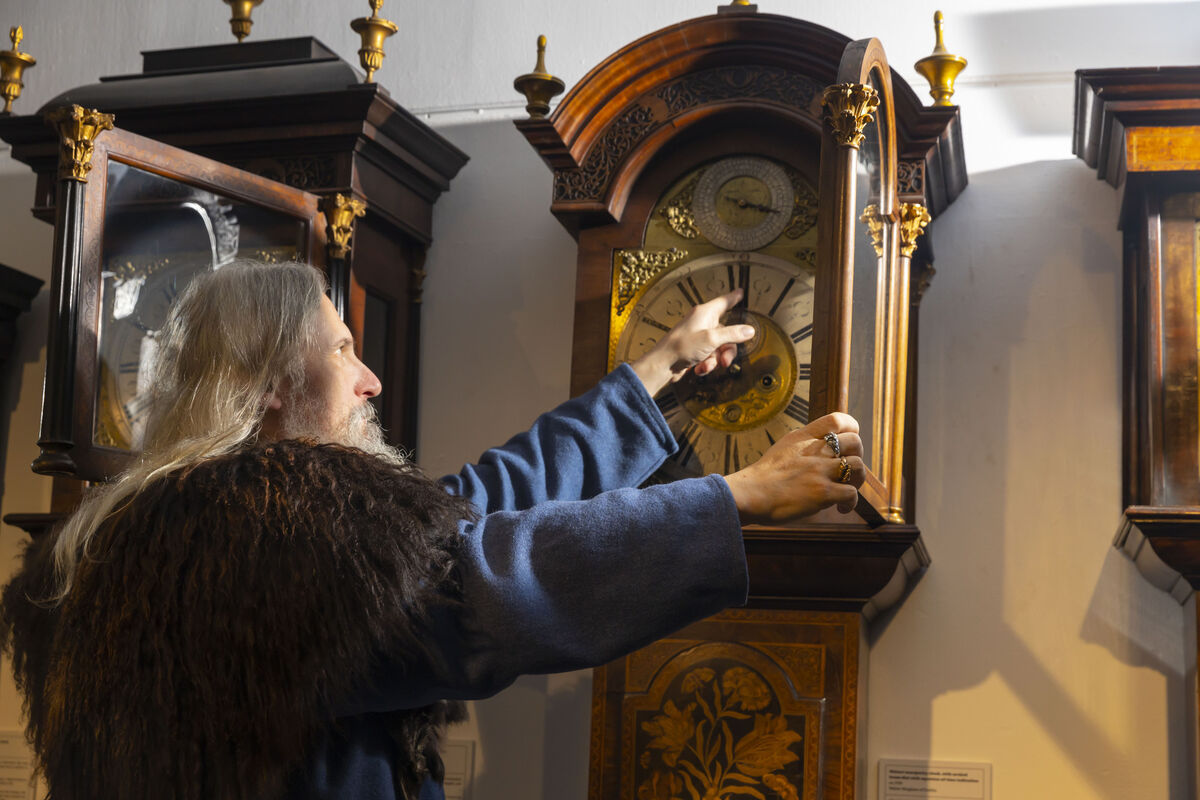
“There’s only two people allowed go at the clocks because they’re quite temperamental and there’s little quirks with certain clocks when you wind them,” said volunteer guide Brian Jacob.
“Most of them are eight-day clocks, so about 40 will get wound and changed this weekend, and it takes a few hours to do them all,” he said.
Although thinking at first the museum might cater to a more niche audience, acting curator/manager at Waterford Treasures Museums Rosemary Ryan said the response has been “phenomenal”, with the time museum now being one of the busiest museums in Waterford.
Ms Ryan said the Museum of Time is the only museum on the island of Ireland dedicated to horology, with over 1,000 clocks and watches on display.
It receives visitors from across the country and abroad.
The clocks are meticulously displayed in their historical context, recreating detailed setups from previous centuries.
The majority of the clocks and watches were donated by lifelong collectors David Boles and Colman Curran.
One stand-out piece is a bracket clock made in London by William Clement.
“It’s the oldest clock in the world with an anchor escapement that we had a secure date for which is 1663,” she said.
An anchor escapement is what makes a clock tick and the clock in particular was bought by Mr Boles from a family in Waterford.
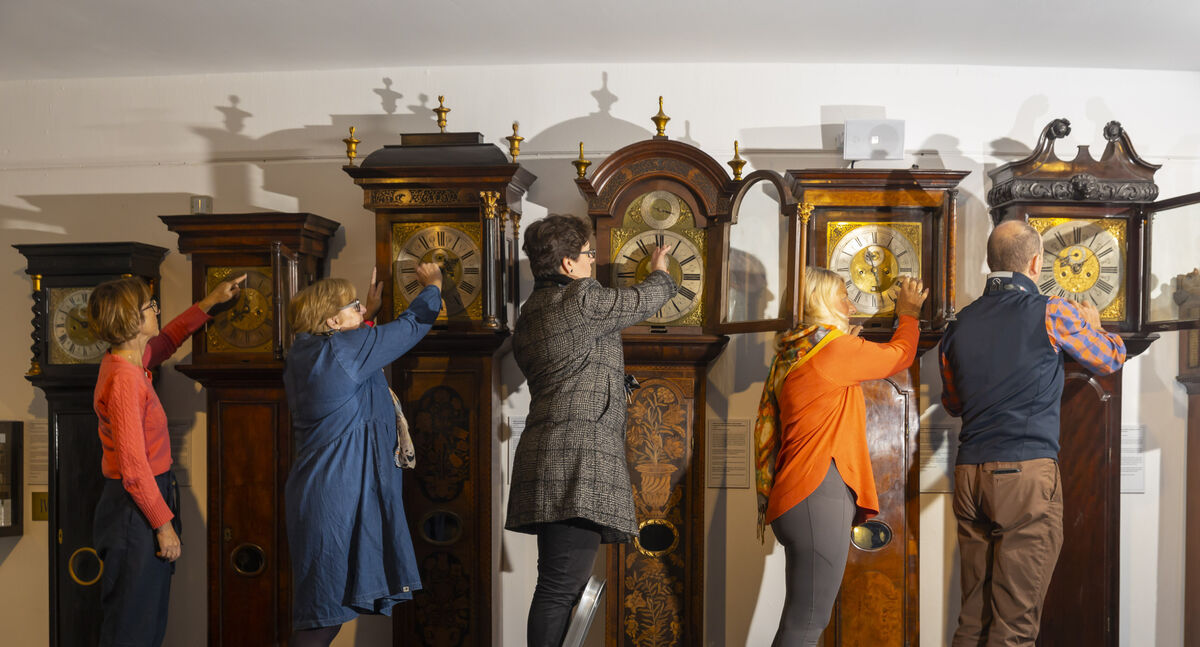
Among those who volunteer at the museum are Mary O’Reilly and Deirdre Power.
“When I went in, I was just completely sucked in. It’s a beautiful place to be,” Ms O’Reilly said.
Although not having a huge interest in horology, Ms Power said she popped in one day and was “totally hooked”.
“I love it, it’s so interesting — this historical perspective on where people who made the clocks came from, and time is really interesting as well,” she said as chimes rang behind her.
Although now a horology enthusiast, Ms Power is not entirely enthusiastic about the clocks going back.
“I do like it being bright in the mornings, but I hate the dark nights. I definitely suffer from SAD (seasonal affective disorder), and I’ve said it for 40 years, but no one believes me,” she said, laughing.

CONNECT WITH US TODAY



Be the first to know the latest news and updates