Extending shelf-life of donated blood 'could boost supply'
Extending shelf-life of donated blood 'could boost supply'

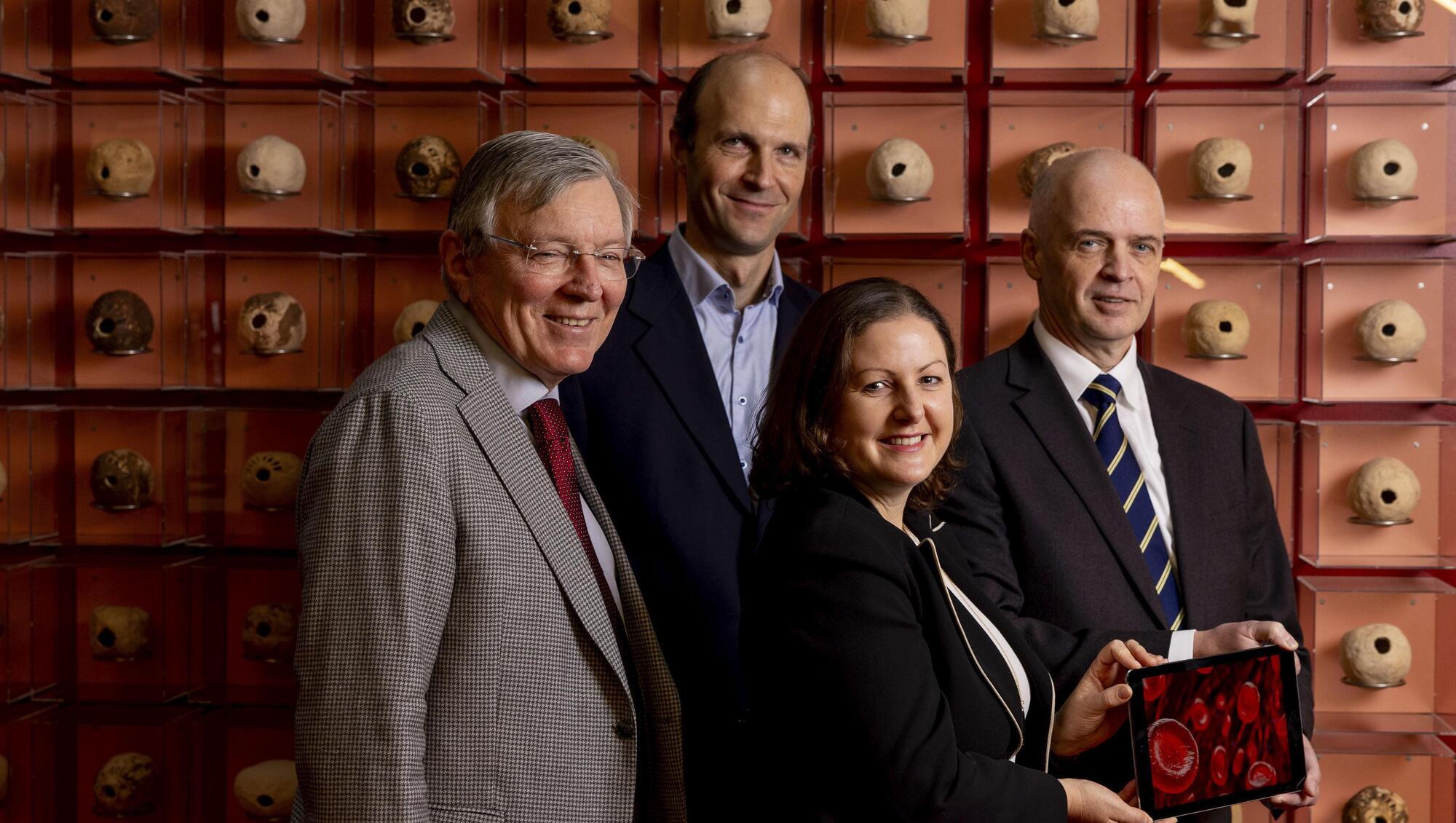
Tor Hervig of IBTS, Ingmar Schoen of RCSI, Allison Waters of IBTS, and James O’Donnell of RCSI at the launch of the new partnership between RCSI and IBTS which aims to make blood products for transfusions more available and more useful for patients. Picture: Conor Healy/Picture It Photography

Extending the shelf-life of donated blood products beyond seven days could increase vital supplies, according to an Irish research project hoping to safely achieve this.

The risk of shortages was seen when an emergency call-out for donors was made on Sunday with only three days' supply of some bloods remaining. 

Matching supplies of blood and blood products called platelets to demand is the issue, said Irish Blood Transfusion Service (IBTS) research and development lead facilitator Allison Waters.

“One of the main patient groups they would serve would be cancer patients,” said Dr Waters, referring to platelets. 

“They only have a seven-day shelf-life and they are stored at room temperature, but there are other newer ways of producing and storing the platelets.” 

Researchers at Royal College of Surgeons Ireland (RCSI) University of Medicine and Health Sciences and the IBTS are hoping to find ways of safely storing donations for longer.

“We really want to understand if we store some platelets at 4 degrees, what actually happens to them,” she said.

“Are they more active, less active? We know they will change shape so does that actually matter? What kind of patient group would they be best for? 

"Current thinking is that cold-storage platelets might be really good for trauma patients and they are a better product for immediately stopping blood loss.

If you can store products for longer, that means you have a better handle on the supply and demand of your blood products.” 

At the moment, cold-stored platelets are not licenced for use in Europe, she said.

“We would be hoping to publish academic publications over the next year. The goal then is for this to be a long-term partnership for the next five years and to be working in this area.” 

Dr Waters estimated it will take “ a long time” before cold-stored platelets might be used here. 

“I would expect probably within the next five years that we will see more and more understanding and applications for this.” 

The partnership will also look at the role blood type plays in how platelets work. 

Haematologist James O’Donnell said: “We will explore how blood group affects the function of platelets and other factors involved in blood clotting.

"This will allow us to understand how blood products of different blood types could be used optimally for patients who are bleeding and who need help to stop that bleeding.” 

This first joint research initiative between RCSI and the IBTS is known as Crimson (Centre for Research Into Major Haemorrhage and Transfusion). The principal investigators are Prof O’Donnell and Ingmar Schoen at RCSI and Dr Waters and Tor Hervig at IBTS.

The project will lead to "improvement of blood products and transfusion services in Ireland and worldwide", said RCSI deputy vice chancellor for research and innovation Fergal O'Brien. 

Blood shortage

This week's shortages of Rhesus-negative blood are linked to high demand from hospitals, an increase in illness among existing donors, and worsening weather, the IBTS said.

IBTS director of donor services and logistics Paul McKinney called on donors to make an extra effort to attend.

  • Find out where to give blood on the IBTS website. 

More in this section

Lunchtime News

Newsletter

Keep up with stories of the day with our lunchtime news wrap and important breaking news alerts.

Cookie Policy Privacy Policy Brand Safety FAQ Help Contact Us Terms and Conditions

© Examiner Echo Group Limited