600 year-old 'sliotars' and a medal for Austin Stack among exhibits at new GAA exhibition
600 year-old 'sliotars' and a medal for Austin Stack among exhibits at new GAA exhibition

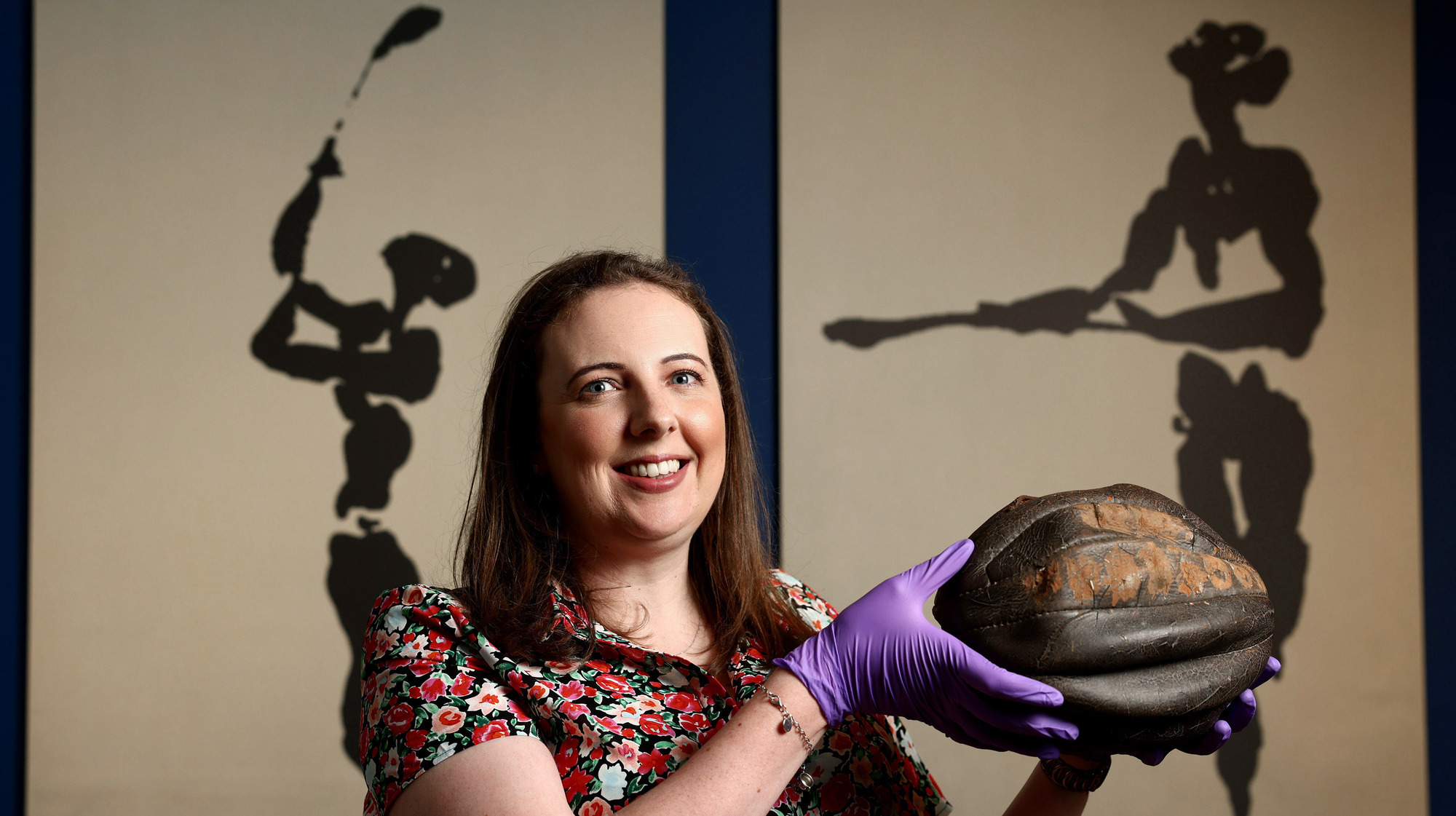
Dr Siobhán Doyle, Curator of GAA: People, Objects & Stories, shows off a rugby football used by the prisoners to play Gaelic football in Frongoch internment camp in Wales in 1916. Picture: Marc O'Sullivan

A 10-carat gold GAA medal made in New York dating back to 1936, 600-year-old hurling balls made from matted cow hair, and a medal presented to Austin Stack are among the many exhibits at a new exhibition charting the GAA's influence.

‘GAA: People, Objects and Stories’ was unveiled at the National Museum of Ireland on Wednesday morning.


Despite the association being founded in 1884, the oldest objects on display include hurling balls made from matted cow hair with plaited horsehair dating back to the 15th century. These items were found in bogland areas in Co. Kerry, Mayo, and Limerick.

A rugby football used by the prisoners to play Gaelic football in Frongoch internment camp in Wales in 1916, a hurl owned by Michael Collins and a handball said to have been used by Eamon DeValera when he was interned at Kilmainham Gaol in the Irish Civil War. Picture: Marc O'Sullivan

Also on display is a rugby ball used by the prisoners to play Gaelic football in Frongoch internment camp in Wales in 1916 and a hurl owned by Michael Collins.

The presentation was created by Dr Siobhán Doyle, NMI’s Curator of Glass, Ceramics and Asian Collections. She is also the author of A History of the GAA in 100 Objects, which was published last year.

Dr Doyle said all of the objects are accompanied by narratives that illustrate their significance in the history of the GAA, and in Ireland.

“Whether it’s the evolution of camogie uniforms for women, or the rugby ball that was used in the Frongoch internment camp, they all tell a story of the GAA’s unique influence and role in Irish history right up to the current day.

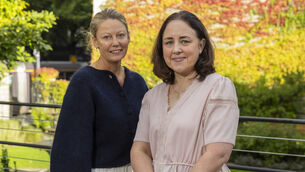
Director of the National Museum of Ireland Lynn Scarff (left) and Dr Siobhán Doyle with a yellow sliotar used in the 2020 All-Ireland senior hurling final between Limerick and Tipperary, which marked the first game in which the yellow sliotar replaced the traditional white sliotar. Picture: Marc O'Sullivan

“We are also inviting visitors to the exhibition to share their own GAA memories and images with us, so that they can be preserved for future generations.” 

Other objects on show include a Medieval Mether, which was discovered at Corran in Co. Armagh. The design of the Liam MacCarthy cups is based on wooden methers, which are in the National Museum of Ireland’s permanent collection.

Also on show is a 10-carat gold GAA medal made in New York which dates back to 1936. It is believed to have been presented to one of the players from the Cavan football team or Limerick hurling team that travelled to play in New York in Yankee Stadium.

Director of the National Museum of Ireland Lynn Scarff (left) and Dr Siobhán Doyle with a handwoven tweed camogie dress worn by Maeve Gilroy in the 1960s during a successful decade for Antrim camogie. Picture: Marc O'Sullivan

Another artefact is a 1960s handwoven tweed camogie dress worn by Maeve Gilroy during a successful decade for Antrim camogie.

Ms Gilroy was later presented with the Cú Chulann camogie award in 1956 and went on to become a respected coach and referee.

A medal presented to Irish nationalist politician, militant republican and political prisoner, as well as celebrated athlete, Austin Stack is also on view.

The piece is believed to be from his time as captain of the Kerry football team which won the Croke Cup competition in 1904-05.

Minister of State for Sport and Physical Education, Thomas Byrne attended Wednesday's opening ceremony.

Minister of State for Sport and Physical Education Thomas Byrne at the launch of GAA: People, Objects & Stories in the National Museum of Ireland – Decorative Arts & History, Collins Barracks. Picture: Marc O'Sullivan

He said: “The GAA is a great national institution which has carved out a special place in Irish society.

“At its heart, the GAA is a community as well as a sporting organisation and its clubs provide an invaluable outlet for sport, physical activity and social activity in every town and village in Ireland.

“The GAA has brought its sense of community and Irish identity abroad, and the association continues to thrive amongst the Irish diaspora and, indeed, new communities around the world. As the association looks ahead to its 140th anniversary, I think it is timely that our National Museum has developed this unique exhibition which I am sure will be extremely popular and provide new insights into both the GAA and Irish life through the years.” 

Tom Ryan, Ard Stiúrthóir of the GAA said: “We are acutely aware of the reach of the GAA into everyday lives, not only across the island of Ireland but right around the globe and the fascinating gathering of artefacts overseen by Dr Siobhán Doyle bears this out.

Minister for Sport and Physical Education Thomas Byrne (left) with Director of the National Museum of Ireland Lynn Scarff look at the baseball cap worn by one of the most successful managers in the history of hurling, Brian Cody, when he was Kilkenny senior hurling manager from 1999-2022. Picture: Marc O'Sullivan

“In many ways the GAA and our games present a mirror image of Ireland and its people and to that end it is no surprise to see that many of the exhibits are normal everyday possessions that one would expect to find in the average Irish home, albeit with a collector’s twist.

“Many of us derived huge enjoyment from Dr Doyle’s book and I warmly welcome the composition of this exhibition which I have no doubt will prove fascinating for GAA members and non-members alike.” 

"The exhibition is open to the public who are invited to engage with the display by sharing their own memories."

More in this section

Lunchtime News

Newsletter

Get a lunch briefing straight to your inbox at noon daily. Also be the first to know with our occasional Breaking News emails.

Cookie Policy Privacy Policy Brand Safety FAQ Help Contact Us Terms and Conditions

© Examiner Echo Group Limited