Call for families of missing persons to have their DNA added to international database
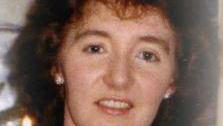
Priscilla Clarke went missing while horse-riding with her employer, Lynda Kavanagh, in Wicklow in 1988.
Families of missing people across the country are being asked for permission to have their DNA added to a database aimed at identifying missing persons based on international DNA kinship matching.
The I-Familia database was launched last year by Interpol.
Now, gardaí are sifting through Irish missing persons files, identifying unsolved cases which could benefit from sharing DNA to the international database.
Those most likely to benefit from the database will be people whose remains are believed to be at sea, and who could have been washed out of Irish waters by tidal movements.
In recent days, gardaí confirmed remains discovered in Scotland in July were those of Donegal man Daniel McLaughlin, a 74-year-old man missing from his home in Quigley’s Point. His remains were identified through DNA.
In another case in 2020, a Dublin man, Patrick Healy, was identified 34 years after he disappeared from his home in the capital. A month after his disappearance, his remains were washed up on a beach in Cumbria but could not be identified until a DNA breakthrough in 2020.
One of the cases which has been identified as being worth including on the database is that of Priscilla Clarke, who went missing while horse-riding with her employer, Lynda Kavanagh, in Wicklow in 1988. Mrs Kavanagh’s body was recovered from the River Dargle two days later but Ms Clarke has never been found.
A cold case review of her disappearance was opened in 2008 but no progress has been made in finding her.
Her sister Claire Clarke-Keane has now been contacted by investigating gardaí who sought her permission to share her DNA profile onto the database in the hope of bringing closure to the case.
She welcomed the use of the database facility by gardaí, saying: “Any tool that moves every case forward, not just Priscilla’s case, has to be welcomed.”
And while she accepts it may not be able to help her locate Priscilla’s remains, she said: “There are lots of new tools out there that can be used and should be used. It might not work for Priscilla but it might for some other person.”
Ms Clarke is among more than 800 people currently missing in Ireland.
A Garda spokesman said: “The I-Familia database is used when the DNA profile of the missing person cannot be obtained. Each missing person investigation is unique. The circumstances of each individual investigation will determine whether the family of a missing person is contacted.”
According to Interpol, DNA profiles are being submitted by the network’s 194 member countries to make links between missing persons and cases related to human remains.
It outlines that I-Familia is made up of three components — a dedicated global database to host the DNA profiles provided by relatives, held separately from any criminal data; DNA matching software, and interpretation guidelines, produced by Interpol, to efficiently identify and report potential matches.
Earlier this year, the Department of Justice unveiled a database containing details of 44 human remains which lie unidentified in different parts of the country.
It is hoped collating the data regarding unidentified remains across the country could help result in the closing of some missing persons cases. Interpol has also been contacted in relation to some of those cases.
Ms Clarke-Keane now hopes the use of the Interpol DNA database will be an extra asset in the efforts to reunite families with their missing loved ones.

CONNECT WITH US TODAY



Be the first to know the latest news and updates