Government hoping to finalise windfall tax on energy companies

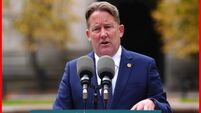
Environment Minister Eamon Ryan is hoping that new proposals can overcome technical issues in the legislation on taxing energy company profits. Picture: Gareth Chaney/ Collins Photos
The Government is set to approve measures to ensure that a windfall tax on energy companies is introduced before the Dáil's summer recess.
Environment Minister Eamon Ryan is due to bring the proposal to Cabinet this morning in a bid to get around technical issues which have caused delays.
The plan, which would split the previously approved Energy (Windfall Gains in the Energy Sector) Bill 2023 in two, is being brought forward due to a technical issue caused by the legislation’s complexity.
This means that the windfall tax will be introduced before the Government moves to place a cap on market revenues made by energy companies. It is understood that this bill will be published in mid-July, with plans to enact the legislation after the summer recess.
While the legislation will not be passed until later this year, both the windfall tax and revenue cap will be applied retrospectively.
It is expected that the windfall tax will generate between €280m and €600m for the Exchequer.
Revenue collected through the windfall tax on energy companies is expected to be used by the Government to assist households with energy costs in Budget 2024.
The Cabinet is also due to hear from Tánaiste Micheál Martin, who will seek approval to continue the Defence Forces' participation in a peacekeeping mission in Syria.
Mr Martin is seeking to extend Ireland’s participation in the UN mission until March or April of next year, with troops then due to withdraw.
The United Nations Disengagement Observer Force (UNDOF) is a peacekeeping mission tasked with maintaining the ceasefire between Israel and Syria, following the 1973 Yom Kippur war.
It was initially established in 1974 by the UN Security Council, with Ireland first becoming involved in the mission in 2013.
At present, there are 138 Defence Forces personnel on the ground in Syria following their deployment in April.
Mr Martin will also look for approval to allow up to 13 Defence Forces members to work with UN peacekeepers in Kosovo for another year.
Additionally, Health Minister Stephen Donnelly is due to bring a memo to Cabinet on the flu vaccination programme for this winter.
Mr Donnelly is set to detail the impact of the vaccination programme on the health service, due to the pressure placed on both hospital and community healthcare settings due to the flu.
The Cabinet is expected to approve the programme, which will provide free vaccinations to all adults aged 65+, children aged between two and 12, and at-risk groups.
People seeking to access the vaccine will be able to receive their inoculation at any participating pharmacy.
Meanwhile, Public Expenditure Minister Paschal Donohoe is to update his Cabinet colleagues on Brexit Adjustment Reserve (BAR) funding.
The memo will focus on the engagement that has taken place with the EU Commission with regard to investment in Rosslare Harbour. It will also give further consideration to matters relating to the EU’s plan to rapidly phase out EU dependency on Russian fossil-fuel imports.
The plan aims to boost the independence and security of the union’s energy supply.
CONNECT WITH US TODAY



Be the first to know the latest news and updates