Moths need similar protection to bees, research finds
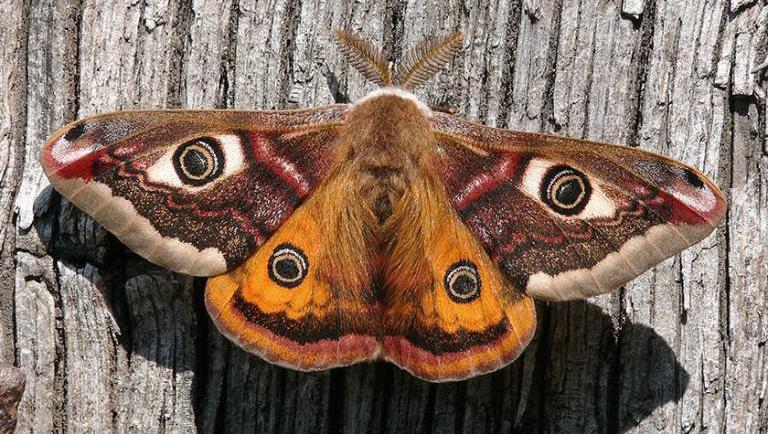
An emperor moth. Scientists found that nocturnal pollinators like moths potentially visit the same number of plants that bees do during the day.
It may be just as important to protect moths and other night-time pollinators as bees, new research suggests.
University of Sheffield scientists found that nocturnal pollinators like moths potentially visit the same number of plants that bees do during the day.
According to the World Wildlife Fund, nearly 90% of wild plants and 75% of leading global crops depend on animal pollination, with one in three mouthfuls of food depending on pollinators such as bees. Pollinated crops are five times more valuable than those that do not rely on them.
Moths need similar protection to bees, especially in urban settings, the researchers said.
Lead author Dr Emilie Ellis, said: "Our research revealed that as urban areas become more developed, the diversity of pollen transported by both moths and bees diminishes. Consequently, urban pollinators may encounter a reduced availability of floral resources.
"Given that moths and bees are dependent on plants for their survival, it is crucial to recognise that plant populations, in turn, rely on these insects for pollination. Therefore, safeguarding urban green spaces becomes essential.
"By adopting an approach that extends beyond the conservation of bees alone and embraces the support of a diverse range of wildlife, we can ensure the resilience of both bee and moth populations. This, in turn, will contribute to the creation of healthier, greener towns and cities."
The study found that moths carry a greater amount of pollen than previously estimated, and visit a wider range of tree species and fruit crops than previously thought.
There are around 100 bee species in Ireland, and nearly 1,500 species of moth, according to Butterfly Conservation Ireland. For every butterfly species, there are 42 moth species, it added.
CONNECT WITH US TODAY



Be the first to know the latest news and updates