Q&A: What's the problem with the Fair Deal scheme?
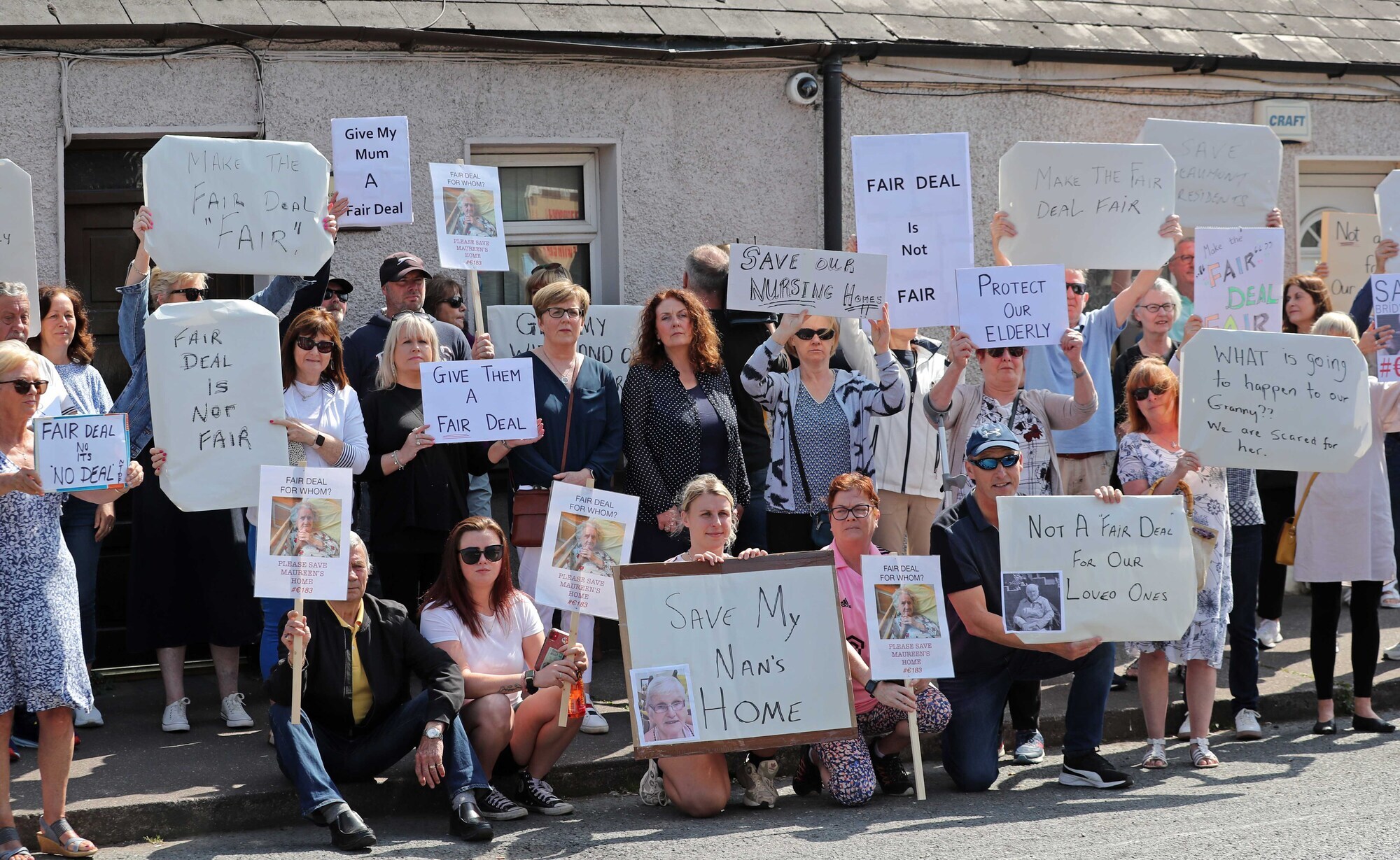
Relatives and friends of Beaumount Residential Care residents protest at the constituency office of Tánaiste Micheál Martin in Cork. The nursing home has opted to leave the Fair Deal scheme. Picture: Jim Coughlan
There are growing concerns about the future of private nursing homes due to issues stemming from the Fair Deal scheme.
Here, we take a look at the scheme, the current issues and what it means for the sector.
The Nursing Homes Support Scheme (NHSS), or Fair Deal scheme as it is known, offers financial support for those being cared for long-term in nursing homes, whether they are public, private or voluntary.
Under the Fair Deal scheme, the person pays a certain amount towards the cost of care and the HSE pays the rest.
The National Treatment Purchase Fund (NTPF) negotiates with registered private and voluntary nursing homes to reach an agreement of the maximum price that will be charged for the provision of long-term residential care.
A deed of agreement is agreed upon and these prices are fixed for the term of the deed, which is generally about two years. There is one set fee per home irrespective of the individual care needs of the residents.
In a report by Hiqa in 2021, concerns were raised the NHSS "is not providing the same level of financial support to private and public nursing homes".
This has been echoed by Nursing Homes Ireland (NHI), which claims HSE nursing homes now, on average, are receiving close to an average €800 extra funding per resident, per week, for nursing home care.
While these homes enter into a deed of agreement, chief executive of NHI Tadhg Daly said when it comes to HSE homes, there is no process of negotiation.
During negotiations, Mr Daly said the nursing home is essentially a price taker because if they do not agree a fee with the NTPS they essentially can not have a nursing home.
There is no ability to renegotiate the fee until the deed of agreement has expired, regardless of the prevailing conditions.
NHI said there have been 24 nursing home closures over the past 18 months, which it claims is a result of the funding disparity.
As well as this, some nursing homes — including Beaumont Residential Care in Cork — are choosing to leave the scheme.
Mr Daly said the failure of the NTPF to address these issues is now impacting the sector's ability to be sustained and will have wide-reaching consequences for nursing homes, older people and the health service.
The fee disparity also impacts on the home's ability to meet costs, including wages for staff, who may opt to leave the sector.
In the long term, Ireland's ageing population will find it difficult to avail of long-term residential care if nursing homes closures continue at the current rate.
Mr Daly has called for an immediate additional budgetary provision to stabilise the existing provision of services.
Current deeds of agreement should be reopened in order to take into account spiralling cost pressures, he said.
In the longer term, the NHI has lobbied for an independent appeals process. Currently, if a nursing home fails to agree a rate with NTPF, it goes forward for an internal review.


CONNECT WITH US TODAY



Be the first to know the latest news and updates