HSE urge people to be wary of ticks ahead of busy season
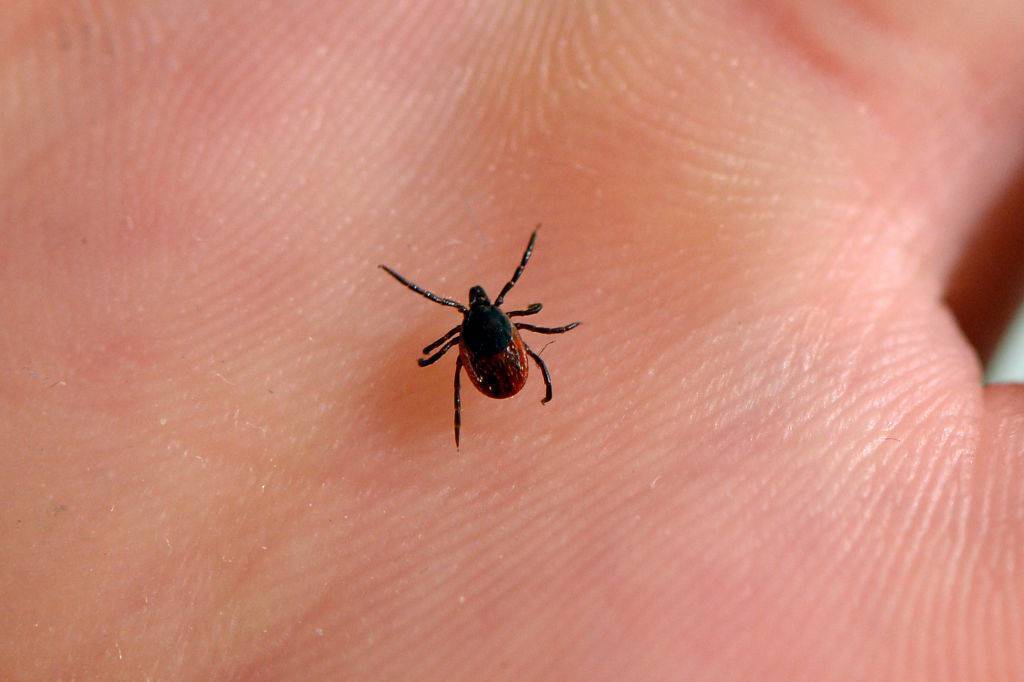
Ticks on the skin can cause lyme disease. Picture: BERTRAND GUAY/AFP via Getty Images)
The HSE's Health Protection Surveillance Centre (HPSC) has issued a reminder to the public on how to protect themselves from Lyme disease as part of Tick Awareness Day.
They have called for people to be proactive and avoiding tick bites, which can cause the disease.
Advising people to be aware over the coming months, specialist in Public Health Medicine Paul McKeown said: "People are more likely to spend time outdoors in the spring and summer months.
"Anyone who spends time outdoors should protect themselves against tick bites. This includes ramblers, campers, mountain bikers, people who work or walk in woodland, parkland and heathland, especially in grassy areas. Preventing tick bites prevents Lyme disease.”
Ticks are present everywhere in Ireland, including both urban and rural areas and are active from spring to autumn.
They are tiny spider-like creatures that feed on the blood of humans, animals and birds, and are more numerous and more active in the summer months.
Tick bites can be prevented by:
- Wearing long trousers, long sleeved shirt and shoes
- Wearing a hat and tuck in hair
- Using an insect repellent (preferably containing the active ingredient DEET)
- Checking skin, hair and warm skin folds (especially the neck and scalp of children) for ticks, after a day out
- Checking for ticks and removing any from your pets/ clothing/ outdoor gear
- Removing any ticks and consulting with a GP if symptoms develop.
Ticks will bite adult humans most commonly on the legs and also the arms, but they can bite on any part of the body, especially warm and sweaty parts of the body not covered by clothing.
In children, ticks are most likely to bite around the head and neck. These are the areas to cover up and protect. These are also the areas to check following time spent outdoors. You can even check yourself and your children during the day.
The most common sign of infection is a skin rash (known as Bullseye rash or erythema migrans). In a small number of cases however, the infection can be more severe, leading to serious nervous system, heart and joint disease.
Dr McKeown added: "Anyone who develops a rash or other symptoms should visit their GP and explain that they have been bitten by a tick. If you think you may have been bitten by a tick and you develop a skin rash speak to your GP. Your GP may prescribe antibiotics if it is likely to be Lyme disease, which will clear the infection,"
The entire tick, including its mouthparts which might break off, should be removed with a tweezers by gripping it close to the skin. The skin where the tick was found should then be washed with soap and water and the area checked over the next few weeks for swelling or redness.

CONNECT WITH US TODAY



Be the first to know the latest news and updates