Climate scientists warn heatwaves to last longer causing more 'heat stress'
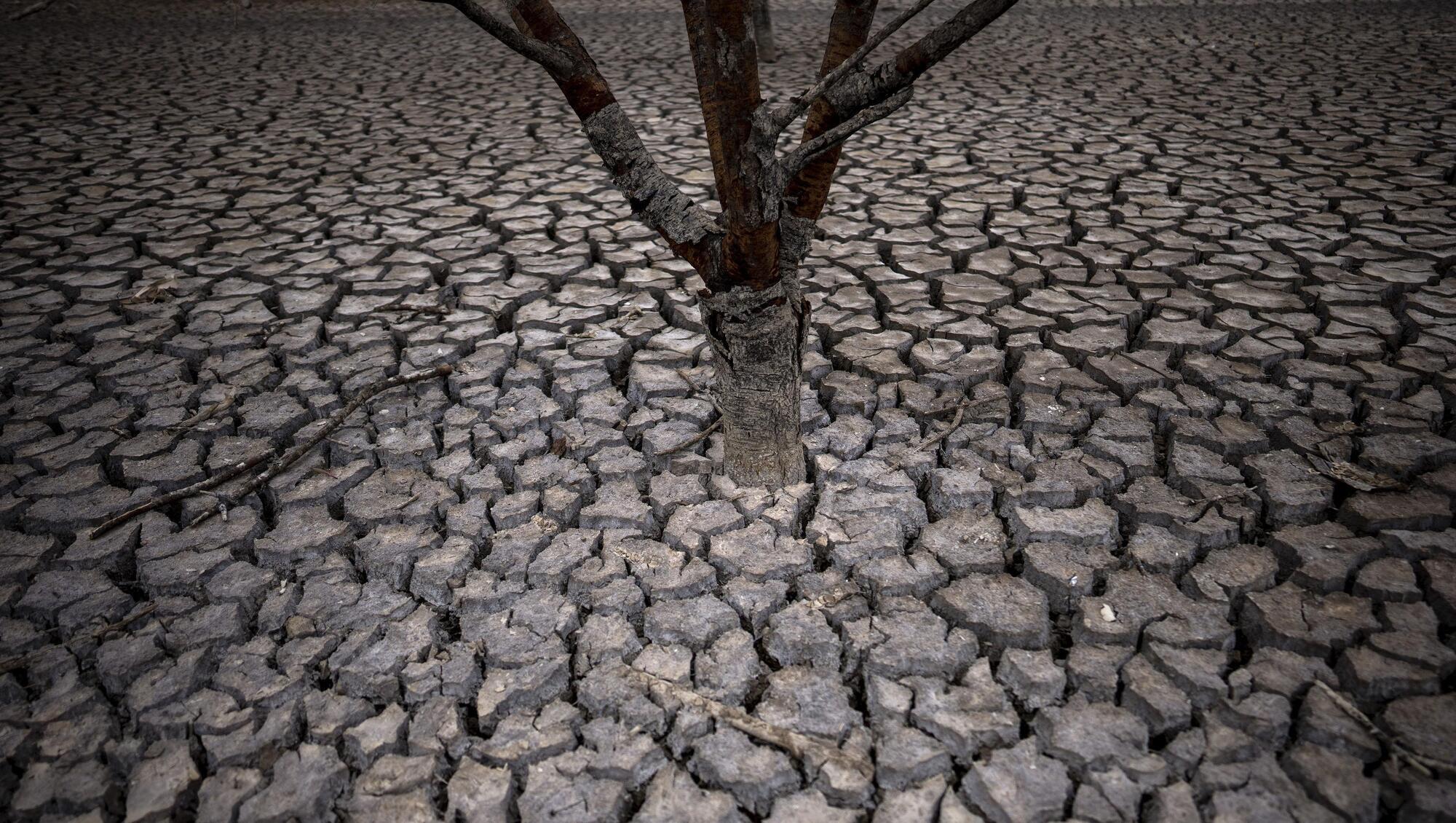
Cracked earth after the water level dropped in the Sau reservoir, about 100 km ( north of Barcelona, Spain. Pictures: AP
Heatwaves are more likely to last longer, leading to potentially deadly spikes in so-called "heat stressed" people across Europe, EU climate scientists have warned.
Last year was the continent's second warmest year on record. It included its hottest-ever summer at just under 1.5C above the recent average, a record loss of ice from glaciers in Europe, and the highest greenhouse gas emissions in the past 20 years.
The European State of the Climate 2022 from the EU's Copernicus Climate Change Service, known as C3S, said last year was "unprecedented" in terms of heatwaves and drought across the continent.
Southern Europe experienced the highest number of days with ’very strong heat stress’ on record, while low rainfall and high temperatures led to widespread drought, it said.
CLIMATE & SUSTAINABILITY HUB
Heat stress is when the body cannot get rid of excess heat, leading to a rising of core temperature and heart rate.
Outdoor workers and vulnerable people are particularly exposed to the effects of heat stress, which can lead to confusion and loss of consciousness, seizures, and even death in extreme cases.
Extremes in heat during the late spring and summer of 2022 resulted in hazardous conditions for human health, C3S said.
Due to the extreme heatwaves during summer, southern Europe experienced a record number of days with ‘very strong heat stress’, it said.
It added that "Europe is seeing an upward trend in the number of summer days with strong or very strong heat stress, and in southern Europe the same is seen for extreme heat stress".
Conversely, there is also a decreasing trend in the number of days with no heat stress, C3S said.
Deputy director of C3S, Dr Samantha Burgess, likened the increasing threat from heat stress to a deck of cards, where climate change is removing the amount of black cards representing cooler days, and adding the number of red cards representing warmer days.
The lack of winter snow and the high summer temperatures resulted in a record loss of ice from glaciers in the Alps, equivalent to a loss of more than five kilometres cubed of ice, the report said.
Widespread and prolonged drought affected several sectors such as agriculture, river transport, and energy, it added.
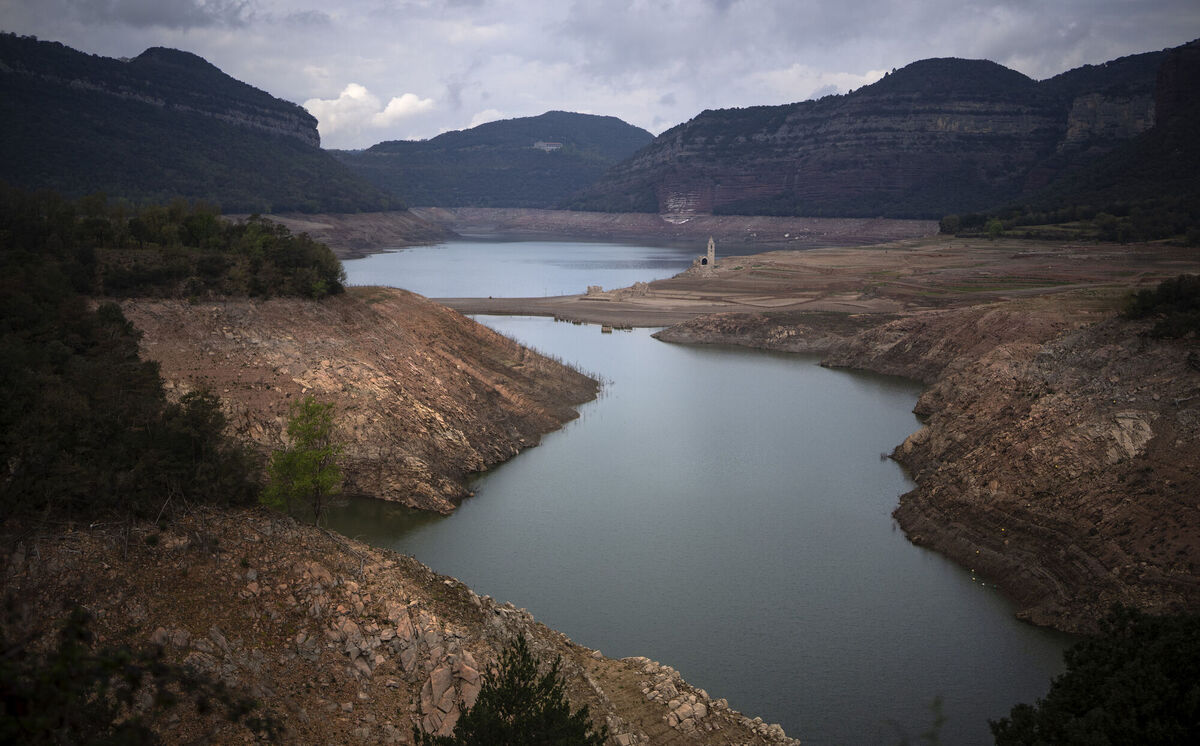
Last year was the driest year on record, with 63% of Europe’s rivers seeing lower-than-average flows, the data shows.
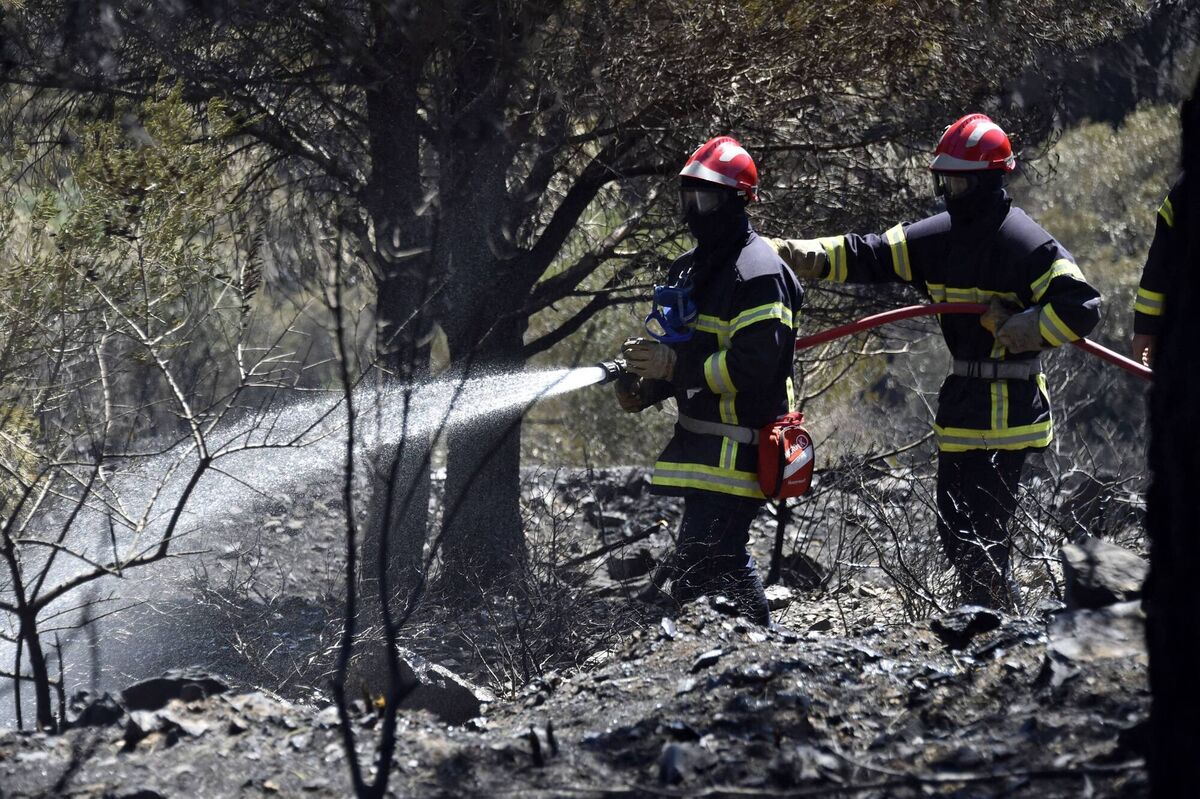
France, Spain, Germany, and Slovenia experienced their highest summer wildfire emissions for at least the last 20 years, with southwestern Europe seeing some of the largest fires on record in Europe, C3S said.
Director of C3S, Carlo Buontempo, called the report alarming.
"It highlights alarming changes to our climate, including the hottest summer ever recorded in Europe, marked by unprecedented marine heatwaves in the Mediterranean Sea and record-breaking temperatures in Greenland.
"Understanding the climate dynamics in Europe is crucial for our efforts to adapt and mitigate the negative impacts climate change has on the continent," he said.


CLIMATE & SUSTAINABILITY HUB
CONNECT WITH US TODAY



Be the first to know the latest news and updates