Maternity care campaigners call for end to pandemic restrictions
Maternity care campaigners call for end to pandemic restrictions

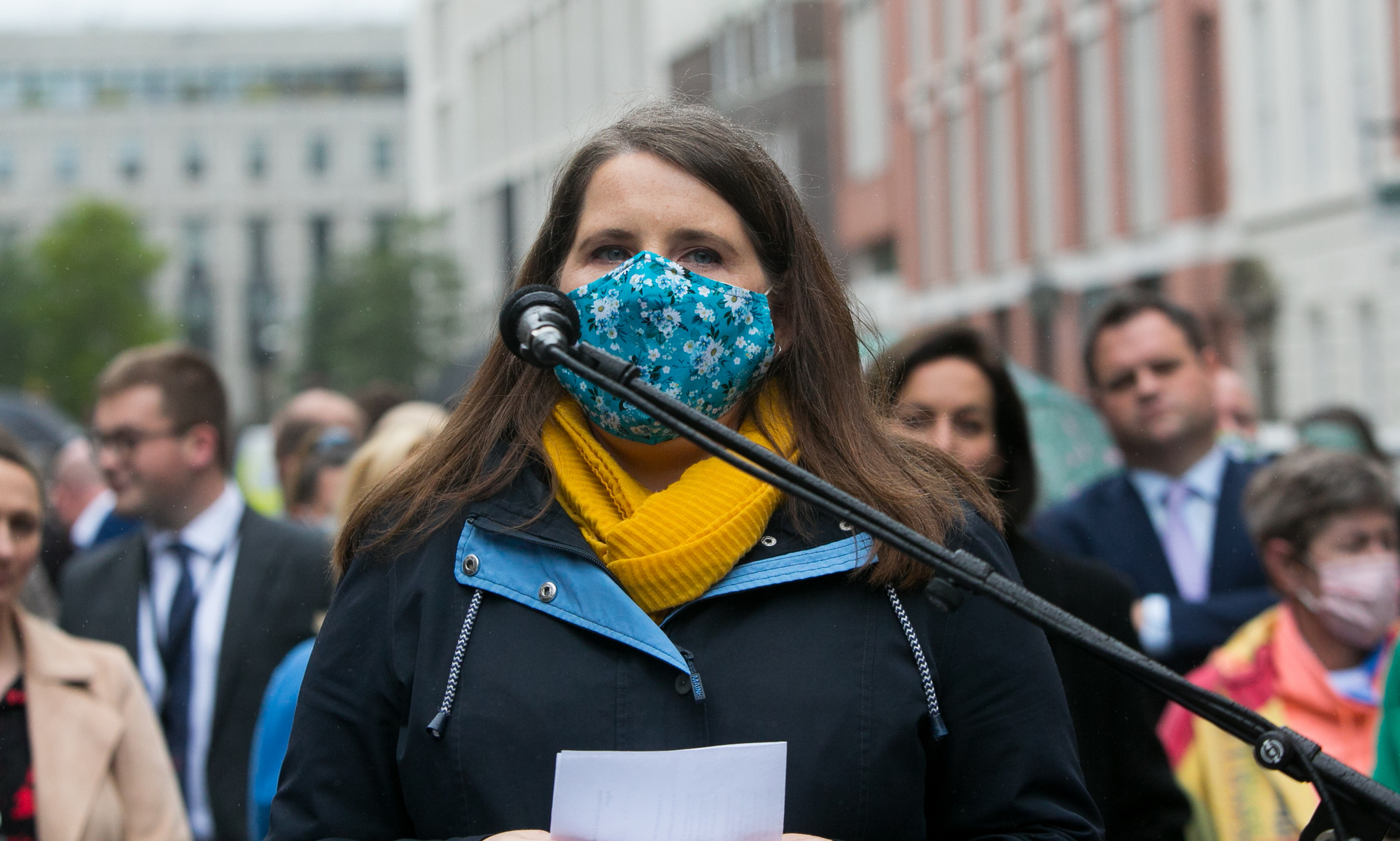
Linda Kelly during a Better Maternity Care protest at Leinster House in 2021 which called for an end to partner restrictions in maternity care. File picture: Gareth Chaney/Collins

Maternity care campaigners have called for final pandemic restrictions around visiting to end next week along with mask mandates in hospitals.

Cork advocate Linda Kelly, of Better Maternity Care, gave birth during the covid pandemic. She actively highlighted the negative consequences of partner and visiting restrictions for women and their families. 

“Of particular concern to campaigners is the ongoing exclusion of partners from antenatal appointments and assessment units, and the total ban on older siblings coming to visit their new brother/sister,” she said.

“This is having a significant, negative impact on families at what should be a joyous, happy time.” 

National guidance around visiting was developed during the pandemic between campaigners and senior HSE executives including Martin Cormican, she said, but this engagement has now ended.

“After much pressure and public outcry, restrictions were finally eased somewhat in line with evidence and infection control best practice,” she said.

“But, unfortunately, most units still have some restrictions in place.” 

From Wednesday, mask-wearing will no longer be mandatory in hospitals, except in certain circumstances. She described this as “another significant step in the post-covid environment” for the public.

“The partner and visiting restrictions still being imposed by hospitals need to be addressed,” she said. 

There is no justification for continuing to isolate women when accessing maternity services.” 

Meanwhile, submissions to The Lancet Respiratory Medicine journal have discussed the best way to treat long covid. 

London School of Economics associate professor Flora Cornish was critical of approaches suggesting that patients worsen by focusing on their symptoms too much.

“People with post-covid-19 condition report that some of their greatest challenges in securing clinical, workplace, and family and friend support lies in the dismissal of their condition, reinforced by assumptions that their symptoms are self-generated,” she said.

In a co-written article, she said: “To engage patients, a patient-centred perspective, rather than a physician-centred perspective, calls for listening to patients’ experience.” 

The submission added: “Patients typically report surprise and bafflement at their post-covid-19 condition symptoms, often believing themselves recovered before having recurrent or new symptoms.” 

A submission co-written by University of Aarhus researcher Søren Sperling suggested a causal model of factors as including catastrophising and avoidant illness behaviours along with ongoing immune changes and respiratory changes.

“Despite intense research in the area, no clear pathogenesis has been established that can explain the full range of long covid symptoms,” he wrote. 

The paper argued that not integrating biological, psychological, and social treatment could “contribute to poor care and stigma for people who are ill in these specific ways”.

More in this section

Lunchtime News

Newsletter

Keep up with stories of the day with our lunchtime news wrap and important breaking news alerts.

Cookie Policy Privacy Policy Brand Safety FAQ Help Contact Us Terms and Conditions

© Examiner Echo Group Limited