Animal attacks on humans to surge as climate change forces a battle for living space

A mischievous lion cub approaches a photographer in Tanzania.
Animal attacks on people are set to increase in the coming decades as climate change plays havoc with habitats in the wild and forces creatures into human settlements.
Scientists have warned that lions, sharks, bears, and the world's most venomous snakes are far more likely to end up in conflict with humans as both vie for living space in the future.
In a study published in the journal, researchers at the University of Washington’s (UW) Center for Ecosystem Sentinels found that a warming world is increasing human-wildlife conflicts.
UW assistant professor of biology and lead author Briana Abrahms said: "We found evidence of conflicts between people and wildlife exacerbated by climate change on six continents, in five different oceans, in terrestrial systems, in marine systems, in freshwater systems — involving mammals, reptiles, birds, fish and even invertebrates. Although each individual case has its own array of different causes and effects, these climate-driven conflicts are really ubiquitous.”
Examples cited include torrential floods in Tanzania leading to more lion attacks after their usual prey migrated away from floodplains.
Also in Tanzania, a severe drought struck the western part of the Kilimanjaro region in 2009, reducing food supplies for African elephants, which in turn entered local fields to graze on crops, at times destroying up to three acres daily. Local farmers resorted to killings the elephants to try and stop the movement into their lands.
Higher air temperatures in Australia has triggered more aggressive behaviour in eastern brown snakes, leading to more incidents of snake bites.
The eastern brown snake is notorious for having the second most lethal venom in the world, but because it prefers open spaces like woodlands and tends to stay away from humans, incidents are relatively rare. Even so, their dangerous venom has led to the most fatal snakebites in Australia over the past 150 years.
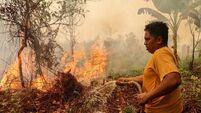
Other indicators of human-animal conflict can be seen in the wildfires in Sumatra, Indonesia that were triggered by El Niño, the climate-warming air phenomenon. Records show that the wildfires drove Asian elephants and tigers out of reserves and into human-inhabited areas, leading to at least one death.
Disruption of terrestrial food webs during the cooling La Niña climate phenomenon, the opposite of El Niño, in the Americas drove black bears in New Mexico and foxes in Chile into human settlements in search of food, the researchers said.
El Niño warmer air and ocean temperatures led to an increase in shark attacks in South Africa, they added.
They warned that these types of conflicts are likely to rise as climate change intensifies, particularly as mass migrations of people and wildlife increase and resources shift.
Dr Abrahms said solutions to the growing problem are possible.
Such measures include public awareness campaigns to carry bear spray while hiking or following Botswana's lead in tackling human-wildlife conflict.
Botswana compensates herders and ranchers for drought-induced attacks by wildlife on livestock, often in exchange for pledges not to engage in retaliatory killings of wildlife, the researchers said.
CLIMATE & SUSTAINABILITY HUB
CONNECT WITH US TODAY



Be the first to know the latest news and updates