Q&A: What is a Sudden Stratospheric Warming and how will it affect Irish weather?
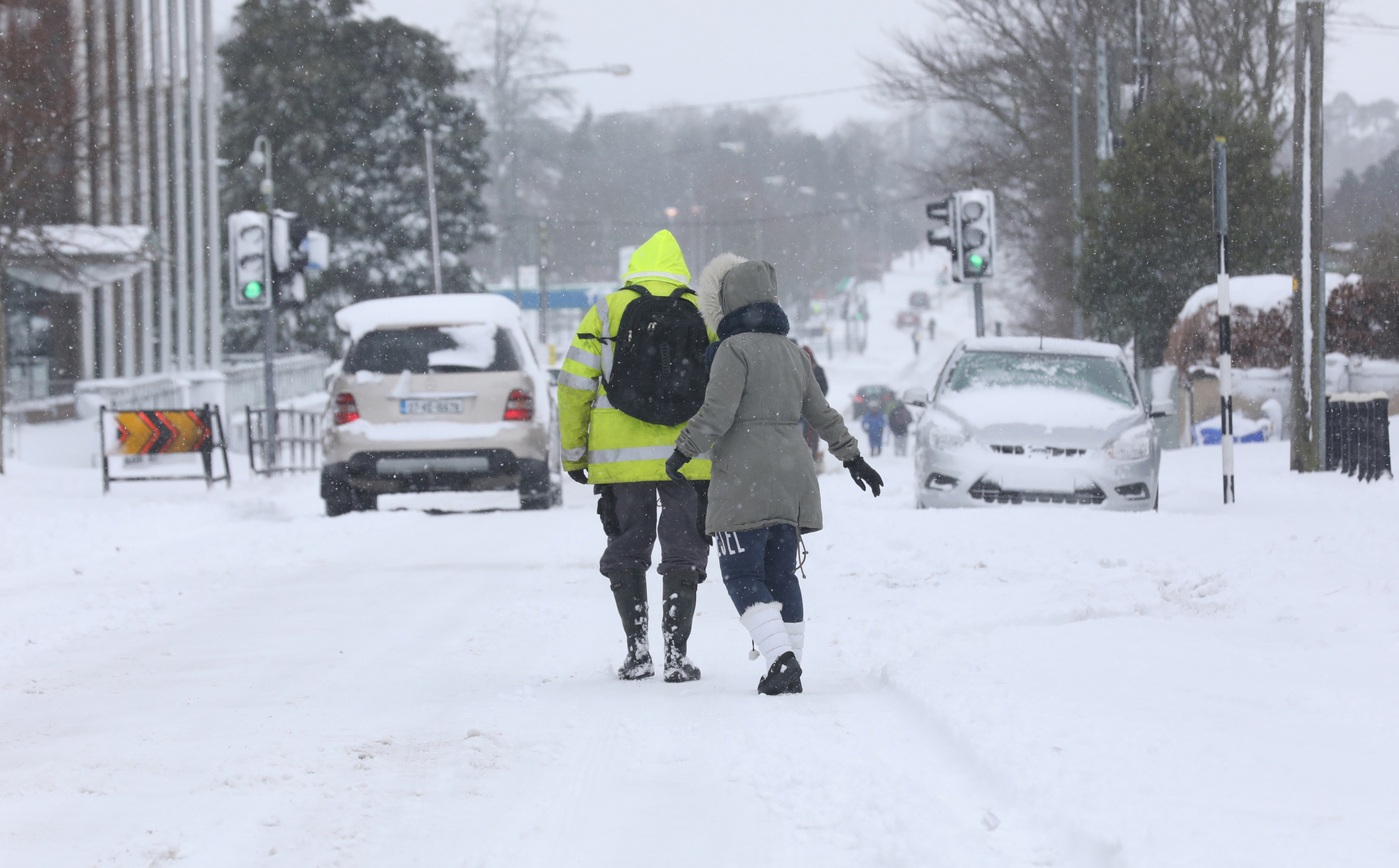
Storm Emma/Beast from the East saw heavy snowfall across Ireland in February and March of 2018. Picture: Eamonn Farrell/RollingNews.ie
Irish weather experts and forecasters have been put on high alert for the possibility of snow in the next few weeks, thanks to models showing an increased likelihood of a Sudden Stratospheric Warming (SSW).
The weather events can cause a plunge in temperatures, heavy snow and freezing conditions.
The UK's Met Office has said there is now "an over 80% chance of a major SSW occurring" across the UK and Ireland in the next few weeks.
But what exactly is it - and what do you need to know about it?
A sudden stratospheric warming is when zonal winds reverse direction under certain conditions.
This causes winds to flow in an eastern direction, and temperature in the stratosphere over the polar regions to rise significantly.
It depends. Major SSW events increase the likelihood for colder than average weather over northern and north-western Europe for several weeks to a few months after the event, but do not guarantee it, as every SSW is different.
Climatologist with Met Éireann Paul Moore explains: "It usually takes 2-3 weeks for a major SSW event to have an effect on the tropospheric circulation below because it takes time for the easterly zonal winds to descend through the stratosphere."
The cold snap which began 2018 was a previous occasion where an SSW had been issued.
Storm Emma saw snow accumulations of up 30cms, while up to 60cms was recorded in parts of the Wicklow mountains
That March, the country was blanketed in snow and thousand of homes suffered power outages.
Temperatures in Cork dropped as low as -7C as status red weather warnings were issued.

While it's not 100% clear as to what will happen, it does not appear so.
Mr Moore explained: "Global weather models can usually forecast, quite accurately, what is going to happen in the polar stratosphere 1-2 weeks in advance, so the upcoming SSW event is highly likely.
"Forecasting how a SSW event imprints on the tropospheric weather patterns below is much more difficult to resolve, especially prior to the SSW event itself."
This is best shown by the fact that an SSW occurred in January of 2019 — but had no effect on weather patterns across Europe.
Mr Moore added: "Therefore, for now, it is unresolved how the upcoming SSW event will affect the weather patterns over north-western Europe. The timing for any impacts, if they do occur, will likely be towards the end of February or the beginning of March."
Check out the Irish Examiner's WEATHER CENTRE for regularly updated short and long range forecasts wherever you are.