Mountjoy prison lands to be dug up to find remains of up to 33 prisoners
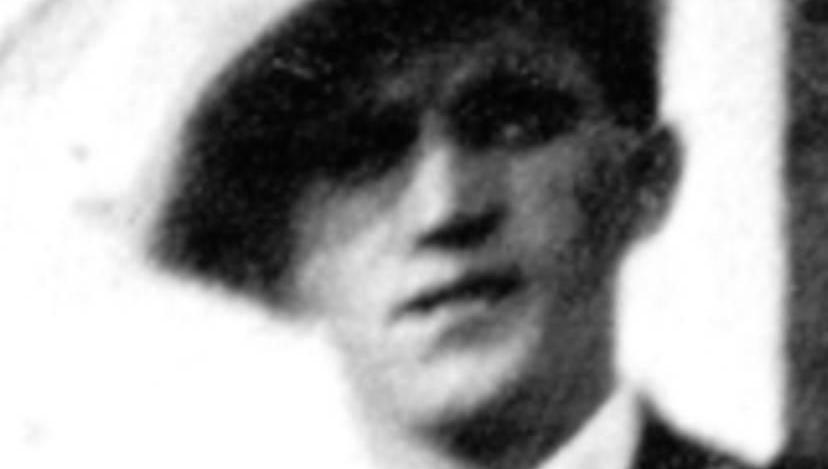
Harry Gleeson: A search for the remains of the country’s only person to be given a posthumous pardon is to recommence.
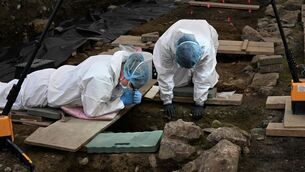
A section of land at Dublin’s Mountjoy Prison is to be dug up in a bid to find and identify the remains of up to 33 prisoners who were executed at the jail dating as far back as 1870.
In particular, the project aims to discover the remains of Henry (Harry) Gleeson, who was executed in Mountjoy Prison in 1941.
Mr Gleeson became the first man in the history of the State to be posthumously pardoned when President Michael D Higgins signed the order in 2015 exonerating him.
He was hanged after being convicted of the murder of Mary McCarthy, a single mother of seven children whose body was found in a field on Mr Gleeson’s uncle’s farm in Tipperary. He maintained his innocence but was executed on April 23, 1941.
Test excavations were conducted at Mountjoy Prison on Dublin’s north side in the wake of Mr Gleeson’s pardon. A total of six spots within the area of the north wall of the prison were checked and 29 individuals deemed to be buried at this location were identified.
A report in 2019 by archaeological consultants said the burials identified there were “in good condition with varying preservation rates of coffin wood”.
“Consequently, the potential for identifying a high proportion, if not all, of the 29 individuals buried at this location, within the untested areas, is high,” it said.
This report goes into the details of Mr Gleeson’s hanging. It cited: “The hangman has to understand the mathematics of his art. The drop must be of sufficient length to cause instantaneous death, but it must not be so great as to outwardly mutilate the victim.”
These excavations will focus on 29 people executed between 1923 and 1954. The majority of them took place in the 1920s, with William O’Neill the youngest of this cohort at just 19 years of age when he was executed on December 29, 1927.
Of the 46 people executed at this time, only one woman was among them — Annie Walsh — who was executed in 1925 for the murder of her husband.
Michael Manning, the last person to be executed by the Irish State, was hanged in Mountjoy on April 20, 1954.
A further four prisoners executed prior to the foundation of the State may also be located at the same site.
The Department of Justice and Irish Prison Service said the purpose of the planned excavations, set to last around 31 weeks, is to locate the remains of Mr Gleeson and return them to his family for reburial and to exhume any other human remains discovered on-site for reburial “at a more appropriate location”.
The potential area for the bodies to be buried covers 1,170 square metres.
“There are no records to indicate the precise burial spot for Mr Gleeson or indeed any of the other people executed,” they said. “In the absence of a ‘burial register’ there is very little information with regard to the depth, orientation or density of the graves of the executed prisoners whose remains lie within this area.”
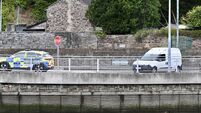
As it is a working prison, strict protocols will have to be adhered to while the works are ongoing, the Irish Prison Service added.


CONNECT WITH US TODAY



Be the first to know the latest news and updates