Rights versus responsibilities — which should have priority or should they co-exist? And since the end of World War II has there been an imbalance in favour of rights, an imbalance that has segued into a distorted view of social relationships?
These questions have come into sharp focus following the recent Reith Lectures on BBC Radio 4, lectures that explored the implications for 21st century living of an important speech by an American president.
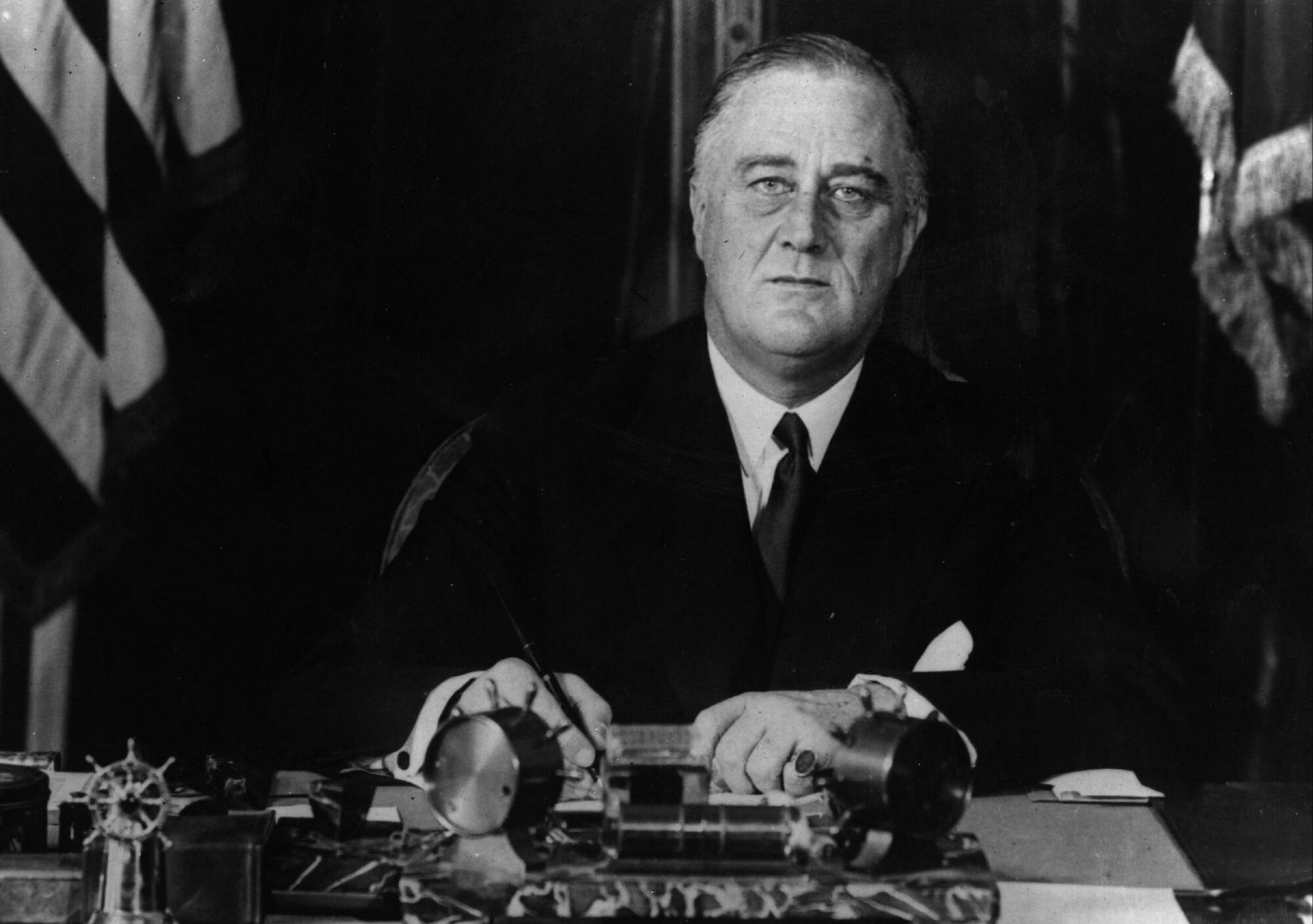
On 6 January 1941, Franklin Delano Roosevelt made a State of the Union speech in the US Congress that still resonates today with lovers and advocates of freedom the world over.
Known as the “four freedoms” speech — and Roosevelt was talking almost a year before the Japanese attack on Pearl Harbour that brought the US into World War II — it helped to set the stage for the Universal Declaration of Human Rights, propagated in Paris in December 1948.
Having warned that the democratic way of life was being assailed in every part of the world, the president said: “In the future days which we seek to make secure, we look forward to a world founded upon four essential human freedoms.”
He then listed these as follows:
“The first is freedom of speech and expression — everywhere in the world.
“The second is freedom of every person to worship God in his own way — everywhere in the world.
“The third is freedom from want — which, translated into world terms, means economic understandings which will secure to every nation a healthy peacetime life for its inhabitants —everywhere in the world.
“The fourth is freedom from fear — which, translated into world terms, means a worldwide reduction of armaments to such a point and in such a thorough manner that no nation will be in a position to commit an act of physical aggression against any neighbour — anywhere in the world.”
In the run-up to Christmas these four freedoms have been the subject of the Reith Lectures on BBC Radio 4 for 2022.
But in a departure from form, four individual experts were chosen to deliver the lectures (the usual format is for the four lectures to be delivered by one person).
It was the former Archbishop of Canterbury, Dr Rowan Williams, who gave the religious freedom lecture, while Dr Fiona Hill, who was a national security adviser in the Bush and Trump administrations, who spoke about freedom from fear.
After the end of World War II in August 1945, it was entirely appropriate that President Roosevelt’s widow (he died in April 1945), Eleanor, was chosen to chair the committee tasked with drafting the universal declaration, which spawned a culture of rights.
Critical reaction to this culture
But in the years since then, there has been a critical reaction to this culture. In the emphasis on and preoccupation with rights, the key question became “What about responsibilities?”
Even today, it is not generally known that, as a result of this critical reaction, there now exists a Universal Declaration of Human Responsibilities, dating from September 1997.
That it is not widely known may be due to the fact that it was never endorsed or adopted by the United Nations, even though a draft was submitted to the UN General Assembly.
This declaration is the work of the InterAction Council, a non-governmental body established in 1983 at the initiative of the then prime minister of Japan, Takeo Fukuda.
The council’s membership included academics, politicians, activists, and religious leaders. Numbered among them is Jimmy Carter, former US president, Mikhail Gorbachev, former president of the USSR, Cardinal Franz Koenig, former archbishop of Vienna, Anna-Marie Aagaard of the World Council of Churches, and James Callaghan, former UK prime minister.
A first draft of the Universal Declaration of Human Responsibilities was prepared by the Catholic theologian, the Swiss-born Hans Kung, who died in 2021. The final draft contains 19 articles, enshrining an “ethic of care” at the core of which is the Golden Rule: Do unto others as you would have them do unto you.
Freedoms rapidly transmute into rights — if I am to enjoy freedom of speech then I must have a right to that freedom.
Article 19 of the Universal Declaration of Human Rights states “Everyone has the right to freedom of opinion and expression”; Article 40 of Bunreacht na hÉireann recognises “the right of citizens to express freely their convictions and opinions”.
But in our time challenges have been mounted to the theory and practice of human rights, largely on the grounds that an excessive emphasis on “rights” promotes a kind of “asocial individualism”.
The InterAction Council, in its preamble to the declaration, stresses that an “exclusive insistence on rights can result in conflict, division, and endless dispute”.
A declaration of human responsibilities is necessary, they insist, to bring freedom and responsibility “into balance”.
Acknowledging the importance of the 1948 Universal Declaration of Human Rights, the InterAction Council said it was now time “to initiate an equally important quest for the acceptance of human duties or obligations”.
“Because rights and duties are inextricably linked, the idea of a human right only makes sense if we acknowledge the duty of all people to respect it. Regardless of a particular society’s values, human relations are universally based on the existence of both rights and duties.”
CONNECT WITH US TODAY
Be the first to know the latest news and updates