Being alone linked to early death for those with heart issues
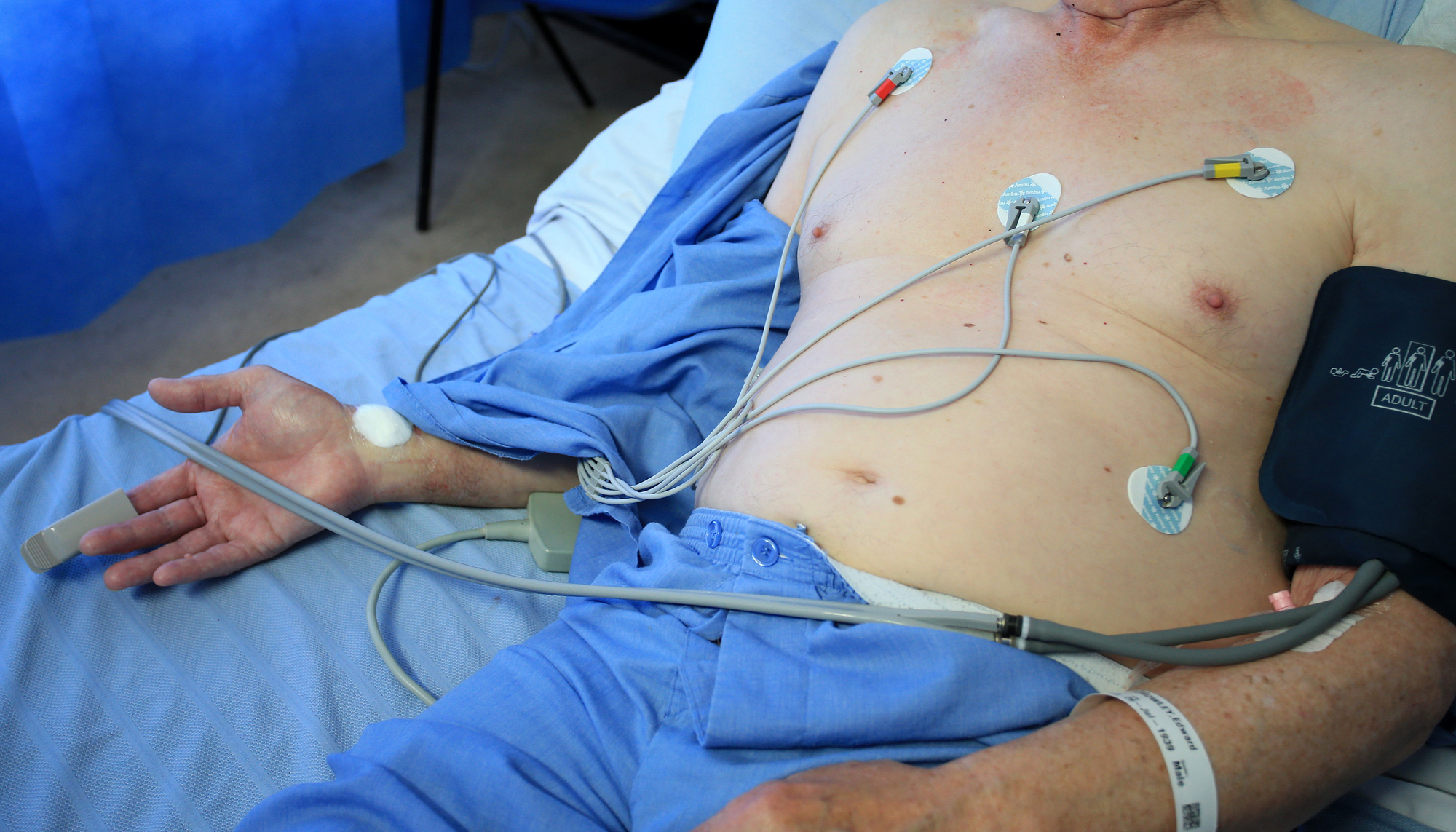
A patient receives treatment a hospital
Loneliness, social isolation, or living on your own has been linked to premature death for people who have cardiovascular disease.
That is among the findings of new research for the University of Limerick (UL), which sheds new light on the negative health impacts of being alone.
An international study, published in the journal of Psychosomatic Medicine, found that people with cardiovascular disease that have higher levels of loneliness, social isolation, and that live alone, tend to die prematurely.
Led by Róisín Long, a student at UL, under the supervision of Dr Páraic Ó Súilleabháin and Dr Ann-Marie Creaven, the researchers wanted to investigate if loneliness, social isolation, and living alone status would predict long-term mortality risk in people living with cardiovascular disease.
Ms Long, who is a professional clinical psychologist, explained: "Social health factors such as loneliness and social isolation have gained a significant amount of attention recently and are really important to think of within the context of cardiovascular health.
"What was unclear is to what degree they impact how long people live when they have been diagnosed with cardiovascular disease."
Our review found that each of these factors are critically important to consider in the treatment of cardiovascular disease, as increased levels of loneliness, social isolation, and living alone appears to lead to premature death.
Ms Long noted that there are likely several reasons for the results of the study.
These range from support from another individual to how an individual biologically responds to stress.
The review included studies that followed people for decades across multiple regions including Europe, North America, and Asia. Each factor was found to be predictive of mortality risk.
The work was undertaken by the team at UL along with the College of Medicine at Florida State University, and the Department of Psychology at Humboldt University Berlin.
Research coordinator on the Doctoral Programme in Clinical Psychology and Director of the Personality, Individual Differences, and Biobehavioural Health Laboratory (Pathlab) at UL Dr Páraic Ó Súilleabháin explained: "This work provides very important insights into the importance of these factors in health and longevity. On our Doctoral Programme we place a strong emphasis on the importance of rigorous research that has international impact, and this work clearly represents this.
"These are clear factors that need to be considered and resulting development of interventions for anyone with cardiovascular disease."

CONNECT WITH US TODAY



Be the first to know the latest news and updates