UN expert group demands 'red lines' around corporate greenwashing
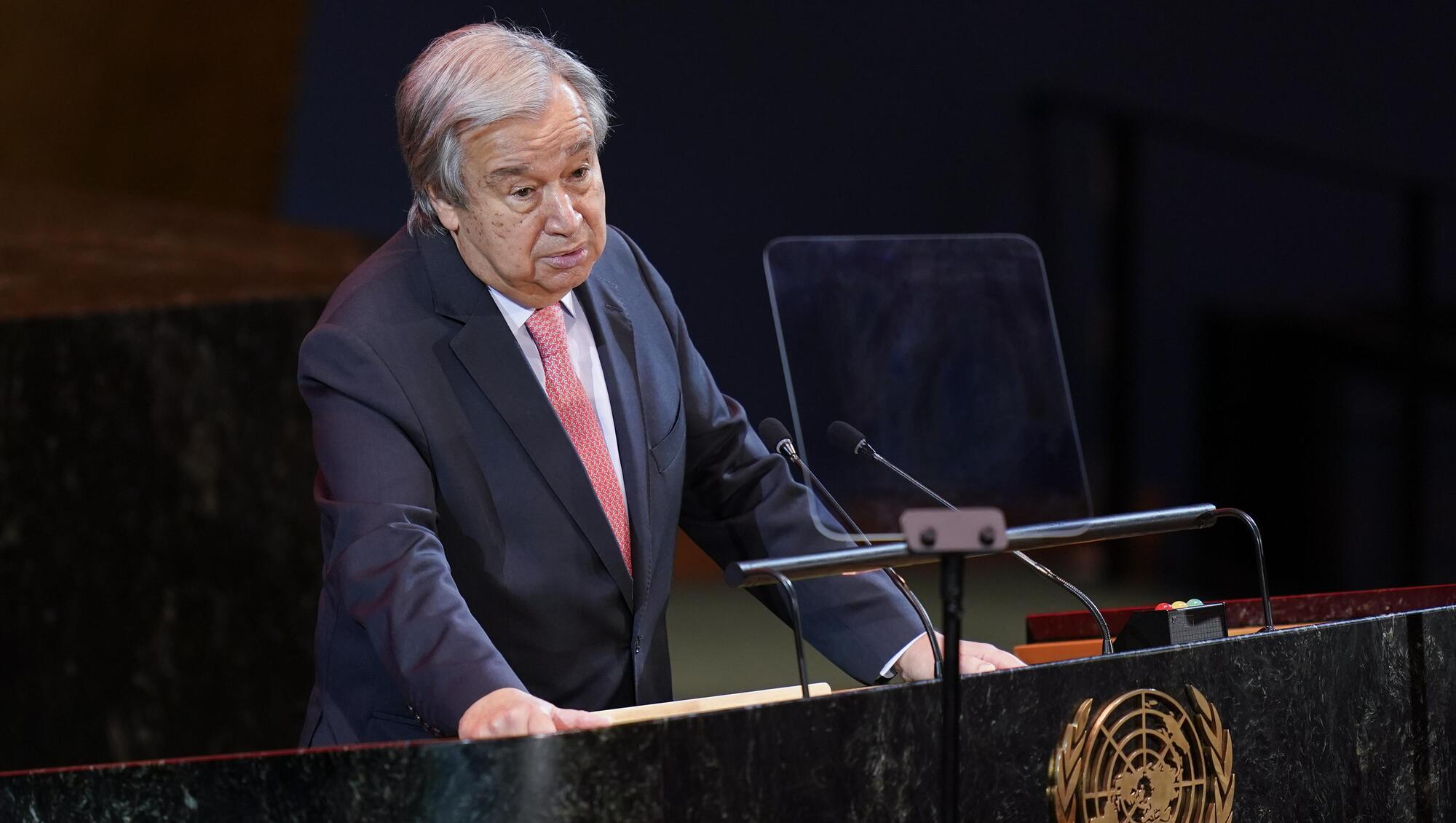
United Nations Secretary-General Antonio Guterres said: "We urgently need every business, investor, city, state and region to walk the walk on their net zero promises. We cannot afford slow movers, fake movers or any form of greenwashing. Photo: AP/Seth Wenig
A report from an expert group assembled under the orders of the UN secretary-general to examine transparency and inaction around climate pledges has demanded "red lines" around so-called "greenwashing".
UN chief Antonio Guterres created the High-level Expert Group on the Net Zero Emissions Commitments in March and on Tuesday it delivered its findings at the Cop27 climate change summit in Egypt.
Over the course of seven months, members of the group held over 40 consultations, with the participation of more than 500 organisations across the world. They concluded that firms and organisations in the private sector "cannot claim to be net zero while continuing to build or invest in new fossil fuel supply".
Greenwashing refers to the practice by firms and organisations of boosting their environmental credentials and image through slick marketing and evidence-free or out-of-context claims. Net zero means balancing the amount of greenhouse gas produced and the amount removed from the atmosphere.
In her address, the chair of the UN group, former Canadian climate and environment minister, Catherine McKenna, said "it’s time to draw a red line around greenwashing".
"Non‑state actors cannot claim to be net zero while continuing to build or invest in new fossil fuel supply. Coal, oil and gas account for over 75% of global greenhouse gas emissions. Net zero is entirely incompatible with continued investment in fossil fuels.
"Similarly, deforestation and other environmentally destructive activities are disqualifying," she said. Ms McKenna said lobbying to "undermine ambitious government climate policies either directly or through trade associations or other bodies" must also be tackled.
She also called for legal requirements to compel non-state entities to reach net zero targets, instead of volunteering to do so.
"Verification and enforcement in the voluntary space is challenging. Many large non-state actors — especially privately held companies and state-owned enterprises — have not yet made net zero commitments which raises competitiveness concerns.
"This picture is changing fast, but it still requires the resolve of governments and regulators to level up the global playing field. This is why we call for regulation, starting with large corporate emitters including assurance on their net zero pledges and mandatory annual progress reporting," she said.
The group was set up amid concern that major companies are pledging to meet net zero targets, all the while backing major new fossil fuel projects.
Mr Guterres said: "We urgently need every business, investor, city, state and region to walk the walk on their net zero promises. We cannot afford slow movers, fake movers or any form of greenwashing.
"A growing number of governments and [companies] are pledging to be carbon free – and that’s good news. The problem is that the criteria and benchmarks for these net zero commitments have varying levels of rigour and loopholes wide enough to drive a diesel truck through."
There must now be "zero tolerance" for such practices, he said.
CLIMATE & SUSTAINABILITY HUB