Economic outlook contingent upon weather, budget document warns
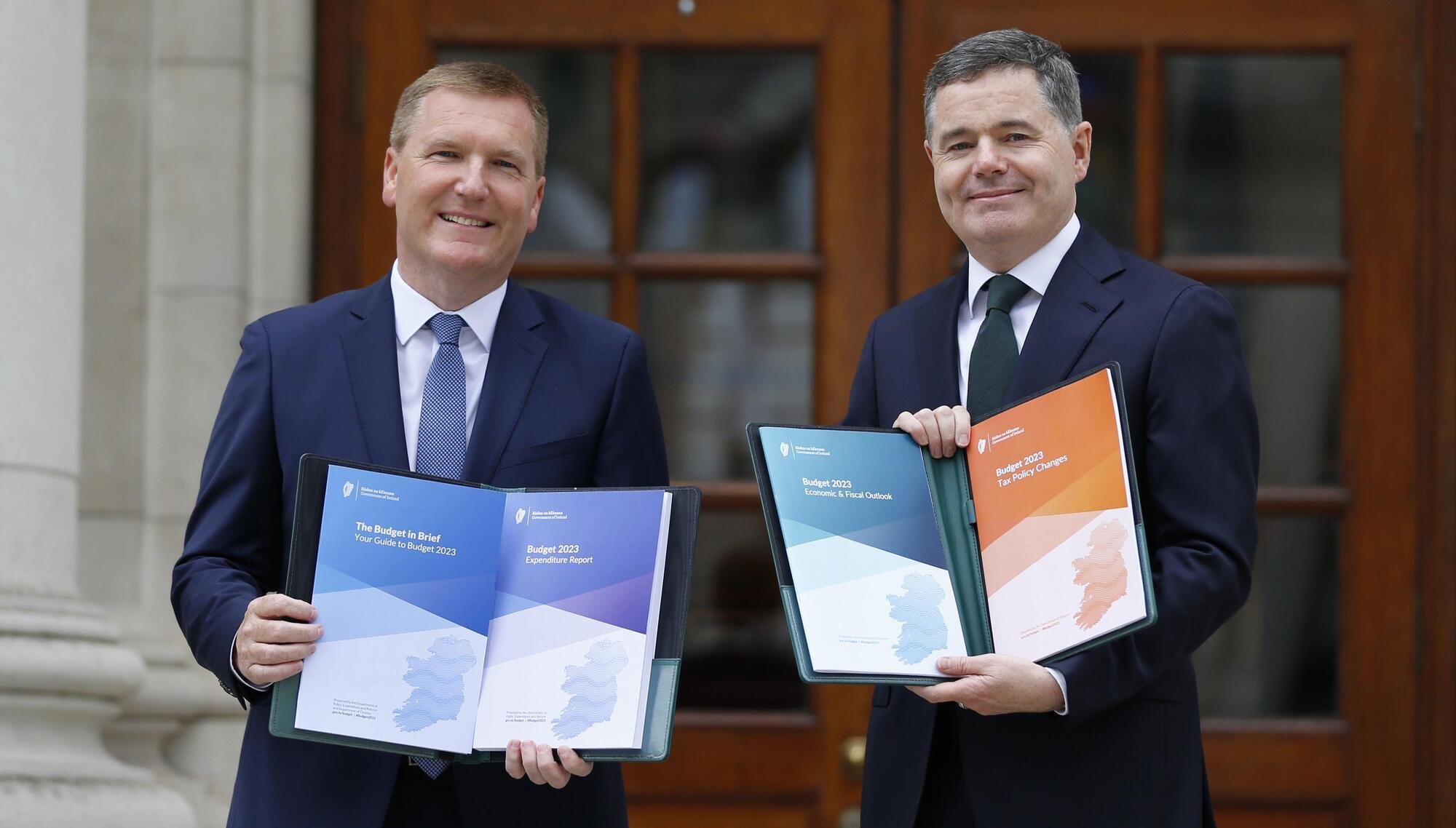
Public Expenditure Minister Michael McGrath and Finance Minister Paschal Donohoe arriving at Government Buildings, Dublin, to unveil the Government’s Budget for 2023. Picture: Damien Storan/PA Wire
A cold snap across Europe this winter would have a significantly negative impact on Ireland's economic outlook as the country teeters on the brink of recession, the Government has warned.
In a budget document, the Department of Finance has stressed that "the key question is whether the economy is in line for a period of weaker growth or whether an outright recession is in prospect".
"While this is difficult to answer, it is important to recognise that the domestic economy is in reasonable shape, with few of the imbalances that characterised the situation in the mid-2000s," the Economic and Fiscal Outlook, published alongside the budget, stated.
Senior sources last night added that the package of measures announced yesterday has been devised to help stave off a recession in the coming months.
There are still fears that a cold snap across Europe this winter, or lower-than-expected generation of energy from wind and other renewables, could drive energy prices even higher and would impact Ireland.
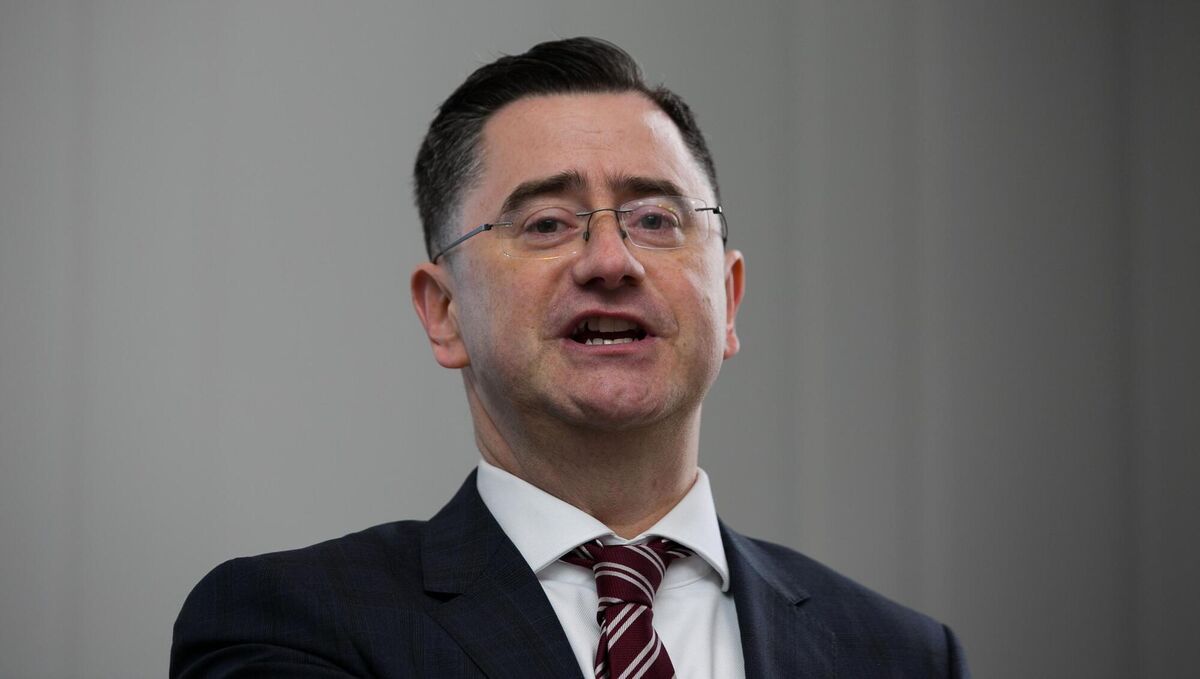
Department of Finance chief economist John McCarthy said: "I think we're in an incredibly uncertain environment.
"If you get a very severe winter, demand for gas will go through the roof, whereas if it's a mild and windy winter, demand won't be as strong."
He added: "Because it's so uncertain, we've actually included a number of scenario analysis in the document.
"So if, for instance, you get stronger or longer outages on continental Europe, hence reducing external demand in Ireland, so exports would be hit that would take another percentage point off MDD [modified domestic demand] for next year."
While Ireland is not expected to enter a technical recession, which requires two back-to-back quarters of negative growth, the economy is now relying heavily on data centres, spending on remote working by businesses, as well as investment by one or two major companies.
This is compounded by the fact that individuals and families have now stopped spending and are instead trying to save to pay off higher-than-expected energy bills in the new year.
"While wages will offset some of the increase in the price level, real income growth is expected to be negative again next year, and this will act as a drag on consumer spending," the Department of Finance document states.
However, Finance Minister Paschal Donohoe said a number of other interventions could be made before the €6bn rainy day fund investment announced yesterday might have to be raided.
Mr Donohoe said investment in a national reserve fund is an "essential message" at the moment, as it is a "really important tool in the economic armoury of our country".
The minister said growth will be "significantly lower" in 2023, and this will be coupled with inflation that will be quite a bit higher next year.
"We believe the most likely scenario for the Irish economy for next year is still one of growth, but it is growth that is going to be significantly lower, versus the last number of years with inflation that will be quite a bit higher than we've been used to for many years," he said.
"The truth of it is that we are in an uncertain environment, and nobody with accuracy can completely be certain regarding when this phase of circumstances are going to begin to improve."
Read More
CONNECT WITH US TODAY



Be the first to know the latest news and updates