Politicians 'must not be afraid to ruffle feathers locally' if Ireland is to cut emissions
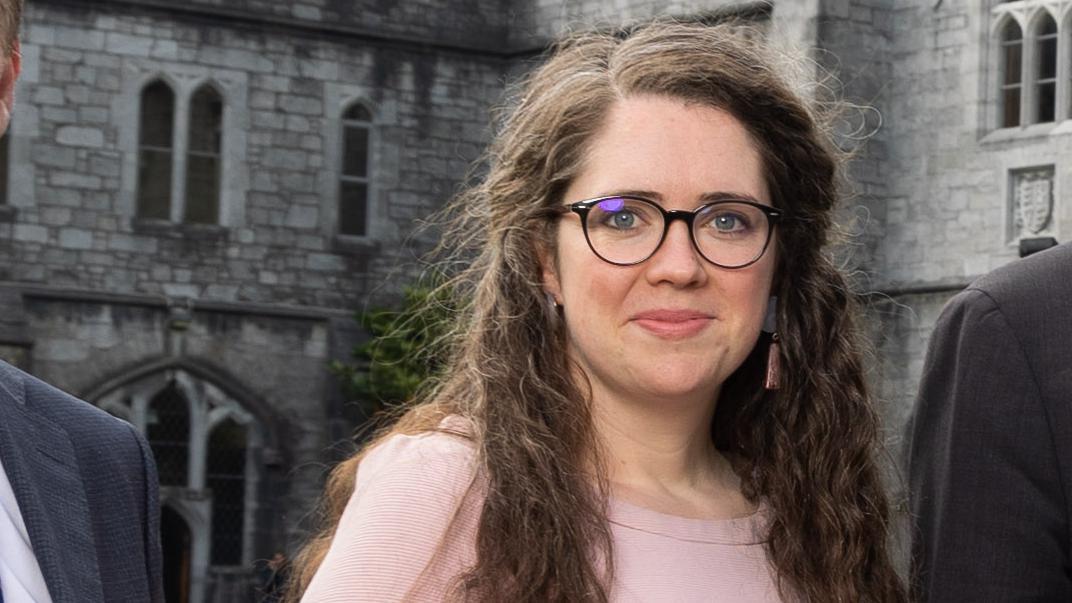
UCC professor in sustainable energy and energy systems modelling, Hannah Daly, was responding to estimates that Ireland's carbon emissions rose by 20% in the first half of this year. Picture: Darragh Kane
Ireland will not reduce emissions without political courage locally. Community representatives will need to be unafraid of “ruffling a few feathers” along the way.
That is according to one of Ireland’s sustainable energy experts, who was reacting to estimates from the European Commission’s data analysis service that Ireland increased its emissions by 20% in the first three months of the year.
University College Cork (UCC) professor of sustainable energy and energy-systems modelling, Hannah Daly, said that the fight to combat, mitigate, and adapt to climate change would not be won by 2030, just because Ireland and other countries have set emissions-reductions targets.
“This is going to be a challenge for the rest of all our lives,” Ms Daly said. “It is never going to be enough, so we are going to have to do what we can.
Everyone has to start removing those barriers.
“When you hear portions of the active travel budget was not spent, that indicates that this is not about cost, but about a willingness of people with power to deviate from the status quo.”
Professor Daly cautioned that Eurostat's provisional estimates of 20% in the first three months of 2022 were based on economic activity, as opposed to real emissions accounting, and that it would likely be lower when confirmed.
“At the same time, we are still burning coal for power, we are continuing to buy fossil-fuel-powered cars, the number of dairy cows is growing, so I don’t hold out a lot of hope that when the emissions accounts come out next year that they will be an awful lot better,” she said.
“Unfortunately, there is no silver bullet: We have to do everything we can as fast as we possibly can, and that includes doubling down on wind and solar generation, reducing sources of energy demand, and to stop buying new internal combustion engine cars, while improving public transport and walking and cycling infrastructure.”
The Climate Act 2021, which was passed last July, commits Ireland to reducing greenhouse-gas emissions by 51% by 2030 and to achieving a climate-neutral economy by 2050.
To reach the 2030 targets, the Government announced ‘carbon budgets’ in 2020 and unveiled them last October.
They include all greenhouse gases in each five-year cycle and will allocate emissions ceilings to the likes of motorists, households, farmers, businesses, and industry.
The carbon budget for 2021-2025 aims to reduce emissions by 4.8% on average annually for five years, while the 2026-2030 budget will increase that annual reduction to 8.3%.
CLIMATE & SUSTAINABILITY HUB
CONNECT WITH US TODAY



Be the first to know the latest news and updates