Social welfare increase of €15 won't cover cost of living rise
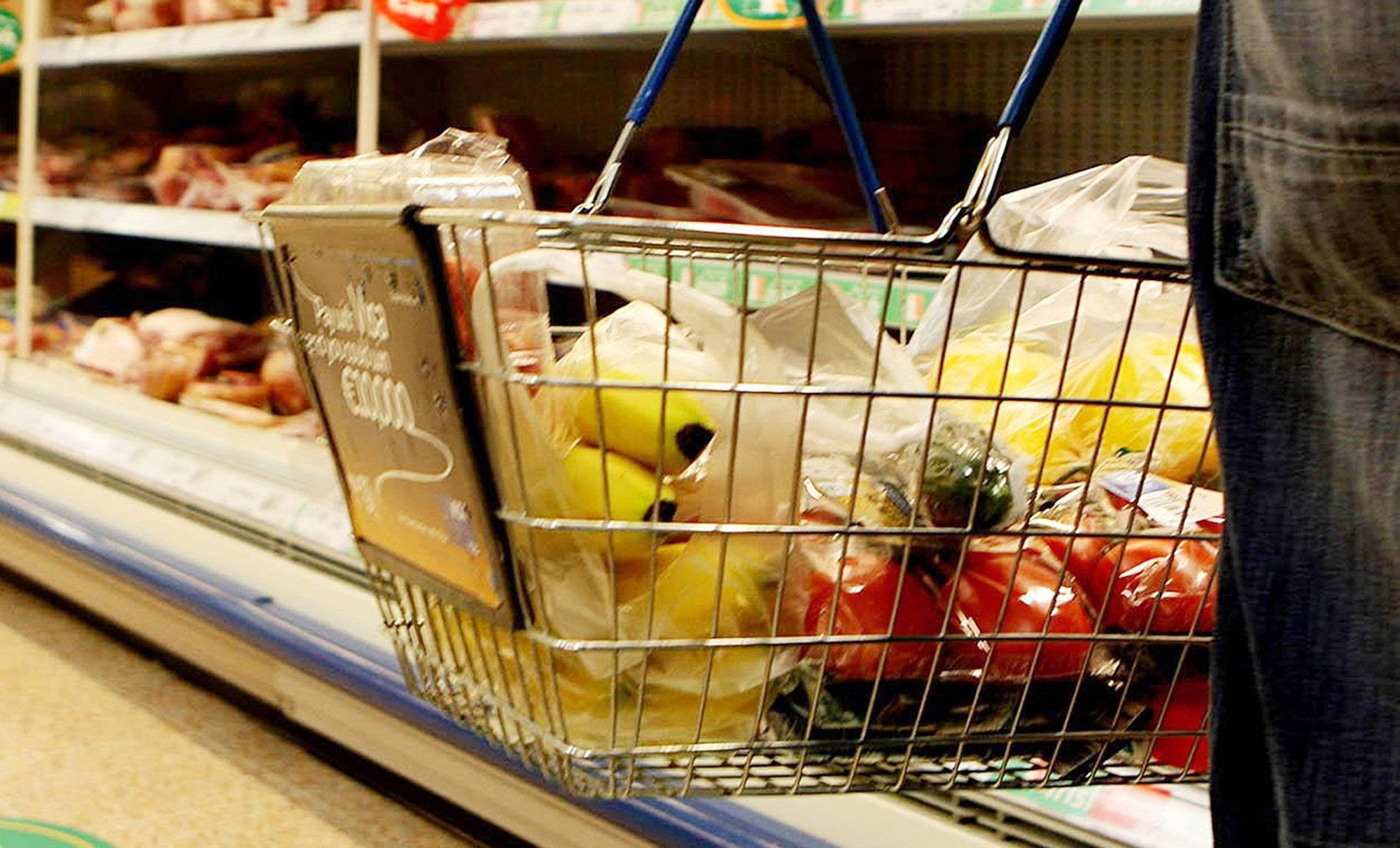
'People on low incomes who set aside food budgets for the week, they’re saying their shopping basket is getting smaller and smaller,' said Tricia Keilthy of St Vincent de Paul.
Increasing social welfare payments by €15 won’t be enough to support families facing crippling cost-of-living increases, the Government has been warned, after the latest figures showed inflation remains at its highest level in 38 years.
For back-to-back months, inflation has now stood at 9.1%, the highest rate since 1984.
The CSO’s Consumer Price Index for July 2022 showed the biggest drivers of this inflation are huge spikes in electricity (up 40%), gas (up 56.6%), rent (up 12.9%) and motor fuel (up 40%).
But, alongside that, food is also up an overall 8.1%.
Bread is 14.9% more expensive than the same time last year. Pasta is up 16.4%, beef has risen 11.3% while poultry is up 13.4%. Milk, meanwhile, is up 21.2% while butter is up 16.6%.
One of the only food items that is cheaper now than this time last year is potatoes, which are down 2.8%.
In the annual Tax Strategy Papers published this week, the Department of Finance detailed options and costings for measures ahead of the budget which is due to be announced next month.
Among the options being considered is a €15 increase to core social welfare payments, at a cost of about €1.1bn.
However, many organisations have called on the Government for a €20 increase in the face of hundreds of thousands of households facing a difficult winter.
“€15 wouldn’t be enough,” Tricia Keilthy, head of social justice at St Vincent de Paul, said.
“We’d need €17 just to stand still [with inflation]. What we’re seeing now is for people on low incomes who set aside food budgets for the week, they’re saying their shopping basket is getting smaller and smaller.”
Rising food costs were highlighted on Thursday as a huge source of concern by migrant and refugees support organisation Doras, which said it was alarmed by rising rates of food poverty among people from migrant backgrounds.
“It’s clear the housing emergency is worsening and driving a new level of deprivation that is leading to not just homelessness, but also hunger,” Doras chief executive John Lannon said.
Stephen Moffatt, national policy manager at Barnardos, urged the Government to consider the impact on families if the right decisions are not taken heading into the winter.
“Last January, a lot of families we support were really struggling to keep the heating on, the lights on and food in the fridge,” he said.
“We’ve had families knocking on our doors seeking food vouchers. And we’ve had to decide who’s in the greatest need. All of our services are saying this is really concerning.”
Mr Moffatt said his organisation’s main worry was that things would be “even worse” for families and children this year with the cost of essentials so much higher than 12 months ago.
“A lot of families were saying they were putting children to bed with coats on,” he said.
He said while the €15 increase would be welcome, it would need to be supplemented by other measures such as increasing the fuel allowance to ensure struggling families get the support they need.
Analysis published last month by the CSO suggested the poorest households are feeling the impacts of inflation more than more well-off households, and advocacy groups fear the impact it could have on the most vulnerable heading into this winter.
Ms Keilthy said that St Vincent de Paul was seeing a large increase in calls from parents, compared to the summer of 2021, ahead of the new school year.
“We’ve noticed an increase in calls for back-to-school help, and these calls started in May when book lists went out,” she added.
“Parents are really feeling the pressure. They’re saying ‘do I pay €100 off the electricity bill or do I make sure children have what they need to go back to school’.”

CONNECT WITH US TODAY



Be the first to know the latest news and updates