Proportion of students from affluent backgrounds at Trinity and UCD over twice national average
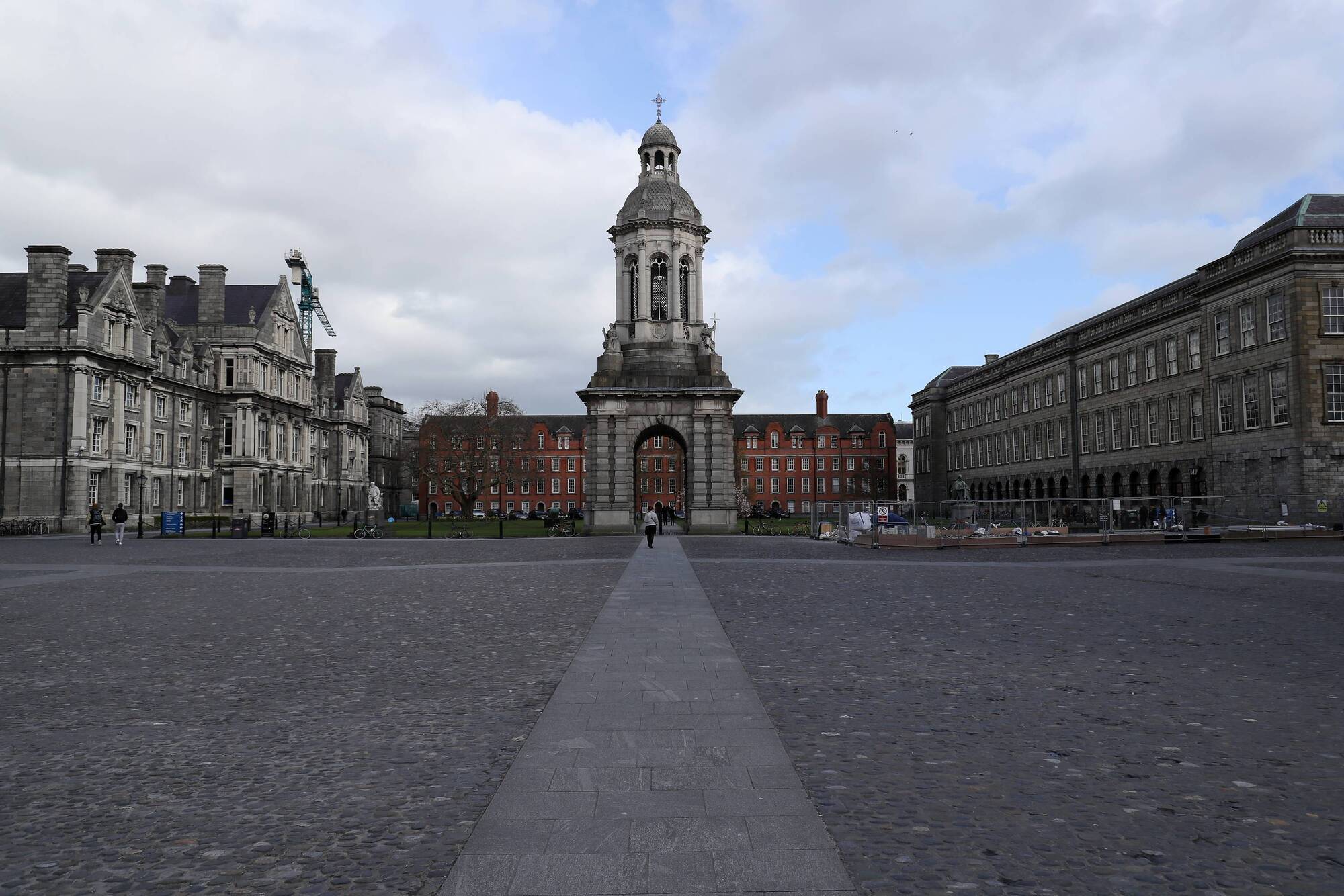
The report by an Oireachtas body on access and outcomes in third-level education found that 36% of the students in Trinity College Dublin education came from affluent backgrounds.
The proportion of students from an affluent background at both Trinity College Dublin and University College Dublin is almost twice the national average for all third-level institutions, according to a new study.
The report by an Oireachtas body on access and outcomes in third-level education showed that just 10% of undergraduate students in the Republic comes from disadvantaged areas, when 15%-16% should come from such backgrounds if third-level colleges were representative of the general population.
It found students from affluent areas were slightly over-represented at higher education level by accounting for 18% of all undergraduates while accounting for 15%-16% of the population but the proportion was up to 36% in both Trinity and UCD.
In contrast, the report by the Oireachtas’ Parliamentary Budget Office (PBO) noted that only 5%-6% of students at the two highest-ranking universities in Ireland came from disadvantaged areas in the academic years 2018/19 and 2019/20.
University College Cork at 6%-7% and Dublin City University and University of Limerick at 8% had only marginally higher proportions.
Letterkenny IT had the most disadvantaged student population by some distance at 26% ahead of IT Tallaght, which now forms part of Technological University Dublin, at 18%.
The study also revealed that disadvantaged graduates tend to earn less on average even when they graduate from the same discipline in the same third-level college and are working at the same grade and in the same sector than those from a less disadvantaged background.
“The gap also tends to widen with age,” it added.
The PBO estimated that graduates originally from Deis secondary schools will earn 2% less than graduates from standard post-primary schools.
The report showed there were also significant socio-economic diversity issues in specific fields of study with only 4% of both medicine and economics undergraduates coming from disadvantaged backgrounds.
The figure for students from affluent areas in the same disciplines was 35% and 43% respectively.
The PBO remarked that “a severe lack of socio-economic diversity” was evident in some key fields.
The report acknowledged that students from disadvantaged areas tended to have higher non-progression and non-completion rates in third-level education.
In 2020, 71.3% of students from non-Deis schools went on to study higher education compared to 46.7% of students from Deis schools.
An analysis of how well different third-level institutions facilitate the social mobility of students found one of the smallest colleges, St Angela’s College in Sligo, was best at facilitating the participation and progress of students from disadvantaged areas followed by Letterkenny IT and Mary Immaculate College in Limerick.
Dublin City University was the highest ranked university in 4th place while the National College of Art and Design was ranked last in 22nd place.
“As an art college, NCAD’s main focus may not be social mobility and labour market success for graduates,” it observed.

CONNECT WITH US TODAY



Be the first to know the latest news and updates