Tourists to US would have to reveal five years of social media activity under new Trump plan
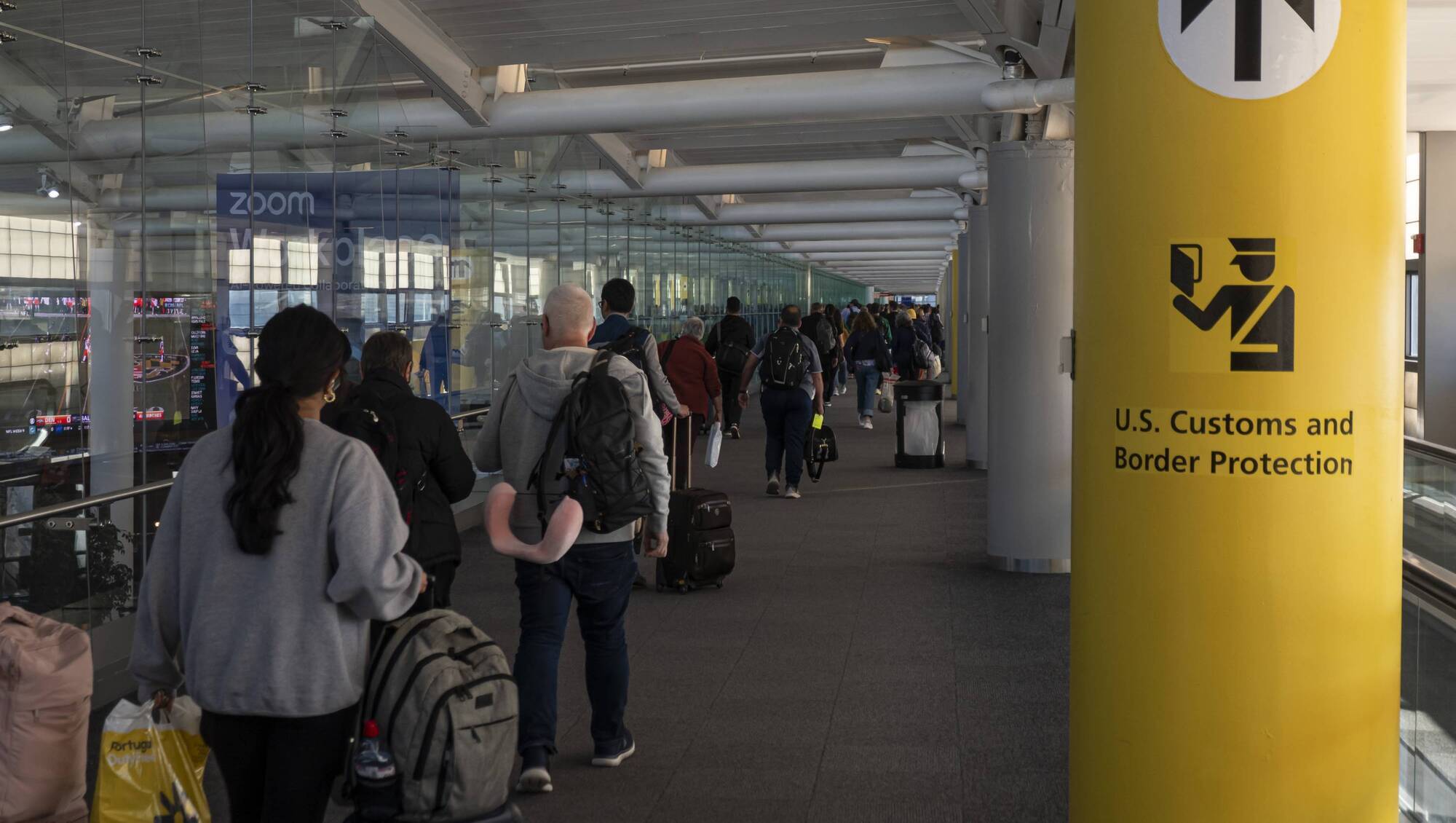
Customs and Border Protection (CBP) would also require any email addresses and telephone numbers visitors have used in the same period. Picture: Nicolas Economou/NurPhoto via Getty Images
All tourists to the United States would have to reveal their social media activity from the last five years, under new Trump administration plans.
Customs and Border Protection (CBP), an agency under the Department of Homeland Security (DHS), would also require any email addresses and telephone numbers visitors have used in the same period, and the names, addresses, birthdates and birthplaces of family members, including children.
The proposal was published on Tuesday in a Federal Register notice, the official publication of the US government, which is put out daily. This called the new disclosures “mandatory” for entry into the US.
It would apply to people of all countries, regardless of whether they require visas or are currently permitted to complete an Electronic System for Travel Authorization (Esta) instead.
That includes visitors from Britain, Australia, Germany and Japan, who are not required to get a tourist visa before visiting the US.
The notice gives members of the public two months to comment. DHS did not respond to media outlets’ requests for comment.
The plan would throw a wrench into the World Cup, which the US is co-hosting with Canada and Mexico next year and would normally be expected to draw huge numbers of soccer fans.
Tourism to the US has already dropped dramatically in Trump’s second term, as the president has pushed a draconian crackdown on immigrants, including recent moves to ban all asylum claims and stop migration entirely from more than 30 countries.
California tourism authorities are predicting a 9% decline in foreign visits to the state this year, while Hollywood Boulevard in Los Angeles reported a 50% fall in foot traffic over the summer. Las Vegas, too, has been badly hit by a decline in visits, worsened by the rise of mobile gambling apps.
Statistics Canada said Canadian residents who made a return trip to the US by car dropped 36.9% in July 2025 compared with the same month in 2024, while commercial airline travel from Canada dropped by 25.8% in July compared with the previous year, as relations between the two countries plummeted.
The US has already started squeezing foreign tourism in other ways, slapping an additional $100 fee per person per day to visit national parks, such as the Grand Canyon and Yosemite, on top of the regular admission fees. Nor will national parks have free admission on Martin Luther King Jr Day another longer: they will now only be free to visit on Trump’s birthday.
The Trump administration had also begun widespread crackdowns on visas for people hoping to live and work in the country. US Citizenship and Immigration Services (USCIS) said in August that it will start looking for “anti-American” views, including on social media, when assessing the applications of people wanting to live in the US.
The administration has also demanded that prospective foreign students unlock their social media profiles to allow US diplomats to review their online activity before receiving educational and exchange visas; those who refuse will be suspected of hiding their activity.
Several high-profile foreign-born students have been detained for voicing support for Palestinians.
As recently as last week, the administration directed consular officials to deny visas to anyone who might have worked in factchecking or content moderation, for example at a social media company, accusing them in blanket terms of being “responsible for, or complicit in, censorship or attempted censorship of protected expression in the US”.
And it has suggested reducing visa lengths for foreign journalists from five years to eight months, prompting calls from global media groups to reconsider.
CBP claims the authority to search the devices of any prospective entrant to the US. Although you can refuse, you may then be denied entry.
While CBP said in 2024 it searched about 47,000 devices of the 420 million people who crossed the US border that year, experts said the number may be much higher under the new Trump administration.


CONNECT WITH US TODAY



Be the first to know the latest news and updates