‘System failing those stuck in emergency accommodation’
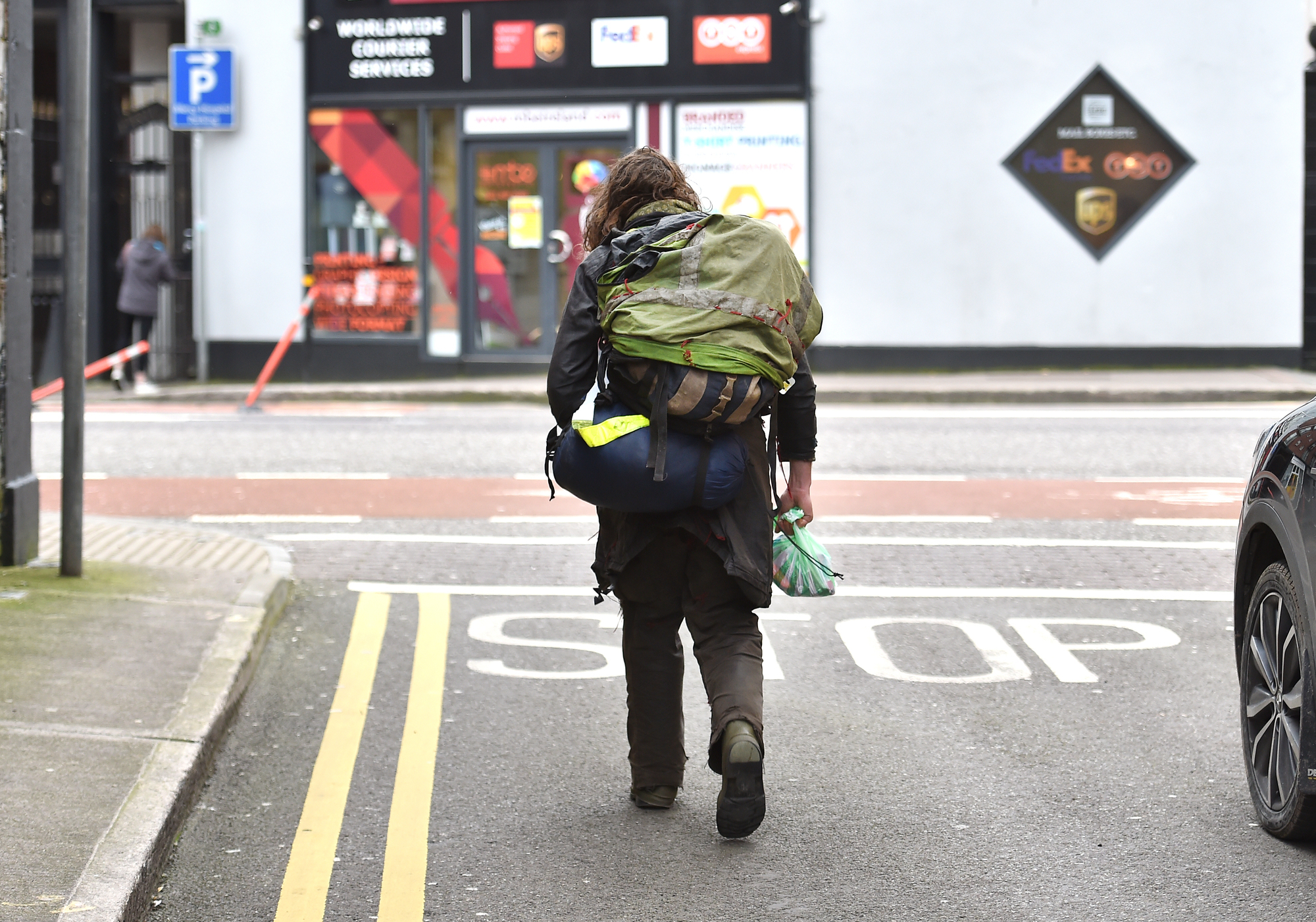
A man walking away with a packed lunch that he collected at Penny Dinners on Little Hanover Street, Cork. Picture: Dan Linehan
A quarter of single people experiencing homelessness are "effectively stuck" in emergency accommodation, which they are forced to use as their long-term home, according to new research.
Analysis of the use of emergency accommodation by single homeless people in Dublin over a three-year period showed that 3,669 people accessed the PASS system, with the stay ranging from just one night to 1,185 nights.
The type of accommodation used were mainly hostels and B&Bs and according to the study: "The analysis has revealed that a quarter of residents are effectively ‘stuck’ in emergency accommodation which they are forced to use as their long term, stable home.
"Despite considerable investment by government and a rapid expansion of homeless services, the current system is failing to move these people into permanent homes.
Overall, four-in-five of all single emergency accommodation users of emergency accommodation in this period were men, and while 64% were Irish, there was an over-representation of both EU (19%) and non-EU people (13%) compared with the broader population, with the nationality of 4% unknown.
The study also found that while 77% had never slept rough, 23% of all service users had.
The research, conducted by Clíodhna Bairéad and Michelle Norris of University College Dublin, was funded by the Irish Research Council and Focus Ireland, with data from the Dublin Region Homeless Executive.
Co-author Clíodhna Bairéad said more research was needed to learn why some people became so entrenched in emergency accommodation.
Ms Bairéad said that while some people used emergency accommodation in the short term, in the way it was initially designed to be used, there were people who remained using it, prompting questions as to alternative ways of assisting this group.
She said one method was the Finnish 'housing first' approach, which would allow people to stay in bedsit-like, single-person accommodation, away from hostels and B&Bs where some people said they did not feel safe and secure.
She also said there was a need for more one and two-bed units in single housing, even allowing for the understandable focus on family units.
The study showed that while the 'long term stable' grouping were mainly men who were older, the ‘long term inconsistent’ cluster was dominated by people who were aged between 18 and 45 years when they first commenced using emergency accommodation and was also associated with very high rates of rough sleeping.
CONNECT WITH US TODAY



Be the first to know the latest news and updates