Government insist building costs bailout not a 'free-for-all'
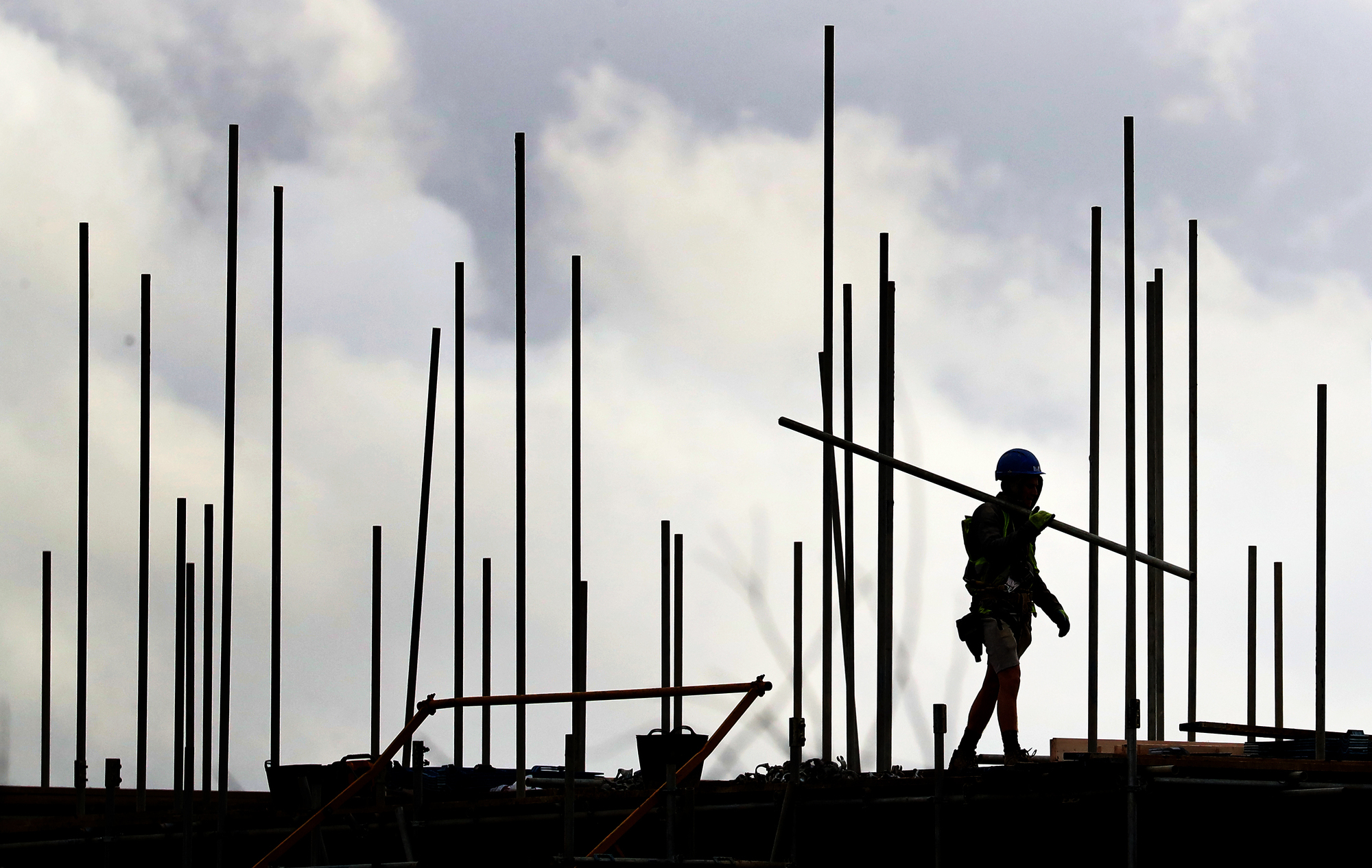
Public Expenditure Minister Michael McGrath said the new measure is 'necessary' and 'proportionate'.
The Government has agreed to bail out builders working on public projects that are now at risk because of soaring inflation.
An extra €160m could be paid to developers working on roads, healthcare facilities, schools, and other key infrastructure this year alone, which will significantly impact the overall cost and delivery of State projects.
The Government will now pay up to 70% of inflation-related construction costs in an open-ended "cooperation framework" signed off by Cabinet.
Public Expenditure Minister Michael McGrath said the package of measures is "necessary" and "proportionate" to ensuring public projects remain viable and are delivered on time.
Mr McGrath said increases in the cost of fuel, energy, and building products have not stabilised, leaving construction firms that have entered into fixed-price public works contracts exposed.
However, he stressed that the ex-gratia scheme will not amount to a “free-for-all”, as any extra payments will be directly linked to the CSO wholesale price index for materials, which measures average fluctuations over time.
Mr McGrath said the additional cost will be met from within the existing National Development Plan ceilings.
He said some builders entered contracts in 2020 at a time when there was "little or no inflation" and builders were now carrying "all of the risk" in relation to spiralling costs.
It is understood that Transport Infrastructure Ireland (TII), the HSE, the Department of Education, and contractors all raised concerns with the minister over the pressure that inflation is putting on projects.
With construction inflation now running at 13%, Mr McGrath said the extra funding would "strike an important balance" between the additional costs incurred by the State and the State's ability to deliver the National Development Plan while also maximising value-for-money for the taxpayer.
He said additional payments for the first three months of this year alone will amount to between €30m and €40m.
Mr McGrath said that no termination date has been put on the scheme, given the uncertainty around inflation in the coming months.
"The cost of producing and transporting construction materials is set to rise further," he said.
"In addition, the availability and delivery time for construction materials has also been impacted, leading to some delay.
Asked about the possibility of legal challenges from contractors who missed out on the original tender based on price, Mr McGrath said: "You can never discount the possibility that a legal challenge will be taken to any Government policy. But I do believe that what we're announcing here will withstand any such challenge."

The Construction Industry Federation (CIF) described the intervention as a “positive step”, but said the measures do not go far enough to address the high cost base in the sector and underline the need for “essential reforms” of the public works contract.
CIF director-general Tom Parlon said public works contracts do not offer the level of risk-sharing, engagement, or certainty provided by the standardised, international forms of construction contracts.
CONNECT WITH US TODAY



Be the first to know the latest news and updates