Software firm ordered to pay executive €329k for unfair dismissal on bullying allegations
Software firm ordered to pay executive €329k for unfair dismissal on bullying allegations

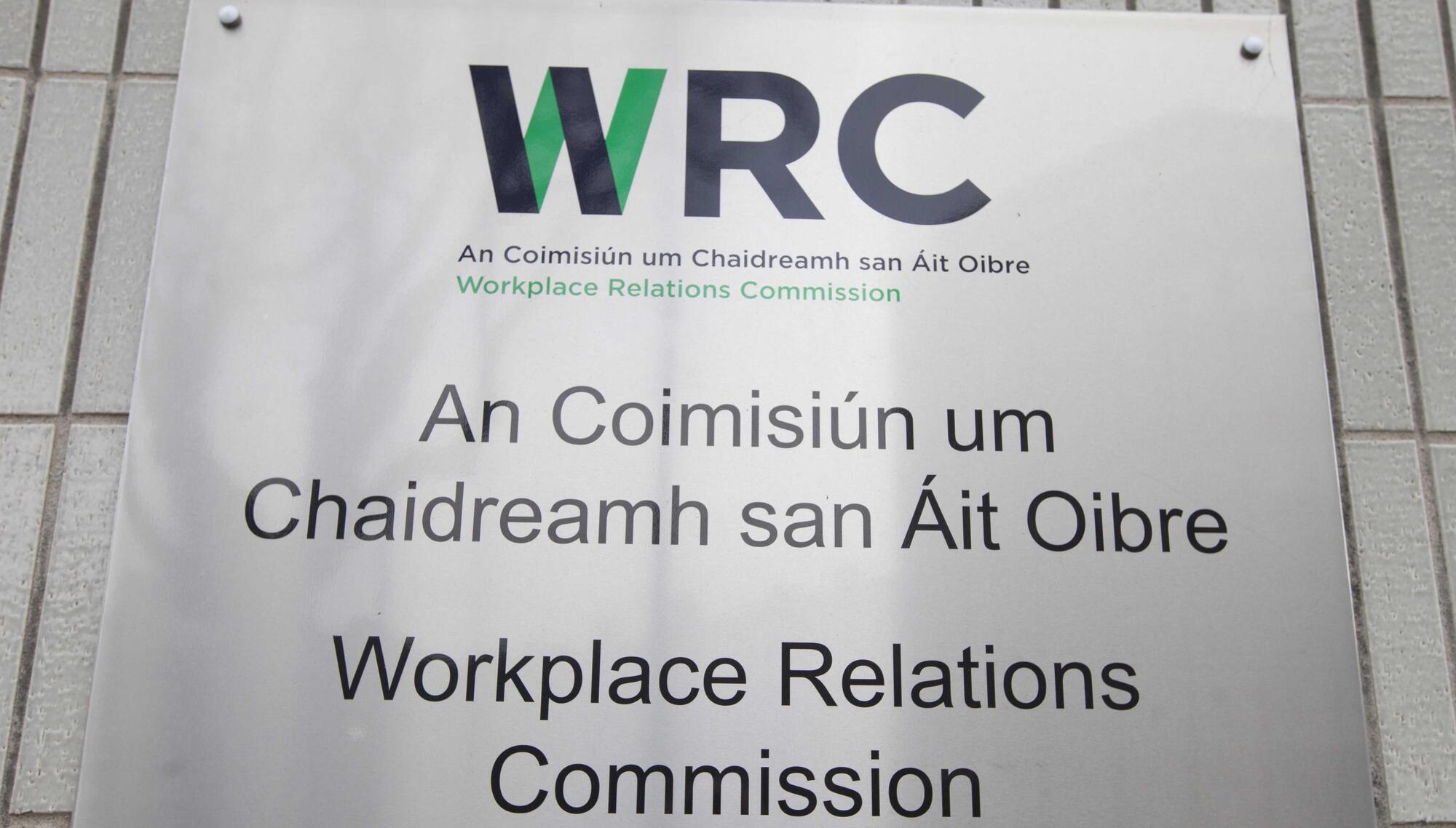
The sales executive was paid €4,220 a week at the job and his award of €329,199 was calculated by the Workplace Relations Commission as 75% of his financial loss over two years. File photo

A State workplace watchdog has ordered that a software firm pay €329,199 compensation to a sales executive for his unfair dismissal.

The sales executive enjoyed weekly pay of €4,220 or €219,466 per annum and Workplace Relations Commission (WRC) Adjudicator, Breiffni O’Neill, has calculated the award of €329,199 as 75% of the worker’s financial loss over two years.

Mr O’Neill stated that while the decision to dismiss the executive via email “was disproportionate”, the worker did through “his inappropriate behaviours” contribute somewhat to the termination of his employment.

The worker’s preferred option was reinstatement but Mr O’Neill stated that compensation should be awarded as “the working relationship between the parties has irretrievably broken down”.

The worker started employment with the firm in December 2016 and was initially employed in the role of Account Executive prior to his promotion to the role of Enterprise Account Executive in April 2019.

The man was dismissed on the grounds of serious misconduct on September 17, 2019, following allegations of bullying having been made against him.

The firm stated that the worker's interactions and communications with his colleagues via Slack, a channel-based messaging platform, “were frequently problematic and required intervention by management on various occasions”.

'Inappropriate behaviours'

In his findings after five days of evidence before the WRC, Mr O'Neill stated that he was satisfied that, while the worker “did engage in some inappropriate behaviours in his interactions with his two colleagues who made a complaint about him, these fell a long way short of warranting his dismissal in the circumstances”.

Mr O’Neill said that, crucially, he saw little difference between the nature of the worker’s comments and messages to a colleague prior to a May 7, 2019, meeting, and the comments made between May 7 and June 6, 2019, which resulted in his suspension, and notably occurred during the period of Ramadan, which the worker as a practising Muslim was observing, but the employer made no allowances for.

Mr O’Neill also found that “any reasonable employer would have tried to understand in the first instance if the employee’s observance of Ramadan was causing a difficulty for him and would certainly not have made a decision to dismiss an employee on the basis of his conduct over a period of less than a month, from May 7 to June 6, 2019, especially when such behaviours were largely similar to those that had not even justified a formal verbal warning less than one month beforehand”.

Mr O’Neill also found that it is impossible to discern what specific comments or behaviours caused a Vice President (VP) of the firm to make his finding of serious misconduct because the termination letter issued on September 17, 2019, only contained one example of alleged bullying behaviour, which was not particularly specific.

This was that, namely, the worker left a voice message where he “said something like ‘either you do something or I will do something about it” and furthermore there is no clear indication that his behaviour worsened significantly after the May 7 meeting.

'Substantively unfair' dismissal

Mr O'Neill also found that the failure by the firm to contemplate issuing a formal verbal, written or final written warning to the worker at any stage prior to his termination “is incomprehensible”. He also found that the worker's dismissal “was substantively unfair as well as wholly disproportionate and that no reasonable employer would have made a decision to dismiss him in the circumstances”.

Mr O’Neill stated that despite both the VP and the firm's People Operations Partner's repeated references to the culture and values of the employer as well as the importance of respect, “the lack of decency, humanity and dignity shown to the Complainant was deplorable”.

Mr O’Neill noted that the worker, “a frequently-promoted, top performer, was suspended via a phone call and was informed both that his employment was being terminated and his appeal was unsuccessful via email instead of being afforded the basic human courtesy of a face-to-face meeting in each instance”.

He said that, moreover, no evidence was provided of any support or engagement by the employer throughout the suspension period which exceeded three months.

He said: "While the callous nature of the Complainant’s treatment and the disregard shown to him was insignificant in terms of my ultimate findings, it is nonetheless indicative of the treatment of him throughout the process, where the Respondent ignored the procedures in their own handbook and is completely at odds with the alleged values and culture espoused by their witnesses.” 

Mr O’Neill also stated that he is satisfied that there was overwhelming evidence to suggest that the VP was heavily involved in attempts to manage the worker’s behaviours and could not have been seen to be independent in his capacity as the decision-maker of the disciplinary outcome.

He also said that “this lack of independence of the person who made the decision to terminate the Complainant’s employment, therefore, rendered the dismissal procedurally unfair".

Level of award

In calculating the award, Mr O'Neill said: “I am of the view that it would have been extremely difficult for the Complainant to have found alternative employment and am not surprised that it took him 22 months to find a new role, given the nature of his dismissal.”

Mr O’Neill stated that specifically, he recognised that the worker earned a very substantial remuneration package, that the firm operates in a niche sector in a city in a very small country where both employers and recruitment agencies are easily known to one another.

Mr O’Neill said that there would have been an obvious reluctance of prospective employers to offer the complainant any position, let alone a well-paid one when being made aware of the reasons behind the termination of his employment.

As part of his case, the worker argued that the dismissal was a disproportionate sanction and far too much emphasis was placed on informal emails and discussions instead of formal procedures.

The worker also stated that the complaints of the two parties who made the bullying allegations against him “are vague and implausible as examples of bullying and harassment”.

The worker - represented by Daniel Johnson, Johnson & Company - argued that robust and coarse language was part of the workplace culture.

x

More in this section

Lunchtime News

Newsletter

Keep up with stories of the day with our lunchtime news wrap and important breaking news alerts.

Cookie Policy Privacy Policy Brand Safety FAQ Help Contact Us Terms and Conditions

© Examiner Echo Group Limited