Teachers vote against prospect of grading their own students
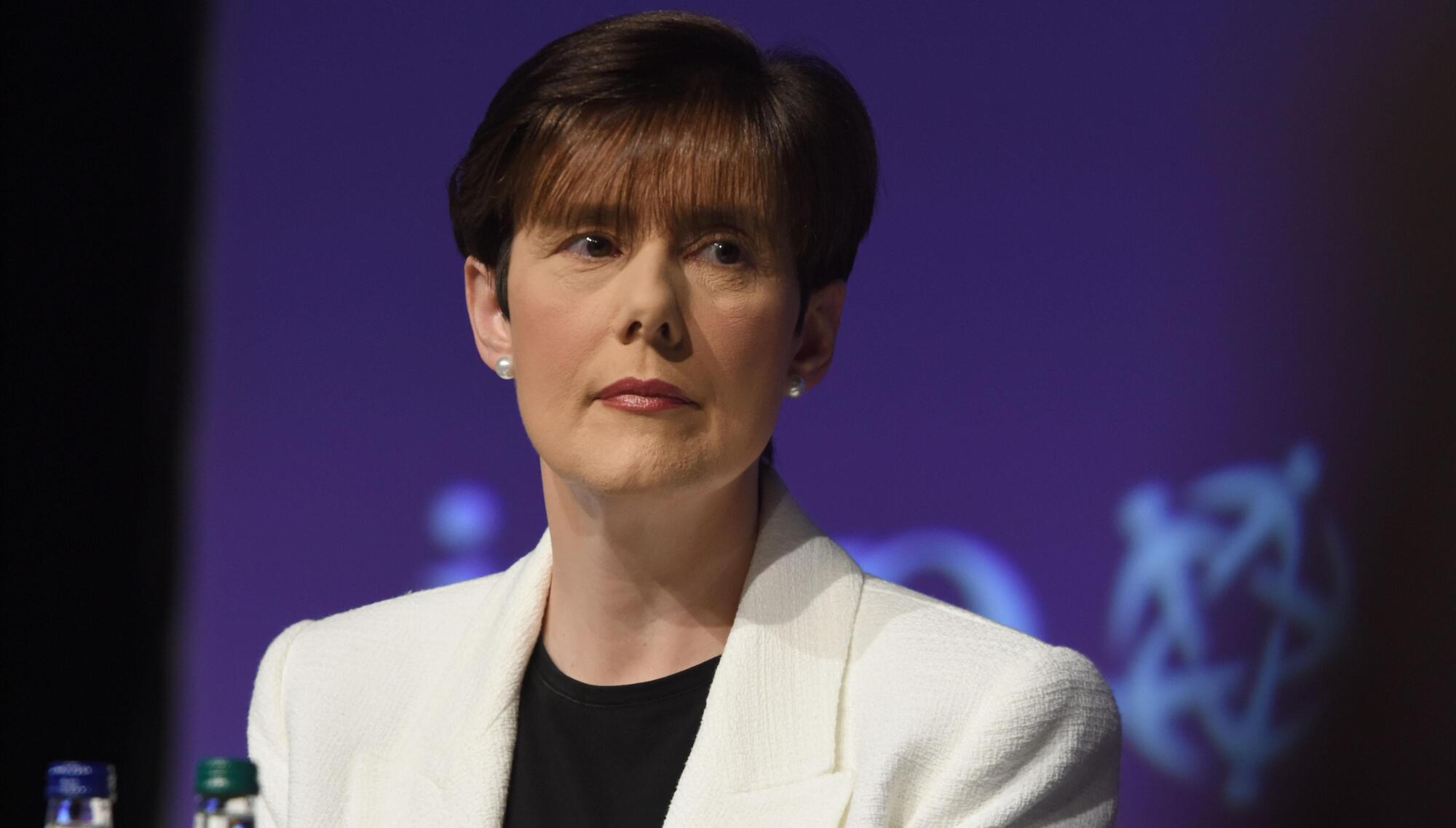
Education Minister Norma Foley listens to INTO general secretary John Boyle speaking to her and delegates at the union's annual Congress in Killarney. Picture: Moya Nolan
Teachers have said a resounding ‘no’ to teacher-based assessments, backing significant motions opposing plans that will see them grading their own students.
The country’s two post-primary teachers’ unions passed motions on Wednesday opposing Education Minister Norma Foley’s Leaving Cert reforms, which see teachers providing 40% of students' final grades.
The Association of Secondary Teachers Ireland (ASTI) and the Teachers’ Union of Ireland (TUI) both strongly oppose the reforms, which will need significant buy-in from teachers, arguing that unions have not been properly consulted.
Teachers attending the annual conferences argued that teachers assessing their own students is a “red-line” issue for many union members, the reforms are “regressive” and will add to grade inflation and to students’ stress levels.
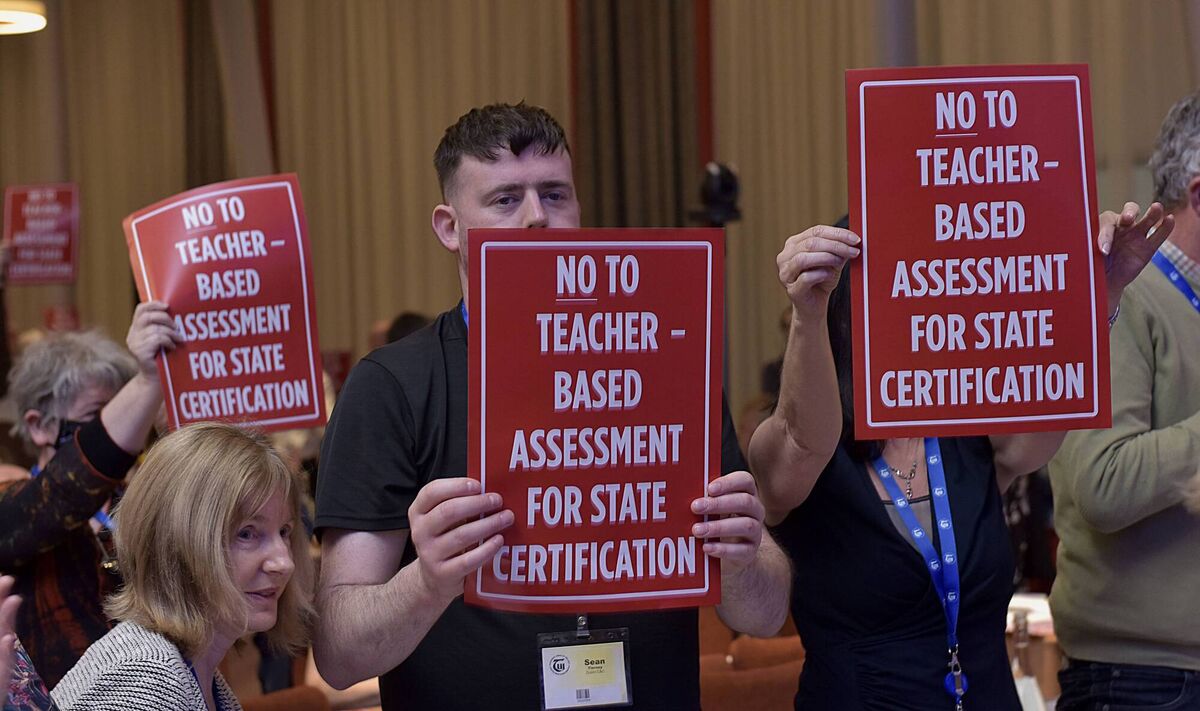
As Ms Foley attended the TUI conference, delegates held up placards that read 'No to teacher-based assessments'.
Niall Duddy of the ASTI told the floor that he feared the 40% included in the plans would be the “thin end of the wedge” when it comes to teachers grading their own students.
On Wednesday, the TUI secured a mandate for the union to resist the implementation of Leaving Cert reforms “by all available means”, including a ballot for a "sustained campaign of industrial action" by teachers.
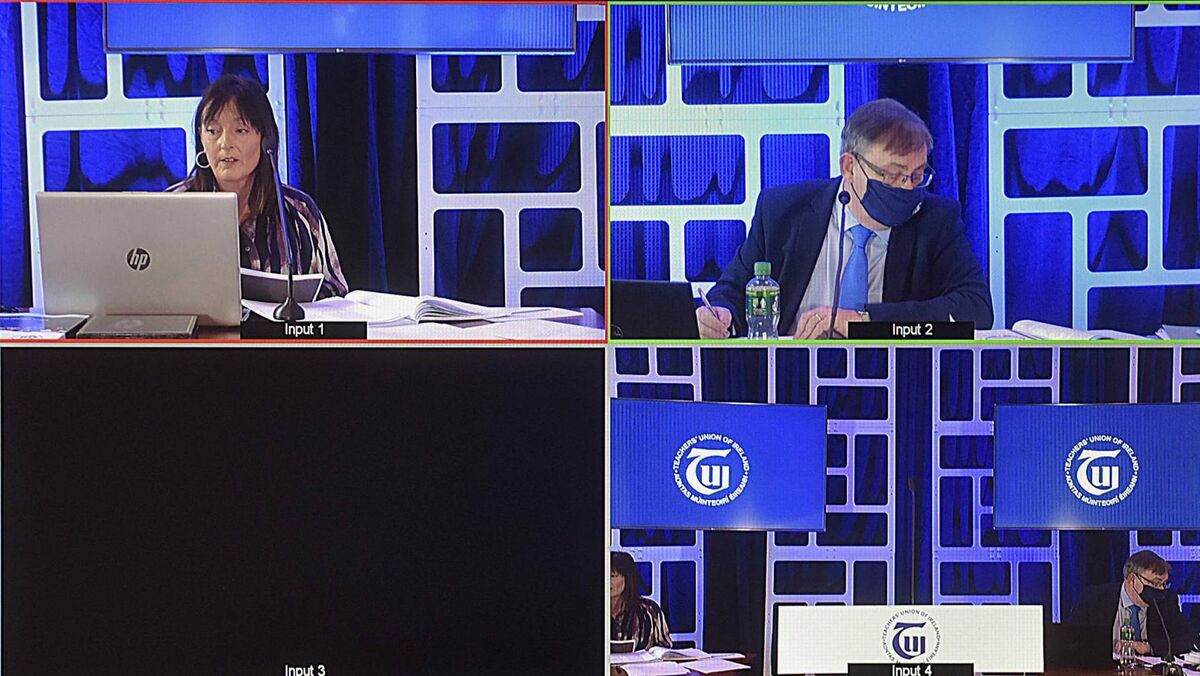
TUI vice president Liz Farrell told Congress that the changes proposed are "regressive" and that the decision by the minister to press ahead without teachers' support was "indicative of the disdain" that the profession is held in by the Government.
The ASTI also passed a number of motions opposing the reforms, including a motion that sees the union “refuse to engage” in any discussion on the Leaving Cert until a full “open and transparent” study of the reformed Junior Cycle takes place.
Addressing the TUI conference, Ms Foley said the proposed reforms would reduce student stress levels and give them more confidence in their work.
"I know too, as a teacher, that you will all be very conscious of the need to protect the relationships at school level that you have with your students," she said.
"I fully recognise that schools and teachers must be resourced to have the facilities, supports, and time to make this work."

CONNECT WITH US TODAY



Be the first to know the latest news and updates