EU leaders agree new sanctions on Russia's financial, energy and transport sectors
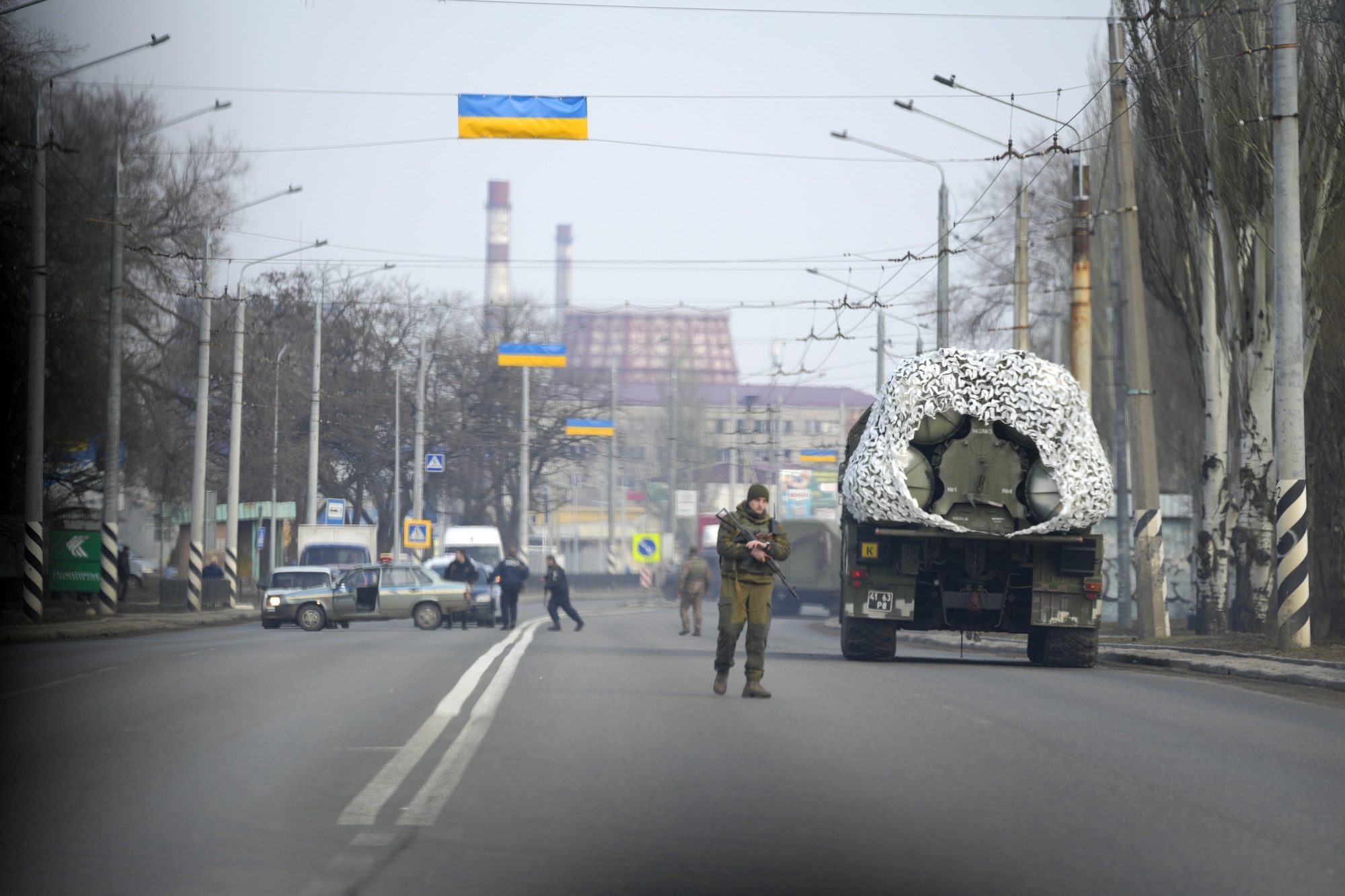
A Ukrainian soldier stands next to a military vehicle on a road in Kramatosrk, eastern Ukraine. AP Photo/Vadim Ghirda
EU leaders have agreed to impose new sanctions on Russia's financial, energy and transport sectors and impose export controls, as well as blacklisting more Russians over Moscow's invasion of Ukraine.
"The European Council today agrees on further restrictive measures that will impose massive and severe consequences on Russia for its action," said a statement by the 27 national EU leaders meeting in Brussels on Thursday night.

"These sanctions cover the financial sector, the energy and transport sectors, dual-use goods as well as export controls and export financing, visa policy, additional listings of Russian individuals and new listing criteria," the statement said.
Read More
Taoiseach Micheál Martin, speaking on arrival at the hastily arranged summit, made clear Ireland will support the strongest possible package against Russia, no matter what the cost on Ireland’s economy.
Russian forces invaded Ukraine early on Thursday, assaulting by land, sea, and air in the biggest attack by one state against another in Europe since the Second World War.
Ukrainian forces battled Russian invaders from three fronts as missiles rained down on Ukrainian cities and Ukraine reported columns of troops pouring across its borders from Russia and Belarus, and landing on the coast from the Black and Azov seas.

The invasion led to warnings from US president Joe Biden that the aggression by Russian President Vladimir Putin would cost Russia dearly.
Ireland will support whatever measures the EU deems fit against Russia, including expulsion from the SWIFT banking arrangement, Mr Martin told reporters.
He said sanctions had to reflect the seriousness of Russia's incursion and "weaken its industrial base and ability to wage war".
He hit out at President Putin and his “henchmen”, who he accused of lying to the world about their military intentions.

Tánaiste Leo Varadkar said Ireland would support any further sanctions against Russia, including measures that could negatively impact financial services in this country.
He said Ireland "will not be putting any selfish economic interests ahead of responses required" and is willing to accept sanctions that "disrupt the banking and financial services that are used by Russians, whether in this State or another State".
In terms of what sanctions are likely, there are currently no plans to either expel the Russian ambassador in Dublin or withdraw diplomats from the Irish embassy in Moscow.
High-level sources said that either such move at this time "would not be helpful" and said that the situation is "not in that space" at present.
The expulsion or withdrawal of diplomats would pose numerous issues for civilians, including Irish citizens in Russia who require consular assistance.
Mr Martin was unequivocal that Ireland will not support or recognise any government installed in Kyiv by Vladimir Putin.
"No. Absolutely not. We support the democratically-elected government of Ukraine. We believe fundamentally in the principles of the UN charter which have been violated by Russia.
"We believe in peaceful solution to disputes. We think of the Ukrainian people in the line of fire and of the young people who will die because of Russian aggression, unnecessarily and in no way is this justifiable."
Mr Martin said that Ireland will be providing an initial €10m humanitarian fund.
"We will also stand ready to do whatever else we can to assist the Ukrainian people in their honour of need."
However, sanctions on Russia may only have a limited impact, Foreign Affairs Minister Simon Coveney admitted.
There is a “great deal of pessimism” that sanctions on Russia will have any impact, but doing nothing is not an option.
Mr Coveney said sanctions will not be cost free for this country or other EU member states, but we are left with little choice on foot of Russia's behaviour.
He said the role that Ireland will play here will not be a neutral one.
Mr Coveney said he is working with Justice Minister Helen McEntee to put a structure and system in place that will allow Ukrainian citizens in Ireland bring their families from Ukraine to Ireland.