Timeline: Russia invades Ukraine - today's main developments
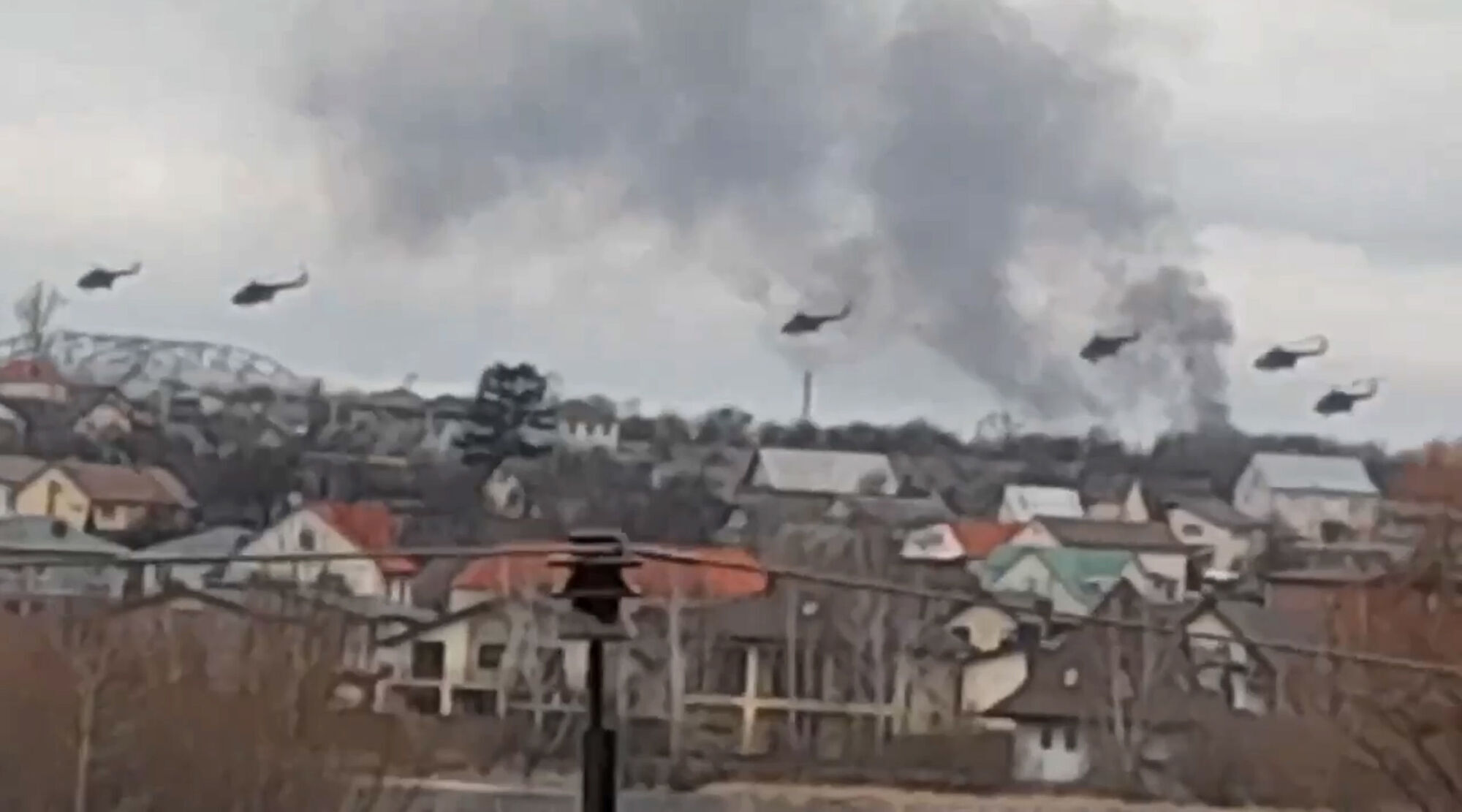
Military helicopters, apparently Russian, fly over the outskirts of Kyiv, Ukraine. Picture: Ukrainian Police Department Press Service via AP
Russian troops have launched what the Ukrainian President has called “a full-scale” military assault on Ukraine.
Up to 100 people, including up to a dozen civilians, are estimated to have died in the fighting so far.
The Ukrainian Health minister has also stated that 169 people have been wounded.
Here are the day's main developments:
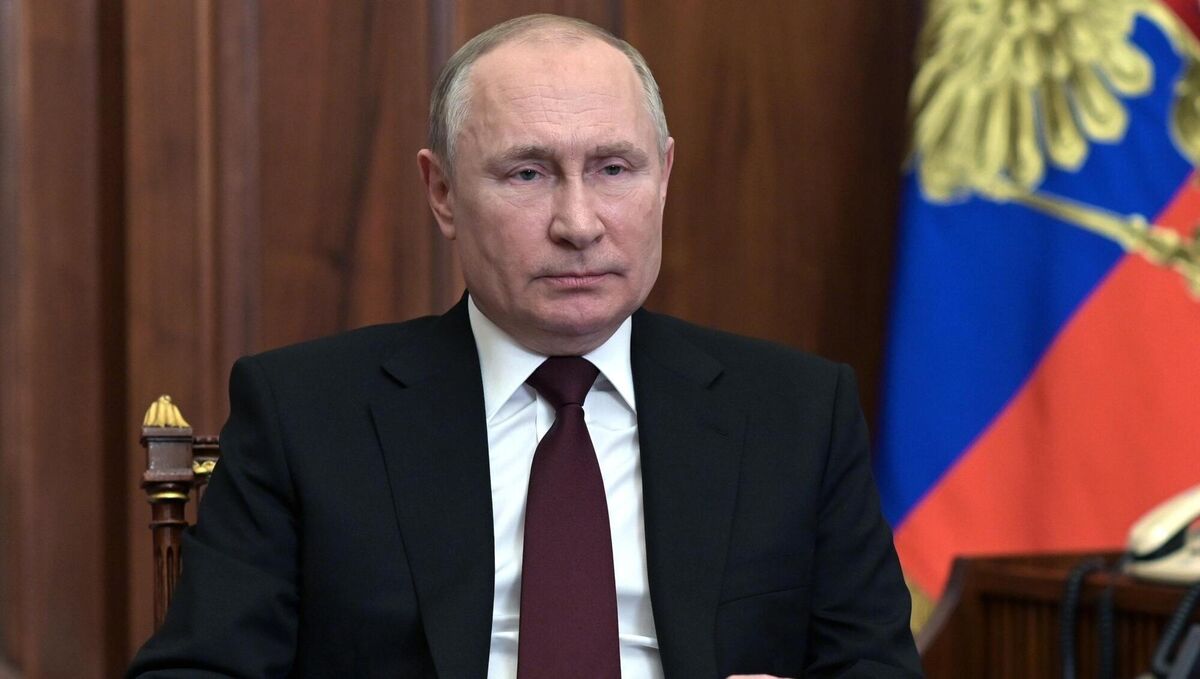
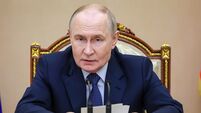
In a televised address delivered as the attack began early this morning, Russian President Vladimir Putin said his military’s actions were required to protect civilians in eastern Ukraine, where the Ukrainian Army and Russian-backed separatists have been fighting since 2014.
Mr Putin said wider intervention in Ukraine was also required to ensure Russian security, which he accused NATO and the US of undermining.
And so, the largest attack on a European state since the Second World War commenced.
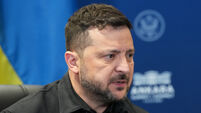
Following Mr Putin’s address, Ukrainian President Volodymyr Zelensky delivered a televised address of his own.
Speaking in the Russian language, Mr Zelensky spoke directly to the Russian people in an attempt to break through a veil of Russian state disinformation depicting his country as a threat to Russia.
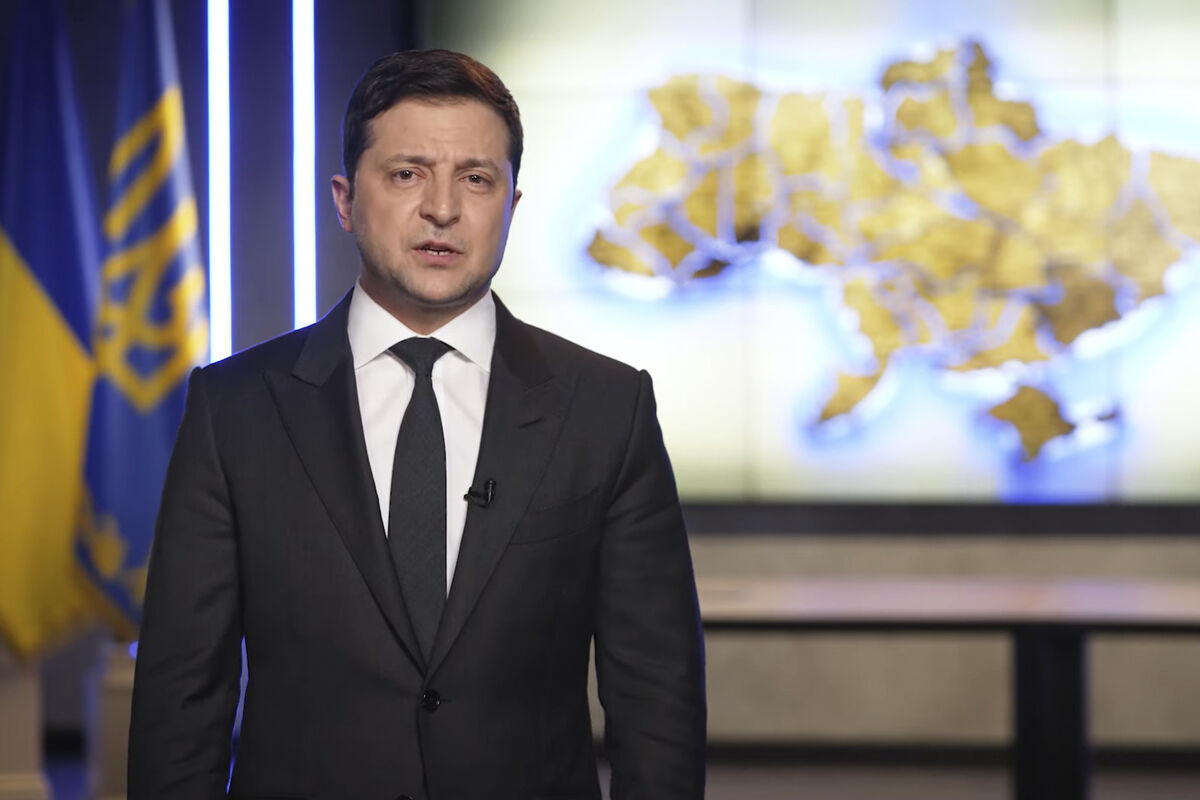
“You are being told this is a plan to free the people of Ukraine,” he said.
“But the Ukrainian people are free.
"The Ukraine on your news and Ukraine in real life are two completely different countries. The main difference is ours is real,” Mr Zelensky told those watching his address.
“You are told that we are Nazis. How could a people that lost more than 8 million people in the fight against Nazism support Nazism?"
Mr Zelensky expressed hope that the Russian Government would listen to its people, even if it would not listen to the Ukrainian government.
He even said he had attempted to call Vladimir Putin but his words were met with only silence.
News of Russia’s invasion was condemned by world leaders.
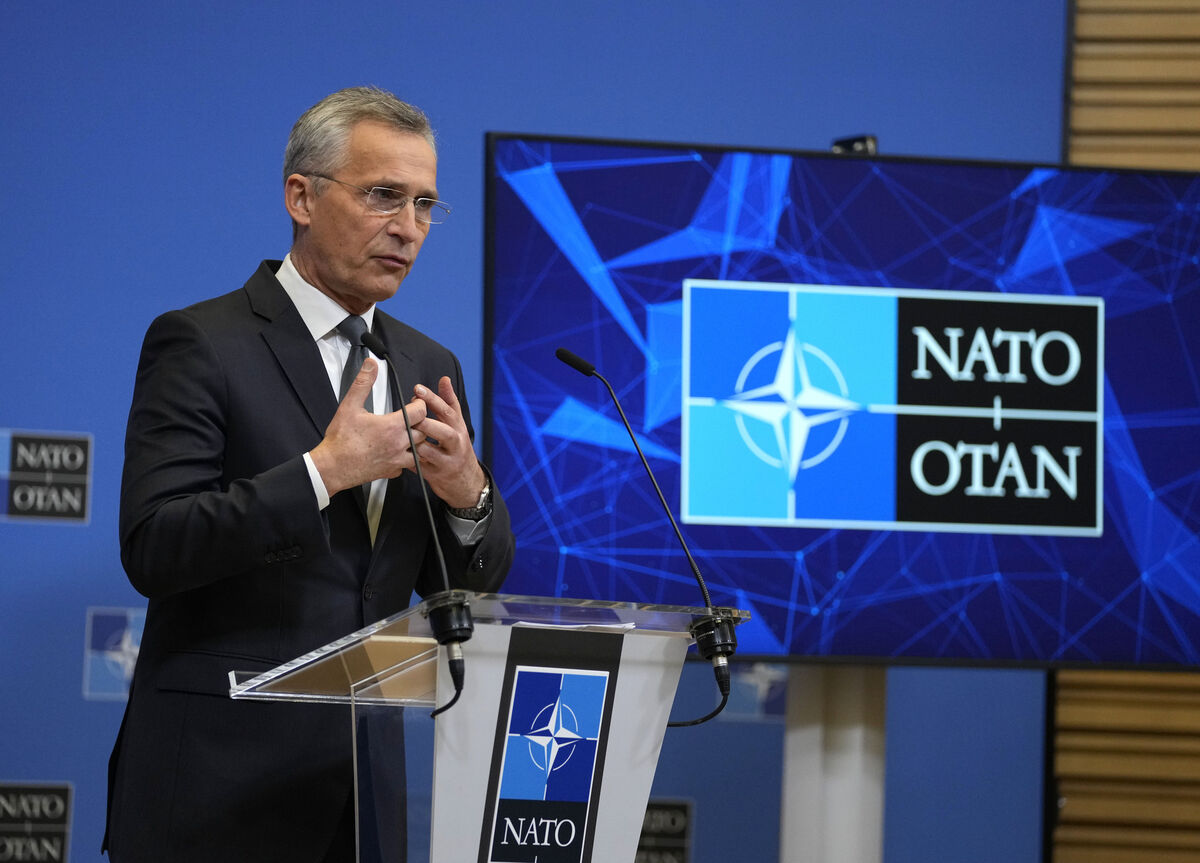
NATO Secretary-General Jens Stoltenberg called the move “a brutal act of war”.
He said Russia's actions had destroyed peace on the continent of Europe.
However, Mr Stoltenberg said that while NATO would be increasing troop presence on its eastern flank, it had no plans to deploy troops to Ukraine.
German Chancellor Olaf Scholz called today “a dark day for Europe.”
In the US, President Biden said his Russian counterpart had “chosen a premeditated war that will bring catastrophic loss of life and human suffering.”
UK Prime Minister Boris Johnson said Putin had “unleashed war on the European Continent.
UN secretary-general António Guterres, appealed to Putin to end the invasion. “President Putin, stop your troops from attacking Ukraine. Give peace a chance. Too many people have already died,” he said.
The US, EU and UK each issued a raft of sanctions against Russia.
The EU said its package would entail “the strongest and harshest” sanctions it has ever issued.
President Biden said the US and other G7 countries would be moving forward with “devastating packages of sanctions and other economic measures to hold Russia to account.”
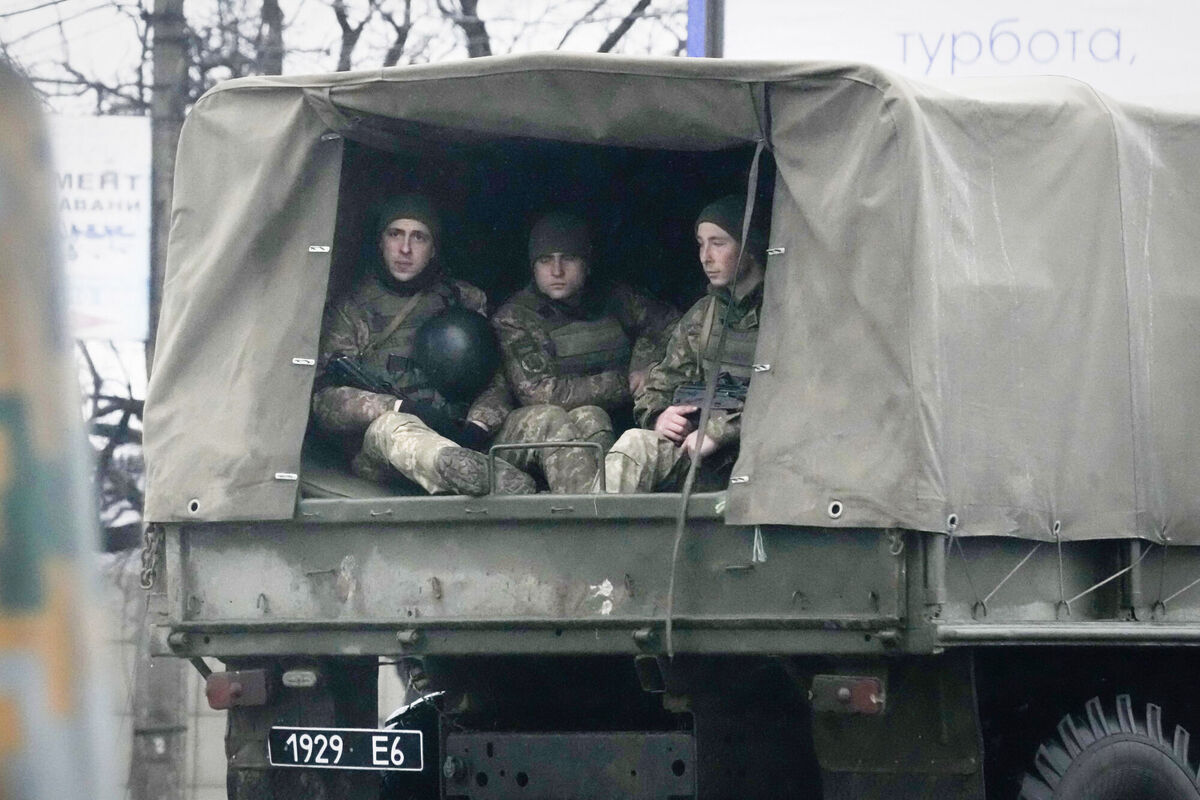
From this morning, there were reports of Russian artillery hitting locations right across Ukraine.
With its attacks, the Russian military appeared to be targeting key infrastructure in Ukraine, including military depots, airbases and airports.
President Zelensky declared martial law and all air transport in and out of the country ground to a halt.
By this afternoon, the Russian military claimed it had neutralised dozens of key Ukrainian army locations, command posts and facilities housing radar.
Throughout the evening, the sounds of air raid sirens and bombs have been heard in and around all Ukraine’s major cities.
Military experts expect Russia to attempt to surround possibly capture Kyiv.
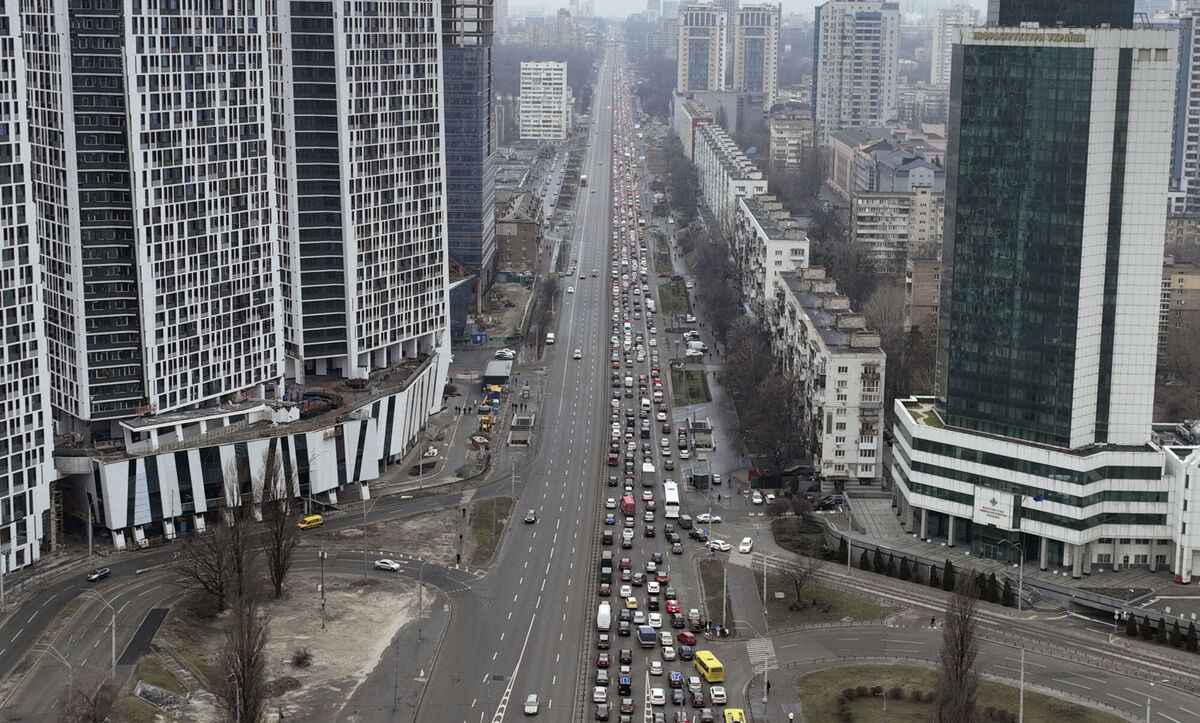
Thousands of Ukrainians have fled the country in the wake of the invasion, with thousands more understood to be preparing to do so.
Pictures on social media showed immense traffic build-up on the main streets of most of the country’s population centres.
Other images showed hundreds of cars queueing to cross border checkpoints into Hungary, Poland and Moldova.
The United Nations (UN) refugee agency appealed to countries that neighbour Ukraine to keep their borders open and allow people to pass safely.
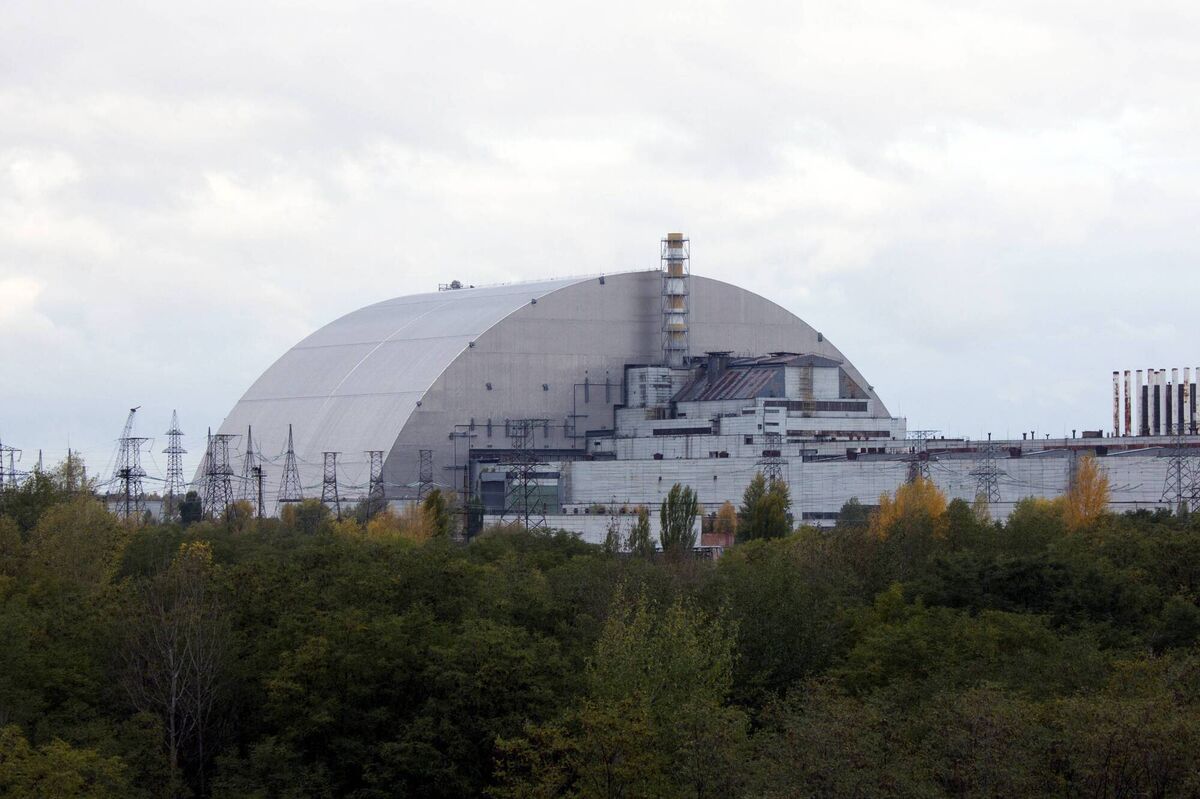
This evening, Russian troops seized control of the Chernobyl nuclear plant, the site of the world’s worst nuclear disaster.
A Ukrainian military official told the that the current condition of the facility, which lies at the heart of the most radioactive location on earth, was not yet known.
“After the absolutely senseless attack of the Russians in this direction, it is impossible to say that the Chernobyl nuclear power plant is safe,” the official said.
What happens next is uncertain.
The UN Security Council is set to vote tomorrow on a draft resolution condemning Russia's actions and requiring it to withdraw. It goes without saying that Russia is likely to ignore any UN statements.
It will remain to be seen whether the hefty sanctions imposed on Russia by the rest of the world will really hamper its actions in Ukraine.
In the interim, countless more lives are sure to be lost and thousands more Ukrainians are sure to be displaced.


CONNECT WITH US TODAY



Be the first to know the latest news and updates