Northern Europe warmer than average, but temperatures drop in southern Europe
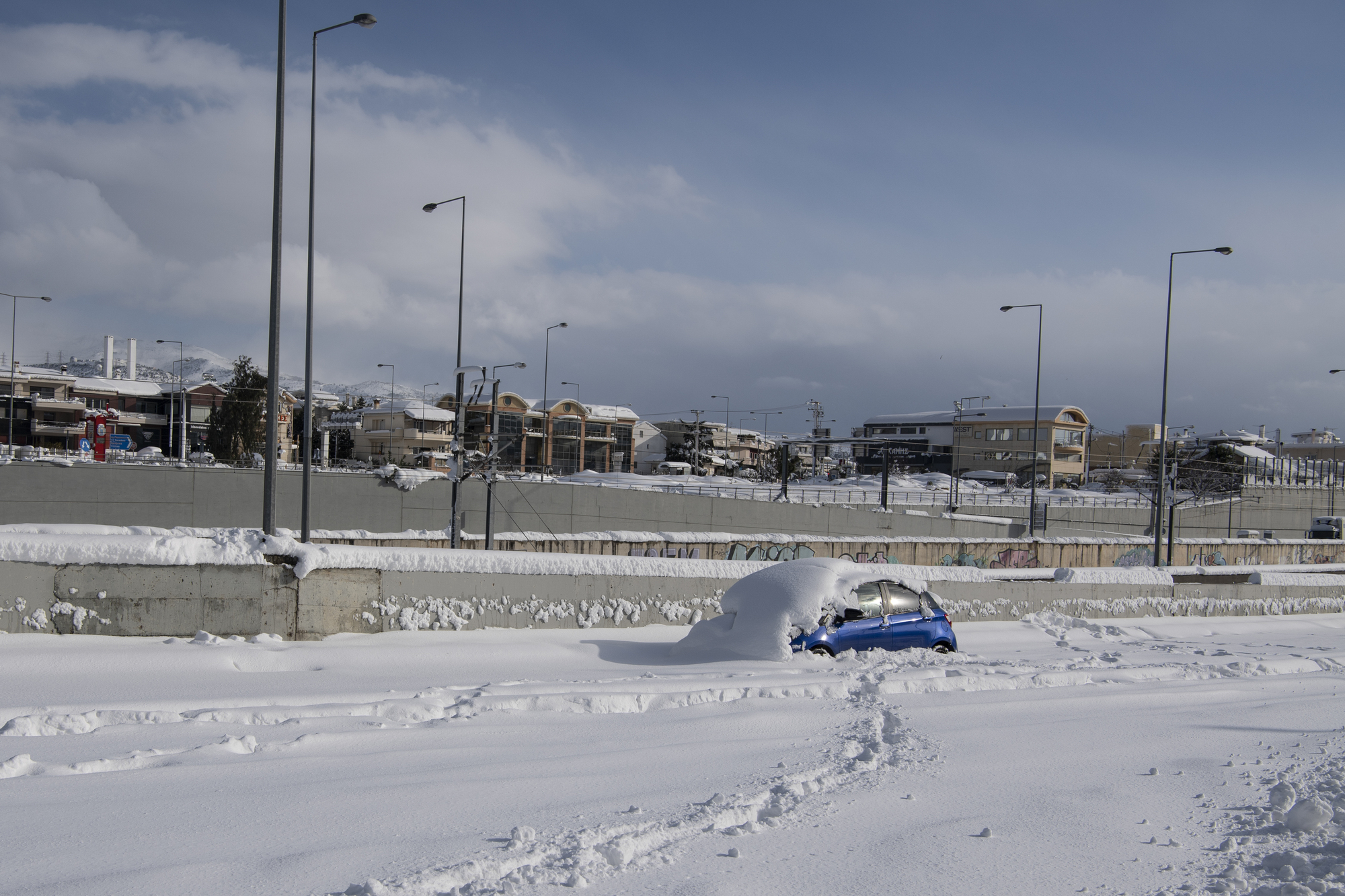
An abandoned vehicle on a motorway after a snowstorm in Athens last month. The European Commission-backed Copernicus Climate Change Service has noticed colder-than-average conditions occurred in France, northeastern Spain, Greece, and Turkey in January. Photo: AP/Michael Varaklas
Temperatures across Europe since the beginning of the year have flipped from usual patterns, official data shows - with the likes of Ireland and Scandinavia warmer than usual, while traditional holiday favourites like Turkey and Greece are colder.
The European Commission-backed Copernicus Climate Change Service, known as C3S, analysed data from across the continent, "using billions of measurements from satellites, ships, aircraft and weather stations around the world".
In Ireland, Met Éireann confirmed last week that Ireland was getting warmer in recent months, with all weather stations reporting above-average temperatures for the fifth month in a row.
In Cork, Sherkin Island had its driest January in 49 years of records, while Cork Airport, along with Johnstown Castle in Wexford, had their driest January since 1964, Met Éireann said.
The higher temperatures in Ireland have also been observed across the north of the continent in January, C3S data show, while some parts of the southern half saw the reverse.
"January 2022 saw, in general, above-average temperatures across Europe. Warmer-than-average conditions occurred across Germany, eastern Europe, Scandinavia, the northern UK and Ireland, while colder-than-average conditions occurred in France, northeastern Spain, Greece, and Turkey," C3S said.
When it came to rain, it was drier than average over most of western and southern Europe, the data shows. Conversely, Scandinavia and eastern Europe were predominantly wetter than average, C3S said.
Globally, January 2022 was 0.28°C warmer than the 1991-2020 average, the agency added. It was the sixth warmest January on record, C3S said. January in 2016 and 2020 were 0.3°C warmer than last month, it said.
When observing Europe as opposed to global temperatures, European-average anomalies are generally larger and more variable, according to C3S. "The European average temperature for January 2022 was 0.79°C above the 1991-2020 average, which lies outside the 10 warmest Januaries on record," it said.
Across the world, temperatures outside of norms were also observed.
"Temperatures were above average in parts of central Asia and Russia and a notable heatwave affected South America, whereas colder-than-average temperatures occurred across most parts of Canada, North Africa, and India," it said.
South American patterns were notable, especially in Argentina, which is experiencing its summer season. "A notable heatwave in South America led to Argentina and Brazil having temperatures exceeding 40°C and the setting of more than 75 temperature records in Argentina," C3S said.
Lost ice cover in the Antarctic was far more pronounced than in the Arctic in January, the data show.
Antarctic sea ice extent - the total area covered by some amount of ice - was 19% below the 1991-2020 average, ranking fourth lowest in this data record, C3S said.
In the Arctic, sea ice extent was just 1% below the 1991-2020 average, the largest January extent since 2009, yet smaller than any January extent prior to 2005, it added.

CLIMATE & SUSTAINABILITY HUB
CONNECT WITH US TODAY



Be the first to know the latest news and updates