Statistics on violence against women are cold comfort to victims, but may help to inform

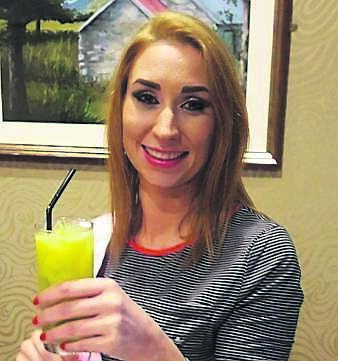
Ashling Murphy: Killed on the banks of the Grand Canal in Tullamore, Co Offaly.
It may seem cold, even inappropriate, to quote statistics amid a national outpouring of grief and anger at male violence against women.
The violent death of women, seen most recently in the killing of Ashling Murphy, rattles the country and often leads to fresh calls for things to change.
Social media, radio stations, and newspapers have been full of individual stories from women of daily harassment, physical and online stalking, and attacks — and how precautions and limits are part and parcel of their lives.
It all comes against the backdrop in recent years of a seeming epidemic in the courts of appalling levels of violence inflicted on females — from domestic violence cases to serious assaults, to rape, and ultimately murder.
Some of last year’s murder convictions in the courts — for the murders of Nadine Lott, Natalia Karaczyn, and Anne Colomines — were particularly gruesome.
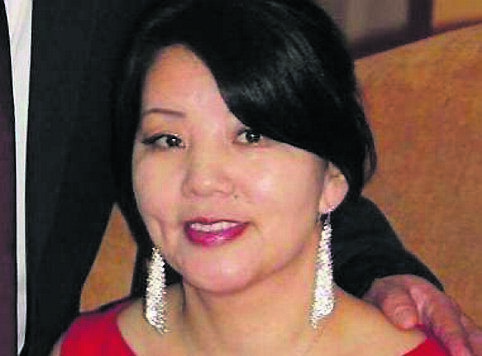
Then there was the fatal assault on Urantsetseg Tserendorj as she left work for home at the Financial Services Centre in Dublin just over a year ago.
And people remember the grimmest couple of days in May 2018 that saw the shocking deaths of Jastine Valdez and 14-year-old Ana Kriegel.
The danger for young women was again reinforced this month with an attack on 17-year-old Alanna Quinn Idris in Ballyfermot, West Dublin, after she got off a bus.
The incidents recorded by gardaí, and later analysed and published by the CSO, only reflect cases that are reported, with unknown — but most likely large — numbers of harassment, assault, domestic violence, and sexual assault cases going unreported to gardaí.
The figures also come with the now-usual caveat from the CSO — that the statistics are published ‘under reservation’, meaning the agency remains concerned about the quality of the underlying Garda data.
Figures provided by the CSO show how murders and manslaughters — a subcategory of homicides — have, in the main, fallen gradually over the last 10 years.
The total number has dropped from the highs of 2012-2014, when there were 59 murders/manslaughters each year, to a low of 36 in 2015, before increasing to 42 in 2016 and then dropping to 38 in both 2019 and 2020.
The trend for male victims mirrors that trend, from the mid- to high-40s in the years 2012-2014, dropping to a low of 29 in 2015, increasing in 2016, and falling to 30 in 2019 and 32 in 2020.
For women, the trend has fluctuated a lot more.
Again, the years 2012-2014 saw a large number of cases – 12, 11, and 13, respectively. During those years, females accounted for, on average, a fifth of all cases.

The number of murders/manslaughters dropped in 2015 to seven, but females still accounted for around a fifth of all cases.
The year 2016 saw the least amount of female homicides, with two cases (representing 5% of the total). But then the situation changed dramatically in 2017, with 16 murders/manslaughters of women — reflecting a third of all cases.
The number fell over the subsequent three years, with 11 cases in 2018 and eight in 2019. But these still represented over a fifth of all murders/manslaughters in those years.
In 2020, there were six cases, representing one in six murders and manslaughters.
The CSO looked in more detail at the years 2018 and 2019, in terms of the gender of the suspected offender in serious crimes that were detected by March 2021.
In relation to murder/manslaughter, it found that, in around nine out of 10 cases, the suspected offender was a male.
Further analysis by the CSO found that of nine murders/manslaughters of women detected in 2018, seven of the suspects were male and two were female.
Of the 26 murders/manslaughters of men, 24 of the suspects were male, and two were a woman.
Looking at 2019, of the six cases where women were killed, five of the suspects were male, and one was a woman.
Of the 25 killings of a male, men were the suspected offenders in 23 of the cases.
As has been covered in the media in recent years, the number of reported sex offences has increased, with Gardaí and the CSO putting it down, in part, to more reporting by victims as well as improvements in Garda recording practices.
The number of sex offences against females rose from 2,047 in 2017 to 2,290 in 2019, before dropping, like most crime categories in 2020, to 2,006.
Sex offences against males increased from 477 in 2017 up to 537 in 2019, only falling slightly in 2020, to 528.
The CSO said that 98%-99% of sex offences in 2018 and 2019 were carried out by a man.
A further examination of detected cases shows that of 528 sexual offences against a woman in 2018, some 520 were suspected to have been carried out by a male.
Also, of the 123 sexual offences against a man, 120 of the suspects were male.
The broad category of assaults covers a wide area, with the CSO analysis here breaking it down to attempted murder/threats of murder, assaults (including serious and less serious assaults), and harassment and related offences.
The total number of offences show a rise between 2017 and 2020, from 18,027 reported cases to 20,655 in 2019. It dropped in 2020, in parallel with Covid restrictions, to 17,800.
The trend over the years shows that while assaults on both males and females increased between 2017 and 2019 and dropped in 2020, the proportion of victims that were female increased — from 40% of cases in 2017 to 44.5% of cases in 2020.
This trend is reflected in the three sub-categories.
Assaults on women increased from 6,074 in 2016 to 6,926 in 2019, dropping to 6,241 in 2020. Again, there was a similar trend with male victims.
But the proportion of assaults involving female victims rose, from 37.5% in 2017 to 44.4% in 2020.
The CSO analysis of 2018 and 2019 figures shows that females were the suspected offender in about 20% of cases of assaults.
The examination of detected cases shows that of 2,536 assaults on women in 2018, a man was the suspect in 1,631 (64%) of them. A female was the suspect in 905 (36%) of cases.
Of the 2,691 detected assaults on women in 2019, some 1,685 (63%) were carried out by a male suspect and 1,006 (37%) by a female suspect.
In relation to attempted murder/threats of murder, the trend is even starker.
The numbers of such cases, for men and women, increased significantly in the four years examined. Threats/attempts of murder jumped from 437 to 809 among men, but rose even more among women, from 262 to 645.
Females accounted for 37.5% of all such cases in 2017, rising to 44.4% in 2020.
The CSO analysis of 2018 and 2019 shows that males were the suspected offender in around 93% of cases.
Of the 161 detected cases of attempt/threats of murder against a female in 2018, some 145 involved a suspected male offender. In 2019, there were 185 such cases, 165 of which involved a suspected male offender.
In relation to harassment, the number of reported cases involving a male victim fell slightly over the four years, from 534 to 514.
The number involving female victims rose slightly, from 919 to 1,042, twice that of men. Women accounted for 67% of all victims in 2020, up from 63.2% in 2017.
The CSO analysis of 2018 and 2019 shows that around 85% of the suspected offenders were male.
Of the 115 detected cases of harassment of women in 2018, a total of 100 of the suspects were male. Of the 129 cases in 2019, some 108 of the suspects were male.
The statistics are of cold comfort to victims and their families, but they may help to inform knowledge of what's going on.
CONNECT WITH US TODAY



Be the first to know the latest news and updates