Asteroid bigger than Carrauntoohil to soar past Earth tonight
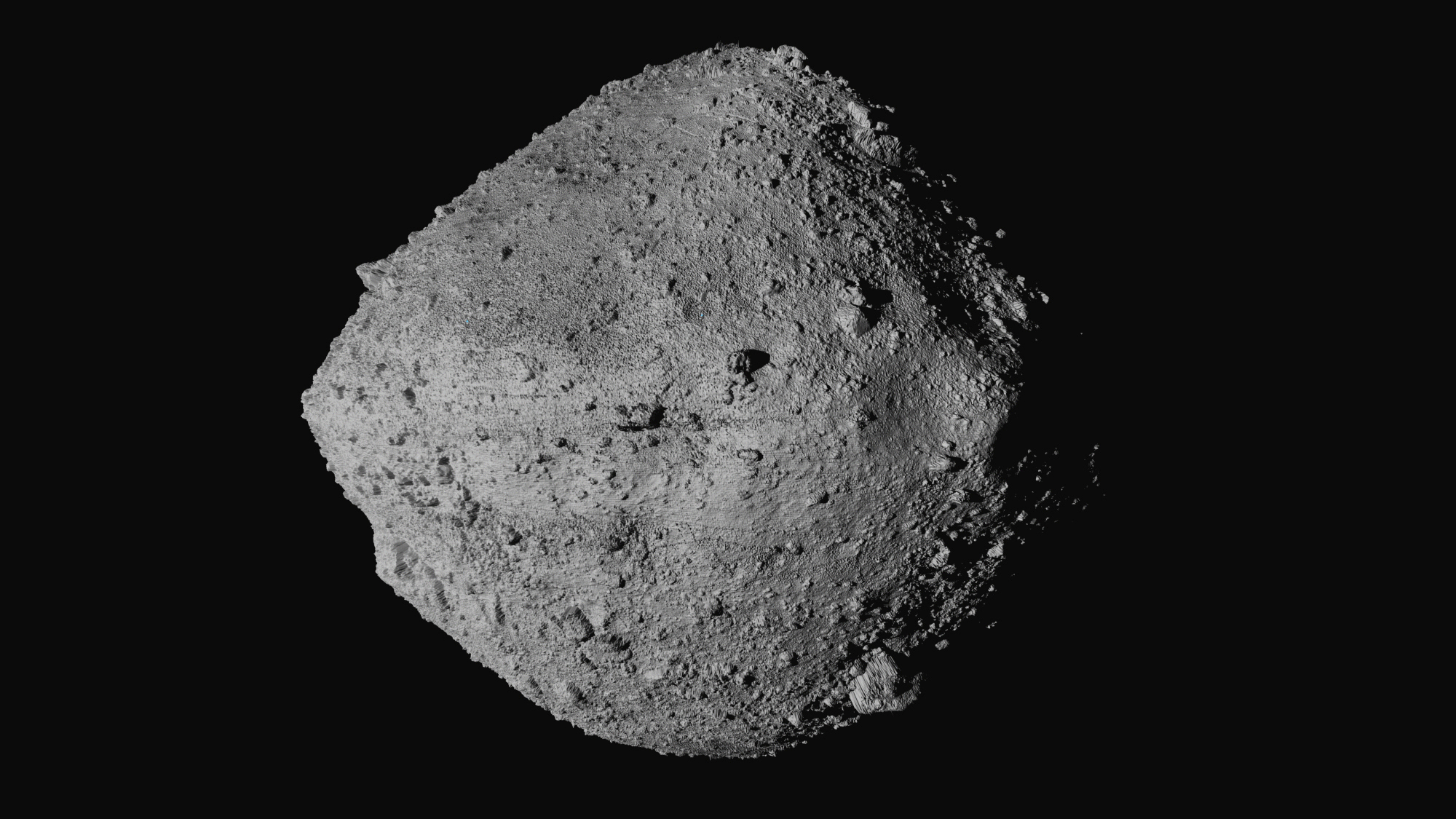
This image made available by NASA shows the asteroid Bennu from the OSIRIS-REx spacecraft. An asteroid named 7482 (1994 PC1) will fly past Earth tonight and is bigger than the world's tallest building. (NASA/Goddard/University of Arizona/CSA/York/MDA via AP)
A giant asteroid, larger than Ireland’s highest mountain, is expected to soar past planet Earth tonight.
Named 7482 (1994 PC1), the asteroid is more than a kilometre wide at 1,052m and is just about bigger than Ireland's highest peak, Carrauntoohil which is 1,038m tall.
Its size means it is also bigger than the Burj Khalifa in Dubai which, at 830m, is the world's tallest building.
However, Nasa’s Asteroid Watch has assured that the giant asteroid poses no threat to Earth and even at its closest, it will pass more than five times the moon's distance from the planet.
Space commentator Leo Enright has said that thankfully, its trajectory means it won't get too close.
“Most asteroids that whizz past the Earth are about the size of a family car. They’re not terribly big but this one is not the size of a family car, it’s the size of Carrauntoohil," he said.
According to Nasa’s Asteroid Watch, the asteroid is expected to pass earth just before 10 pm tonight.
Robert McNaught discovered asteroid (7482) 1994 PC1 at the Siding Spring Observatory in Australia on August 9 1994.
Earlier this week, Nasa's Asteroid Watch Twitter account said: "Near-Earth #asteroid 1994 PC1 (~1 km wide) is very well known and has been studied for decades by our #PlanetaryDefense experts.
"Rest assured, 1994 PC1 will safely fly past our planet 1.2 million miles away."
Near-Earth #asteroid 1994 PC1 (~1 km wide) is very well known and has been studied for decades by our #PlanetaryDefense experts. Rest assured, 1994 PC1 will safely fly past our planet 1.2 million miles away next Tues., Jan. 18.
— NASA Space Alerts (@NASASpaceAlerts) January 12, 2022
Track it yourself here: https://t.co/JMAPWiirZh pic.twitter.com/35pgUb1anq
The agency's Planetary Defence Coordination Office monitors the skies to find, track, and monitor near-Earth objects.
Nasa is also looking at ways to intercept potentially hazardous asteroids with its double asteroid redirection test (Dart) mission.
The mission aims to prove a spacecraft can autonomously navigate to a target asteroid and intentionally collide with it, smashing it off course.
You can track the asteroid's progress and journey past Earth by following Nasa's Asteroid Watch.

CONNECT WITH US TODAY



Be the first to know the latest news and updates