Q&A: How to get ventilation right in classrooms
Q&A: How to get ventilation right in classrooms

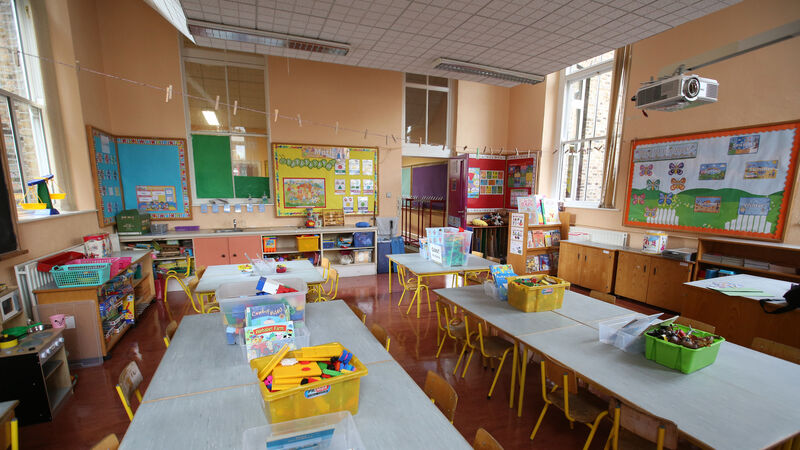
The department of education has advised opening the windows before and after class as well as during breaks but keeping them partially closed or closed while students are in them. Picture: Sam Boal/Rollingnews.ie

Ventilation has become a key tool in the fight against Covid-19 in schools and workplaces. 

Many classrooms now have carbon dioxide monitors to measure how fresh the air is, with experts advising continuous levels below 800ppm to 1,000 ppm (parts per million) are advisable.


Teachers this week however reported in the search for these numbers some classrooms hit temperatures as low as 10 degrees.

Q. WHY ARE WINDOWS OPEN?

A. If fresh air levels and air flow are low in the room and if a person in the room has Covid-19 — or any other virus — then they are more likely to spread it; this is because their breath circulates around the room instead of dispersing.

Opening windows seemed like a solution until the frost and ice hit this week.

Q. HOW CAN SCHOOLS BALANCE COLD WITH VENTILATION?

A. This is extremely challenging but windows may not need to be open all day according to Simon Jones, a member of the Expert Group on Ventilation advising the National Public Health Emergency Team (Nphet).

“What we’ve learned over time is this may not be necessary in all circumstances, air moves through a building very differently in winter compared to summer. It is not a fixed thing,” he said.

The department of education has advised opening the windows before and after class as well as during breaks but keeping them partially closed or closed while students are in them.

Q. HOW CAN CARBON DIOXIDE MONITORS HELP?

A. They cannot tell when Covid-19 is in the room but they can warn teachers and students when carbon dioxide levels are high.

Some teachers reported “unmanageable” carbon dioxide levels of 1,500 ppm this week, Mr Jones said.

The monitors are “a tool to help you see the invisible” and one high reading does not mean it is time to evacuate the room in the way a fire alarm does, he said.

They should be calibrated outdoors, then placed inside away from windows, doors, or direct sunlight in the classroom.

Monitors should also be “away from breathing zones, 2m away at least from the nearest head” he said and acknowledged a shortage of sockets can make this difficult.

Q. CAN THE PROBLEM BE FIXED THIS WEEK?

A. Unfortunately not. We have been through a swift rush of learning to get to this stage, but implementation of change is expected to take time.

Mr Jones urged teachers to use the data function on monitors and record levels to support funding applications later. 

“They will have the evidence they need, up until now it has been very difficult to say whether the ventilation is effective or not,” he said.

“Whereas now you will be able to produce a graph, and say it is not working for us.” 

 He cautioned it is not realistic to expect HEPA filters — which clean the air even in stuffy conditions — in all classrooms immediately as the worldwide supply chain is under pressure.

x

More in this section

Lunchtime News

Newsletter

Keep up with stories of the day with our lunchtime news wrap and important breaking news alerts.

Cookie Policy Privacy Policy Brand Safety FAQ Help Contact Us Terms and Conditions

© Examiner Echo Group Limited