Covid-related staff shortages hitting many sectors
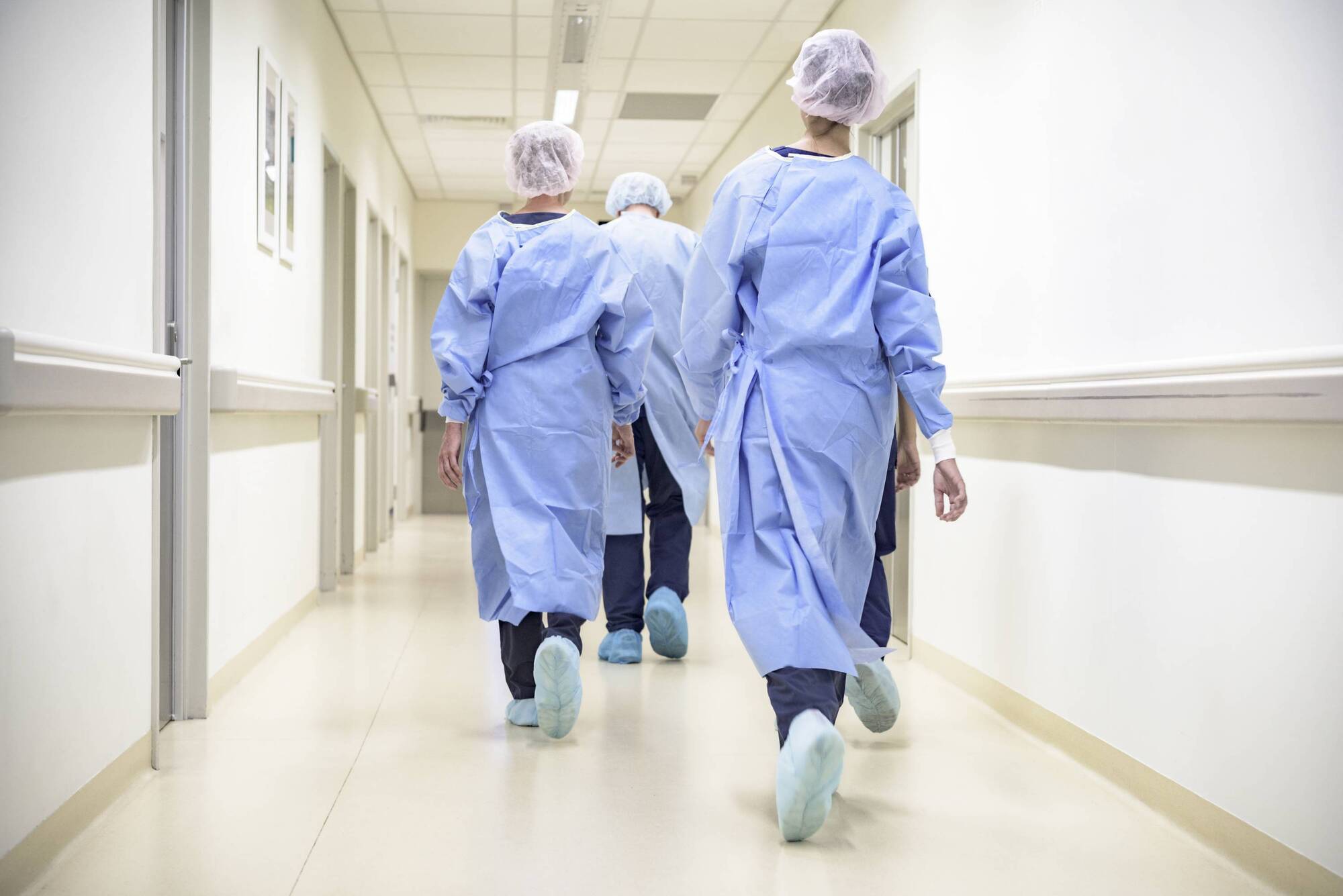
Almost 8% of all nurses out absent from work because of Covid-19, according to the INMO.
Staff shortages related to Covid-19 have hit a number of sectors, with many organisations saying temporary changes may be introduced to deal with the absences.
It comes as cases of Covid-19 have been rising in recent weeks to record levels, with the HSE’s Dr Colm Henry saying 25% of the cases in 2021 were between Christmas and New Year.
Ibec has estimated that 15-18% of workers in most industries are currently out of work due to Covid-related reasons with the number reaching up to 20% in manufacturing.
With the continuing high number of daily cases, it is believed the actual figure has risen above these estimates.
The business group has said the introduction of shortened isolation periods for critical workers is urgently required to minimise disruption to manufacturing and retail activites providing essential supply of goods and services across society.
The head of Ibec, Danny McCoy, said it is crucial to act now in order to avoid adding a short-term economic crisis to the existing public health crisis.
However, Fórsa, Ireland’s largest public service union, has called for a public health-driven approach to the current crisis as opposed to a business-driven approach.
While acknowledging the stress staff shortages are having on businesses and services around the country, the union said that with such high levels of transmission any return to work must provide the maximum protection to public health.
Here we look at some of the sectors that have been affected.
Almost 8% of all nurses out absent from work because of Covid-19, the Irish Nurses and Midwives Organisation (INMO) has said.
This follows the HSE saying on Thursday that an average of 12.5% of their overall staff are out either because they have Covid-19 or are a close contact of someone who is sick with the virus.
The INMO said on Friday that feedback from their members indicates this level of absenteeism is unsustainable, and they have called for a longer suspension of elective operations. Earlier this week the HSE urged hosptitals to cancel electives for two weeks.
“Today 353 patients are on trolleys, a 100% increase on the number of patients on trolleys compared to this day last year,” INMO general secretary Phil Ni Sheaghdha said.
“Our nursing and midwifery rosters are depleted. It is becoming increasingly difficult to fill rosters. According to our own calculations based on figures provided by the HSE, 7.29% of nurses are on Covid-related leave at present.”
Dr Henry said earlier today that without the derogation allowing asymptomatic staff who are close contacts to return to work, the health service “would be in serious trouble.”
Hospitals across Cork, Kerry, Tipperary and Waterford have been hit by staff shortages linked to Covid-19 with staff being redeployed to hard-hit units where possible.
University Hospital Kerry (UHK) today announced further cancellation of some services and asked people to explore all other options available before attending the Emergency Department, if possible.
Out patient scheduled appointments have been cancelled while elective surgeries have been postponed with the exception of time critical surgery up to and including Tuesday, January 11.
Patients should not attend scheduled outpatient and elective surgery appointments during this time unless they receive a call from UHK staff telling them otherwise.
On Tuesday there was about 1,313 staff absent, a spokeswoman for the ten hospitals in the South/South West Hospital Group said.
Overtime is being offered to any staff who can do it to keep services running for patients, she said.
“This figure includes staff who are Covid-19 positive, close contacts, staff who are symptomatic and staying at home in line with public health guidance, those awaiting the results of Covid-19 tests, and workers who are vulnerable to Covid-19 (cocooning) and must remain off-site for their own safety,” she said.
Vulnerable workers account for just 96 of the absentees.
Latest figures from December 31 showed that 8,000 health services staff were not at work because they had either tested positive for Covid or were a close contact.
However, the HSE’s chief operating officer, Anne O’Connor, said today that the figure was more likely to be 14,000 to 15,000.

Up to 600 nurses in the mental health services are absent from duty due to Covid with the Psychiatric Nurses Association (PNA) saying it is creating unprecedented pressures on remaining staff.
As a result of the shortage, there have been closures and curtailment of services with some nurses having to be redeployed.
PNA General Secretary Peter Hughes said there is "a huge and unsustainable reliance on overtime and staff goodwill to maintain rosters and staffing" adding that remaining staff are being exposed to unsafe working environments.
Mr Hughes warned the delivery of mental health services will become unsustainable if the current situation continues or worsens.
"The pressures being experienced are coming on top of historic staff shortages throughout our mental health services and which have left the provision of services stretched to their limits," he said.
Meanwhile, Nursing Homes Ireland has said that an average 8% of staff in nursing homes are unavailable due to Covid-19.
It carried out “a snapshot survey” with 100 nursing homes to ascertain extent of staff being unavailable due to the virus.
“Replicated across the sector, it equates to approximately 2,800 personnel being absent due to the virus,” said a statement.
Tadhg Daly, NHI CEO said: “Once again staff within our nursing homes have been placed under intense pressure because of Covid-19 and have stepped up to their efforts to ensure residents are provided with excellent care.
“Nursing homes provide person-centered, specialised care on a 24/7 basis and this continues to be achieved in the face of adversity.”
Mr Daly added that nursing homes taff have endured an “extremely difficult two years and very severe pressures continue to present”.
The Irish Pharmacy Union (IPU) has that some pharmacies have had to reduce hours or close for certain days as due to Covid related staff shortages.

It said that community pharmacies are under “significant pressure”.
The IPU has called on people to plan ahead and wherever possible order required medications, such as repeat prescriptions, well in advance.
“Doing so will alleviate the pressures on pharmacies while ensuring no interruption in medicine supply,” it said.
Darragh O’Loughlin, Secretary-General of the IPU said the shortages are “exacerbating a pre-existing shortage of pharmacists and pharmacy staff that has grown more acute in recent years”.
Mr O’Loughlin added: “These staff shortages come at a time when the demands on pharmacies have increased significantly. Each pharmacy will strive to maintain services to patients and the public, but reduced hours and temporary closures cannot be ruled out.
“We would ask all members of the public to be patient when visiting their pharmacy and understand certain services may take longer than usual.”
Schools reopened for the first time since Christmas on Thursday and as reported in today’s Irish Examiner, there were severe staff shortages.
The Association of Secondary Teachers in Ireland estimated that 15% to 30% of staff were absent while the Irish Primary Principals' Network reported that schools were down 20% to 25% of staff.
Many principals also reported that 30% to 40% of children did not turn up for class.
The Irish National Teachers Organisation (INTO) said it was an “incredibly difficult first day back”, as pupils and staff members restrict movement due to contracting the virus or being close contacts.
“In order to maximise our chances of providing in-person teaching and learning throughout this term, we again call on the Government to reinstate contact tracing in schools,” said INTO general secretary John Boyle.
The National Transport Authority (NTA) had said that 10-20% of absences across public transport “are Covid-19/illness related”.
The remainder are from general illness “not unusual for this time of the year", the NTA told the in a statement.
It added: “Some operators are experiencing localised increases in absence levels which leads to a limited number of services being cancelled at short notice. We would ask that passengers plan ahead of their journey and check for up to date travel information from individual operators.”
Bus Éireann said that it is experiencing “minor disruption” due to Covid-related absences.
The company said it is “working agilely on a daily basis across its 17 depots to prioritise services so as to minimise customer disruption”.
It was also reminded customers to plan their journeys and to check its website for regularly updated service impacts.
A spokesperson from Irish Rail added that over 95% of services are operating today while on Saturday, all services except four will run.
It has planned that on Sunday all services will run, and on Monday and Tuesday, more than 96% of services will run.

An Post has warned that some post offices may have to close temporarily due to “a significant increase in Covid-19 related absence”.
It said that the absences are “placing a temporary strain” on resources and this may impact regular service delivery levels.
Customers have been advised that where a post office has to temporarily close, social welfare benefit payments will be transferred to a neighbouring office.
An Post has said that contingency plans are in place and staff “are working hard to minimise the impact on customers”.
“We apologise for any inconvenience this situation may cause. The Health & Safety of our Staff and Customers is our priority,” said a statement.

CONNECT WITH US TODAY



Be the first to know the latest news and updates