For people from Australia to Afghanistan, Ireland is home for Christmas
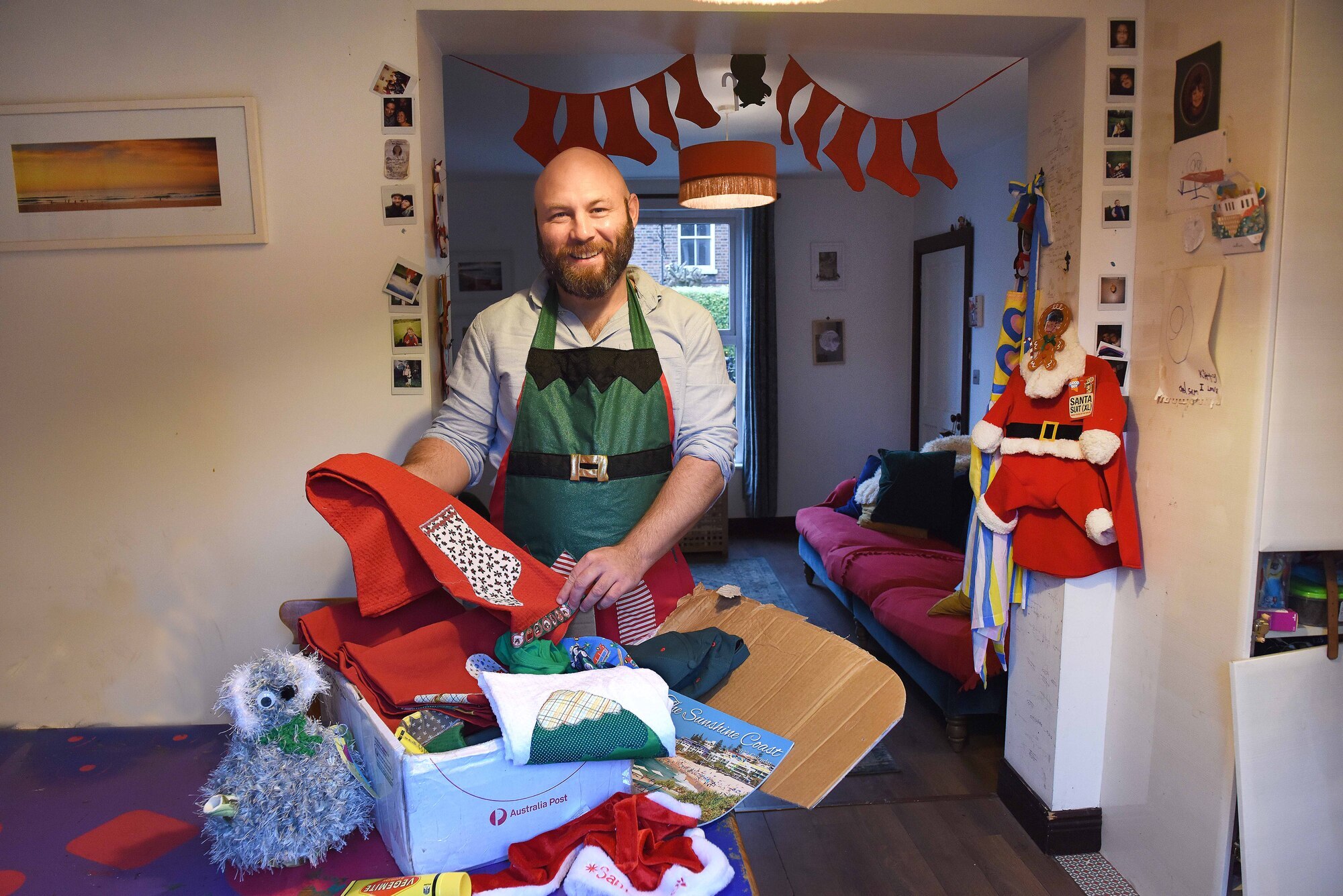
Sam Atwell with the box of Christmas-themed goodies, sent to him from Australia by his mother who handmade or customised the majority of the items including the apron Sam is wearing. Photograph Moya Nolan
Sam Atwell saw Ireland as the "home of writing", and it was this that attracted the actor and writer here initially.
Now, eight years later, having witnessed not one but two referendums, Ireland feels very much like home; and Dublin City, where he lives, feels as intimate as a "village".
Originally from Brisbane, Australia, and having lived in Indonesia from the age of six months to when he was six years old, Sam studied acting which led to a three-week stint on , which turned into a 13-year relationship with the show where he acted, wrote, and directed.
But in 2013, it was time to see the rest of the world.
"I always thought of Ireland as the home of writing, and that is what always attracted me," says Sam, who, unbeknownst to his 2013 self, would go on to work with many Irish actors and writers.
"I came over here on a holiday in 2013, and through a family connection I ended up meeting Brigie de Courcy ( executive producer)," explains Sam. "They needed a multi-camera director and I had done that back in Oz."
Having taken a holiday here in 2013, he returned to Ireland in 2014 for work and took up a job in . He has since worked as their script producer before moving on to work in animation in Ireland, and now he's back in RTÉ.
" with Angeline Ball is the first show I got to work on, and I am so happy with how well that's been received.
"And outside of my own work, I've loved the stuff coming out on stage and screen. Emmet Kirwan's (2018) was life-changing, and by ThisIsPopBaby (2016), the feeling and the movement behind that piece of theatre was just incredible. I recently watched Damien Dempsey's film ( , 2021), what a story of grace, beauty, and friendship."
How can a 30-something adult from a different hemisphere step into a totally foreign land and find not only home, but a sense of connection to its culture?
It turns out that Ireland actually ran in Sam's DNA.
"When I came to Dublin, I just fell in love, and we looked into it, and both my parents are very Irish," he says.
"My dad's great grandmother left the west of Ireland, a lot of the family went to America and some went to Australia. And on my mum's side they're from Kerry.
But it wasn't actually his ancestors that made Ireland feel like home, but his now-partner Kitty Maguire whom he met after a few years in Ireland.
"Ireland became home quite quickly after I moved here, but meeting Kitty cemented it," says Sam. "When we moved in together it really felt like home."
And if he has had a front-row seat to the arts, he has also gotten to see Ireland pass through seismic social change since he's been here.
"I've been really lucky in the time I've been here — there's been such social change in terms of the marriage referendum and the abortion referendum," says Sam.
Despite nearly a decade in Ireland, he has only made it home to Australia twice for Christmas.
"We do the traditional ham and turkey here," he says.
"At home, we do that too, but usually on the barbecue served with buckets of prawns, and sometimes we exchange presents on the beach.
"Christmas day in Ireland lasts longer, in Australia you're eating hot food in a hot environment, so you tend to get a bit sleepy, but here we power on into the night battling it out playing board games.
"I love a sunburnt Christmas, but I do love it over here at Christmas too."
But it's not just Christmas and the arts that he loves about Ireland, it's the "kindness" too.
"There's such a kindness here," he says.
"People are so generous and caring. It's hard to put into words just how much I love Ireland — and the love affair just grows stronger and stronger, and my parents love it too, so I hope they can travel back here again soon.".
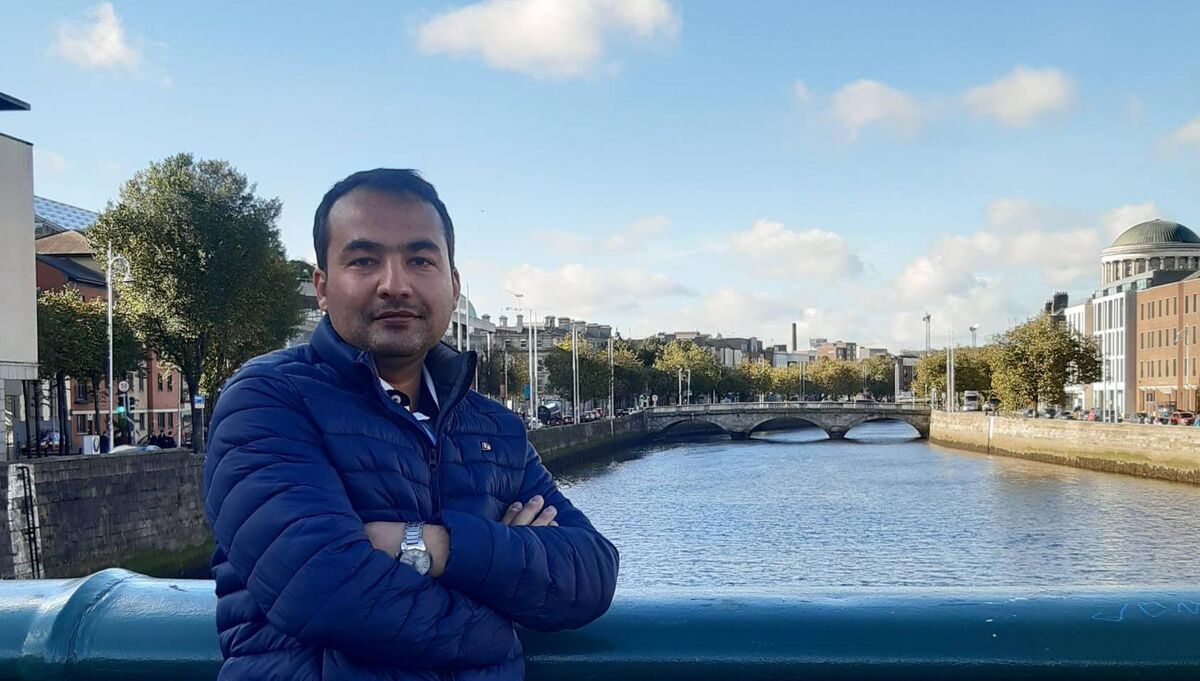
This will be Shoaib Karimi's first Christmas in Ireland. In August, the 33-year-old fled his homeland of Afghanistan with his then-pregnant wife. Between fleeing the city of Herat for Kabul, and trying to find a safe passage out of Afghanistan, the young couple lost their much-wanted baby.
For now, Mosney, the direct provision centre for refugees in Co Meath, is their home.
In Afghanistan, Shoaib worked for a global human rights organisation, Centre for Civilians in Conflict, following the completion of a law degree, and his wife was the IT manager at Afghanistan's National Environmental Protection Agency.
They left Afghanistan with just the clothes in their bag, leaving behind elderly parents whom they cared for and a sister who relied on Shoaib after a marriage break-up.
The couple arrived at their new home in Ireland on August 26.
"After Herat collapsed on July 31, my wife and I fled to Kabul through the support of the UN and my employer," explains Shoaib.
"Then Kabul collapsed on August 15.
"But on August 17, we found out the Irish Government accepted us as programme refugees.
"We were so glad to have a path to escape our country."
But having official documents to Ireland did not mean they had a clear pathway to the airport in Kabul, as it was "impossible" to get to the capital city's airport with the Taliban takeover.
Finally, on August 26, leaving their family and lives behind, the couple boarded a Dutch military plane bound for Islamabad where they would take a civilian flight to Dubai, then on to Amsterdam, and eventually to Dublin.
"My wife and I are very grateful for the support the Irish Government and Irish people have given us," says Shoaib.
Now in Ireland, they're officially refugees, meaning they have to start their lives from ground zero and access housing, education, and the labour market.
"I would like to find a house and be integrated as soon as possible," says Shoaib.
"I spend my days in Mosney improving my English in an online class that's provided by the centre, and I got the learner permit for driving.
"I'm engaging with the primary issues of life here while I have a glance at my future career. I'm looking to start work in my field of experience to support my costs and further my studies."
His professional experience and education are shared by most of the Afghan people who fled here.
Work and livelihood aside, his biggest concern is getting his loved ones out of Afghanistan safely, especially his niece who worked as a TV presenter in Herat, as female journalists are particularly under threat.
And what will life be like in Mosney for Christmas?
"We don't know how we should join in this celebration," he said.
"We know that it is a cultural event, we don't know how to celebrate it, we just know it's a holiday on December 25, and then some other holidays come until January."
What he does know for sure is that Ireland is his new and permanent home; and for that, he is extremely grateful.
"I believe that Ireland will be a home for my children," says Shoaib.
"I would like to say thank you to the great nation of Ireland."
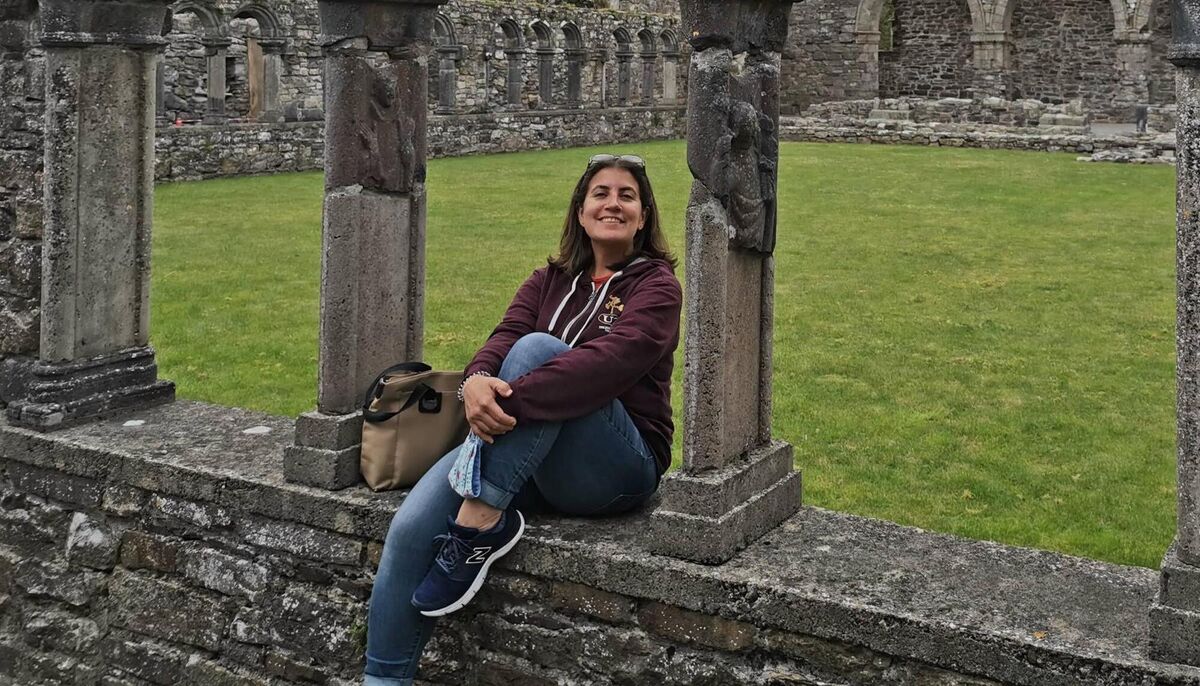
While some people fantasise about pursuing the American dream, this woman swapped California for Cork.
Cristina O'Connor, is originally from the Bay Area in California, but since 2012, Cork has been her permanent home — a year in UCC and the love of a Corkman being the main reasons for her transatlantic move.
"I came here originally in 2001 for a study abroad year at UCC just after I turned 20," says Cristina.
"I met a Corkman in a pub in the summer of 2002 just a few weeks before I moved back home to the States.
The end-of-year romance turned serious, with the couple marrying a few years later, and a move to the US ensued.
"He then moved to the US for five years, and we came back here in 2012 when I was 30," says Cristina.
Affordability and quality of life were the main drivers behind a very informed decision to make not only Ireland, but Cork, their home.
"At home, the standard holiday time, if you get any, is two weeks per year, and we wanted the opportunity to have more time off for travelling and that sort of thing.
"We stay in Ireland for many reasons. For my husband, it is, of course, his home — but additionally neither one of us can imagine going back to the US and the culture of working all the time with very little time to relax or enjoy life."
Another major reason to make a permanent move to Ireland was healthcare and gun crime.
So what is the thing about Ireland that makes it hospitable for her?
"I notice that Ireland seems to be a relatively sane corner of the world these days, and I hope it remains that way," she says.
"Don't get me wrong — it is not without its problems and conflicts and is by no means perfect, but I don't see the same drastic divide in society that exists back home in the US.
"Politicians aren't saying that climate change or the housing crisis or Covid aren't real — they certainly disagree on how to address these and other issues, and they certainly might not address issues effectively, but they aren't denying that the issues exist in the first place. Nobody is trying to overturn referendum results."
For Americans, Thanksgiving is the big celebration at the end of November, as is Christmas, with many Irish people reared on movies centred around the American Christmas, with the likes of and the Griswold family of .
Is Cristina's Christmas complete with trimmings, crafting, neighbourly competitions over lights, log fires, and freshly picked pine trees?
"Christmas is a quiet day in our house, even in a 'normal' year," says Cristina.
"We crack open a bottle of something bubbly when we get up, and spend the day watching movies, and we make ourselves a nice steak dinner and apple pie."
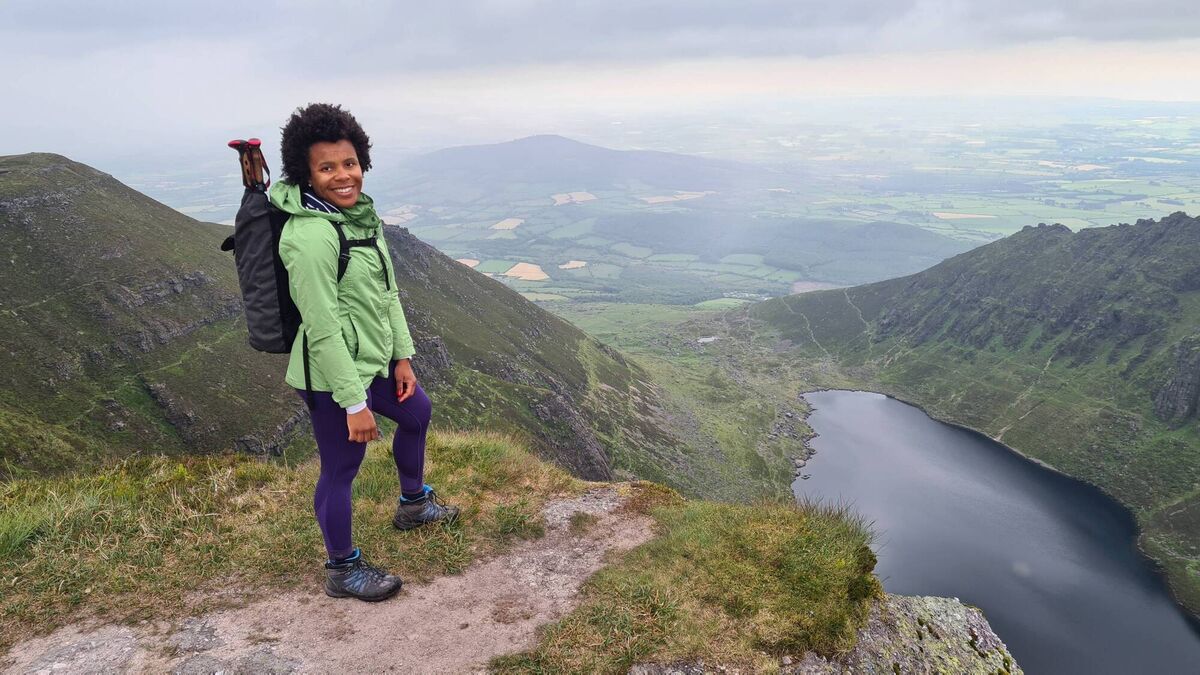
When Sarah Nascimento arrived here from Brazil in 2013, she thought she'd be here for a year.
Eight years later, she's hiked every major mountain in Ireland, including Kerry's Carrauntoohill; navigated her way into the corporate tech world; and also gotten married.
"I left Brazil when I was 23, saying to everyone I'd be back in a year," she says.
"I had a student visa that allowed for six months of study and six months of work, that was eight years ago."
When her first visa expired, a permanent return to Brazil did not feel like the right move. She wanted to continue her English studies and move into a professional career too, so Sarah decided to stay another year in Ireland.
But by the end of the second year, a permanent move home still didn't feel right.
"So then the second year came, and I said: 'The Brazilian life isn't something I want anymore', so I decided to fight the good fight and stay," she says.
Sarah came to the decision when she was "on holidays at home" in Brazil.
But a decision to make a go of life in Ireland, came with navigating both the corporate and the property ladder.
Sarah moved from English classes to undertaking a bachelor's degree in marketing. This led her into the tech world, working as a customer success manager in a multinational company. In 2017, she founded Brazilian Professional Network Ireland.
"I wanted people to exchange information, and I wanted to inspire and motivate people so everyone could see that it was possible to get a professional job here," says Sarah.
"It might be difficult, but what's important is the psychology behind finding the opportunity," she adds.
Opportunity is something she specifically identifies as a trait of Ireland.
"I feel you have a lot more opportunities to be who you are," she says.
"Sometimes it's hard to get the jokes because some are very specific to here and there is a degree of sarcasm."
Sarah says she found the same welcoming atmosphere in the work environment too.
"People have always been friendly and willing to explain, even what my rights are here and how the system works," she adds.
Another place she has integrated with is the Irish pub, especially at Christmas.
"I've done the '12 pubs', which is a very Irish thing, but I've never managed to do the whole 12," admits Sarah, who has spent many Christmasses and new years in Ireland.
Another part of her Irish Christmas experience is visiting the lights on Henry St and Grafton St, and especially this year, as she will be out of Ireland on Christmas Day, and it's not because she'll be in Brazil.
"This year is exceptional as I got married, and we are going to Germany to my husband's family," she explains.
He is more part of Sarah's pandemic story, rather than her Irish story.
"We met just before the pandemic and we became serious in the pandemic," she says.
"My partner is German and he loves hiking, and he was like: 'OK, let's go for a hike'. It was my first time, I had never gone up a mountain prior to 2020, but now hiking is my hobby," says Sarah, and it's made her love Ireland even more.
So does she feel Irish or Brazilian or both?
"I do feel Irish to a certain extent, and I don't feel Brazilian anymore so I must be Irish, otherwise I don't belong anywhere".
Sarah is on LinkedIn here.
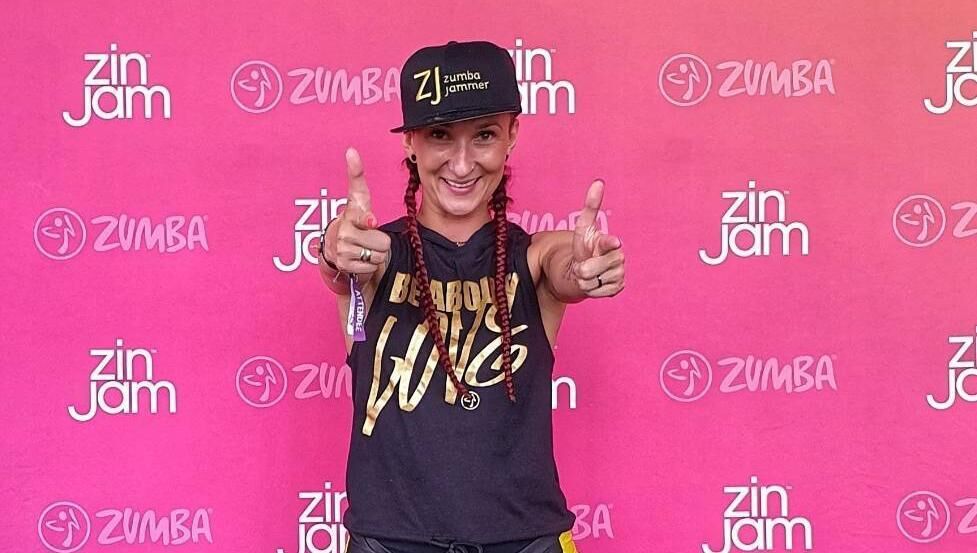
Justyna Mikolajczyk will be 15 years in Ireland this February, and she might be spending this Christmas in the Rotunda Hospital.
"I'm pregnant now, and due on January 1, but I think the baby will come sooner," she says.
It will be her second child, having already had her son here in 2013, so Ireland has long been home, even though that wasn't the original plan.
"I came to Ireland with my boyfriend at the time," she says.
"I was taking a break from my studies, and I said: 'I'll come for a year and make money, study English and then get back to my studies in Poland'.
After four years in Ireland, she and her boyfriend decided to get married, which they did in the Polish embassy — and four years after that she gave birth to her first child.
"We didn't have a plan to stay, we were just living our lives, even now we are still renting," explains Justyna. "But we feel very welcome here and when we are back from Poland, we feel at home here."
But one set of roots she has put down is her business ones — as a Zumba dance teacher, and as a Zumba Jammer. She is the only Zumba Jammer in Ireland, meaning she leads training for other Zumba teachers already qualified here.
Zumba has been a major part of her Irish story. She had been working in retail while she undertook a fitness course and began a job in a gym. One day she saw "this girl moving amazingly" and wanted to know what the dance was. She undertook Zumba training and began teaching it after that.
But it was after the birth of her son that she moved into it full-time, and she's now Ireland's best-known Zumba teacher.
"People think I'm the Polish celebrity," says Justyna, who's grateful for the opportunity Ireland gave her to pursue her "dream".
"I think Zumba is the main part of my life here, it was my dream," says Justyna.
"If you are hard-working and you have a dream you can make it here.
But home is now Ireland — Dublin City Centre to be exact, a stone's throw from the spire.
And how will she celebrate Christmas, in the event that she is not in the Rotunda Hospital giving birth?
"Christmas we will spend at home, it's more Polish," she says.
"We then go to church at midnight if it's open, and if it's not, we will go on the morning of December 25, and then on the second and third day we'll meet our friends," says Justyna, who doesn't ordinarily spend Christmas here.
"This will be our second Christmas in Ireland, the first one was last year because of Covid," she explains.
After 15 years in Ireland, what has she noticed about Irish people and life here that's different to Poland?
"We are very similar, but you are more open, you accept that people are different, I came here without English and that was totally fine," says Justyna.
"And it's the same with my husband — he's opened his own business as a carpenter and he's never not busy."
Justyna is on Instagram.
Esther-Ayo James, 27, moved from Nigeria to Cork when she was aged seven.
She remembers her mum togging her out in red and white to see the men's senior hurling team arrive at Mallow train station.
"My mum is one of the most amazing people I know," she says.
"My mum is very community-oriented, she was in the Tidy Towns - she's that kind of person."
The biggest difference between Ireland and Nigeria for seven-year-old Esther was school, and the temperature difference.
"In Nigerian schools, they do this end-of-year ceremony and you see where everyone comes in the class. There was a thing of striving to do very well. Then when we moved here, and I was driven as a result," she explains.
When she came here first she was initially started in second class, but quickly moved to third, such was the standard of her Nigerian education.
However, it being 2001, and only the start of immigration here, there wasn't a lot of diversity in her school.
"We were the only black kids in the whole school, and that was different, especially because we had African accents," she says.
"But it was really interesting trying to navigate the intricacies and nuances of being different, and people trying to make you feel different."
By her teenage years, "Ireland felt like home", and Esther also had citizenship by then, as well as a grasp of our in-jokes.
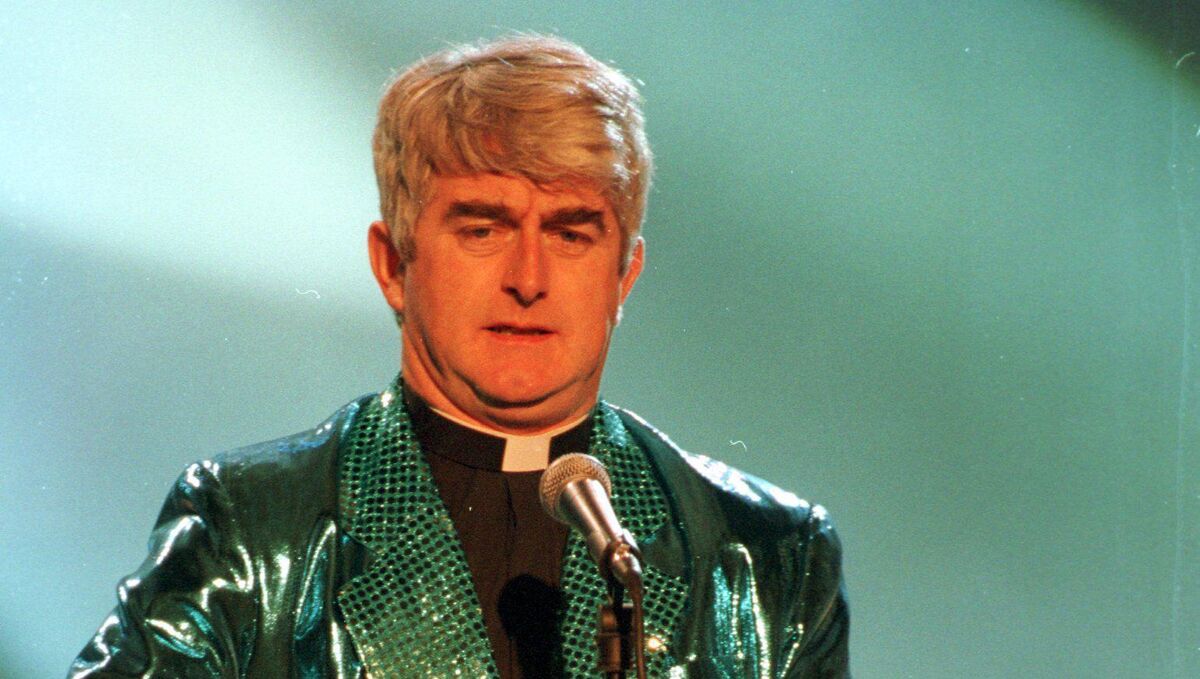
"By my teens, I knew what they were talking about when they were talking about Fr Ted," she says.
But at 18 years of age, Esther couldn't wait to leave Ireland.
"I wanted to leave Ireland and go anywhere and do anything," she says.
"I went to college in Scotland. I knew what the feeling of going away from somewhere was like, the knowledge that the world is so much bigger, and I wanted to explore that as well.
"My parents always stayed in Ireland, and after college, I had the postgraduate anxiety of: 'I don't know what I should do with my life'.
At 27, Esther has her sights on acting while working as a carer in Dublin, but she will return home to Cork for Christmas, where they'll have a traditional Irish day — except for the food.
"Our Christmas is pretty much like any Irish family would have it, except we'd have Nigerian food like jollof rice, fried rice, gizdodo, fried yam — it would be celebration food, not celebration food that's specific for Christmas," explains Esther.
But Christmas here is very different to her early experiences of Christmas back in Nigeria.
"Christmas is like a festival, and nobody has to be stuck in the house," she says.
"My first Christmas here, I was like: 'Where are all the people?' That's one of the things that stuck with me.
"That's the biggest difference between Nigerian and Irish Christmases, the quietness," she adds.


CONNECT WITH US TODAY



Be the first to know the latest news and updates