Walk-in vaccination centre reaches capacity before 11.30am
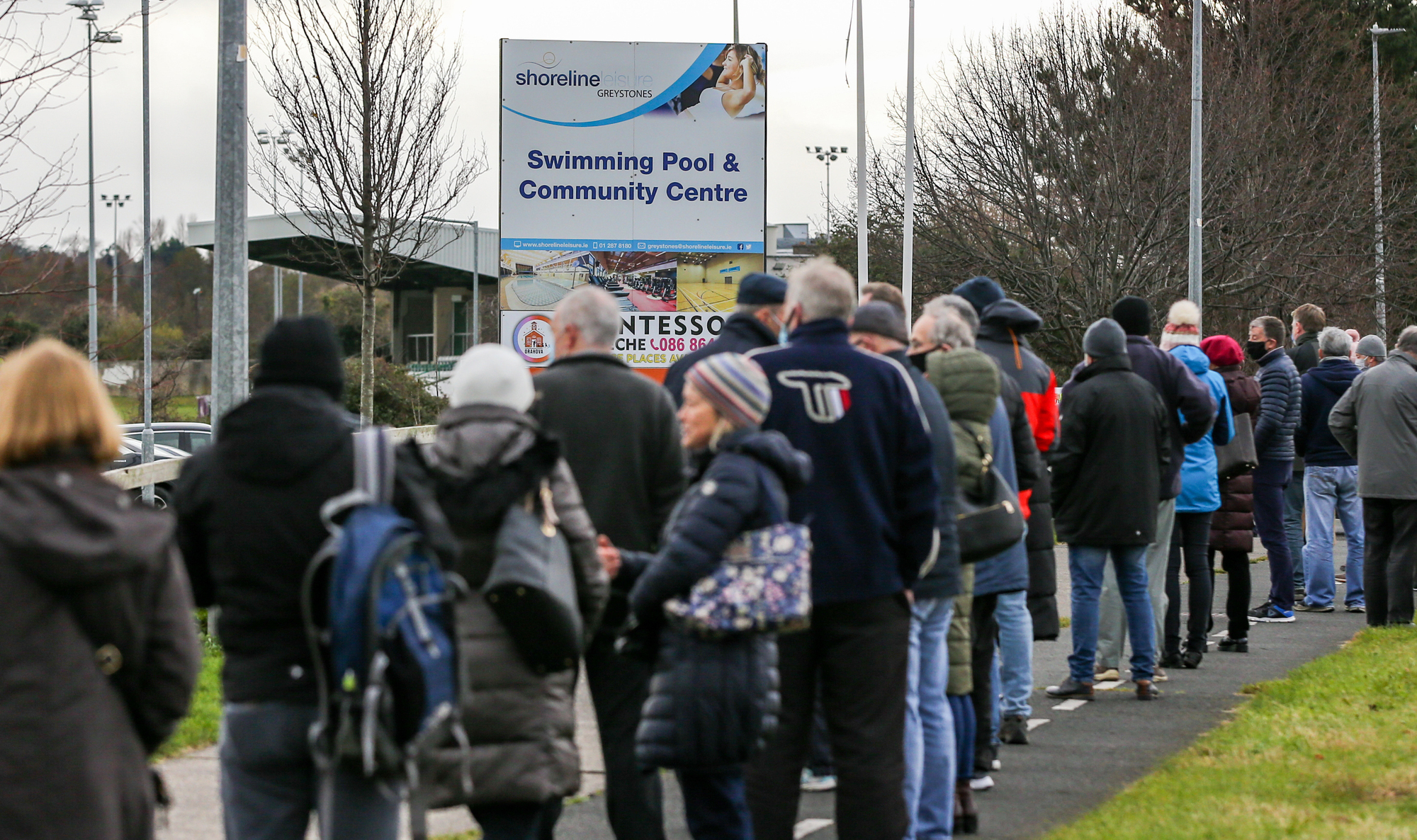
Queues of people form outside a walk-in vaccination centre in Greystones, Co Wicklow this week. Picture: Brian Lawless
Long queues have again formed today at walk-in booster clinics across the country, with some people forced to queue for two hours or more.
The booster clinics are open for healthcare workers and people aged 50 to 69 this weekend, with 18 walk-in vaccination centres open across the country.
The centre at University College Dublin (UCD) once again had to turn people away, with the HSE saying on Twitter at 11.25am that it had reached capacity and would not be accepting any more walk-ins.
People had been queuing there for up to two and a half hours for a booster jab.
In Tipperary, a centre in Clonmel saw queuing times of two hours and 20 minutes, while there were waits of 90 minutes in Nenagh.
Other centres saw little or no queueing.
Long queues at some walk-in centres earlier this week led to public annoyance and large numbers of people being turned away.
The Taoiseach has apologised to those who were not able to get their third dose and the HSE says things will continue to improve as they increase vaccine centres and capacity.
You do not need an appointment but you must wait at least five months after your second vaccine dose before getting the booster and three months if you had the single-dose Janssen vaccine.
Lists of booster clinics are available on the HSE website and health chiefs say clinic times may change at short notice depending on demand and people should check clinic times online before attending.
So far, over 1.1 million booster doses have been administered.
Up to date information on queuing at vaccination centres can be found here.
Scientists are warning two doses of a coronavirus vaccine are not enough to prevent a person from catching the Omicron variant.
The warning comes as the Department of Health confirms a further 4,004 cases of Covid-19.
There are currently 481 Covid patients in hospital, down 30 on yesterday. Of those in hospital with the virus, 111 are in ICU - up one since Friday.
Analysis by the UK Health Security Agency (UKHSA) found that the AstraZeneca and Pfizer-BioNTech vaccines provided “much lower” levels of protection against symptomatic infection with Omicron compared to Delta.
But the preliminary data, which looked at 581 people with confirmed Omicron, suggested effectiveness seemed to “increase considerably” in the early period after a booster dose, giving around 70 to 75% protection against symptomatic infection.
Dr Mary Ramsay, head of immunisation at the UKHSA, said while their early data should be treated with caution, it indicates that “a few months after the second jab, there is a greater risk of catching the Omicron variant compared to Delta strain”.
She added: “The data suggest this risk is significantly reduced following a booster vaccine, so I urge everyone to take up their booster when eligible.”
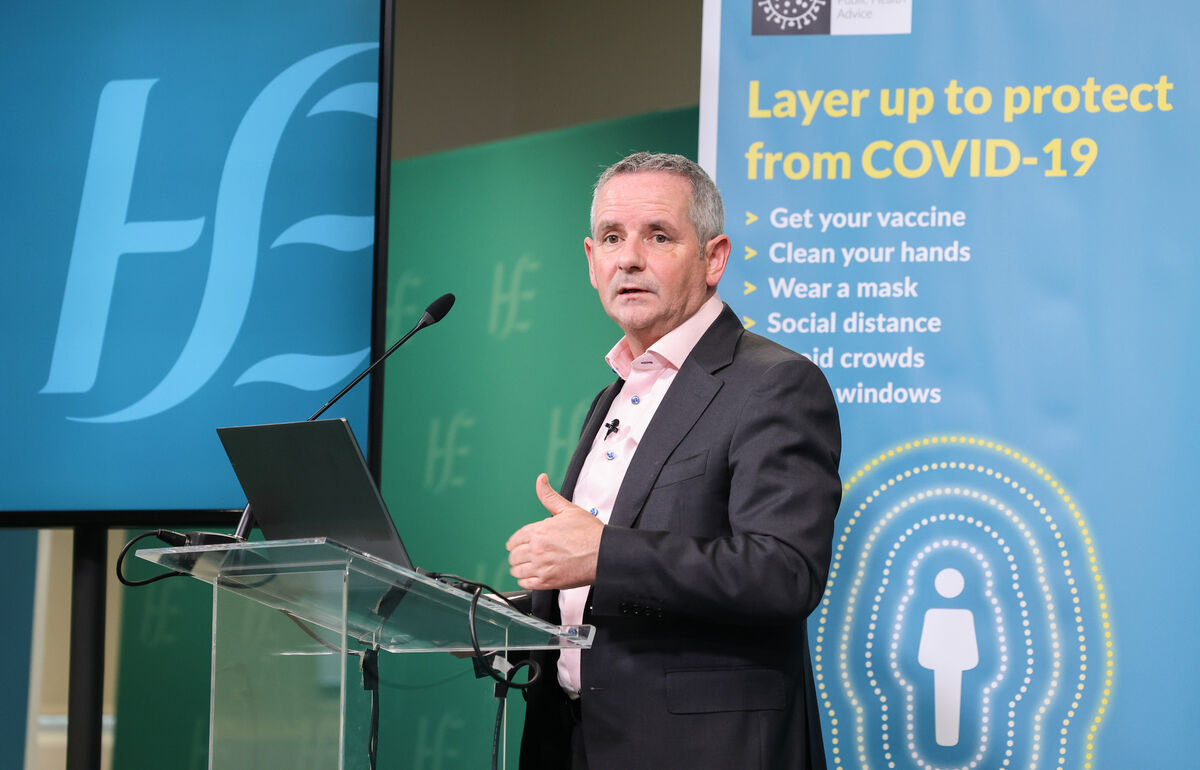
The HSE chief has encouraged people who are eligible to avail of the booster jab in order to help reduce the pressure on the health system.
Paul Reid said that December and January will put hospitals under "real pressure" adding that the public can help to make it better by taking up the booster vaccine when offered.
The Chief Medical Officer says the country is in "a very uncertain and unstable position" due to the high incidence of Covid-19.
Dr Tony Holohan says the public health measures will work to slow and stop the transmission of the Omicron variant, as well as the Delta variant.
He wants people to take steps to ensure the safest possible interaction with loved ones over Christmas.
Professor of Medicine and Infectious Disease at UCD, Jack Lambert believes people have taken their eye off the threat of coronavirus.
"In some situations, I believe we have let our guard down because it was being preached that once you reach a certain level of vaccine coverage in the country, the virus would just go away. But that is not the reality," said Prof Lambert.


CONNECT WITH US TODAY



Be the first to know the latest news and updates