Significant percentage of Defence Forces applicants don't follow through on application
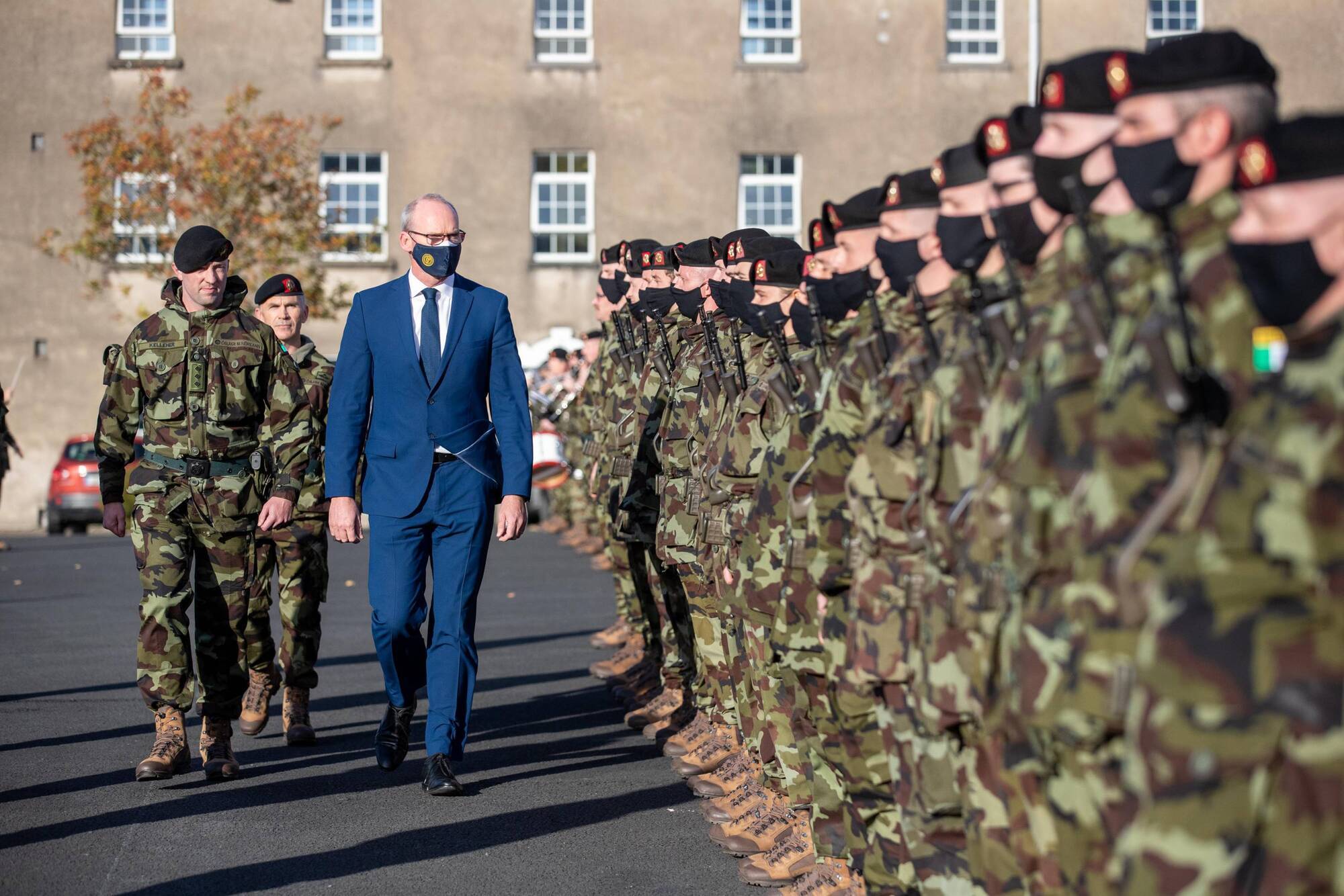
Defence Minister Simon Coveney, accompanied by the Chief of Staff of the Defence Forces, Lieutenant General Seán Clancy, reviewing the 119th Infantry Battalion, Unifil, at Sarsfield Barracks, Limerick, last month
A large percentage of people who apply to join the Defence Forces never follow through on their initial application, new figures show.
By the time it comes to actually recruiting those suitable, the numbers who do join up are so small the Defence Forces “can never expect to reach its basic minimum strength of 9,500,” especially as it is 1,000-plus short of that mark.
In total there were 5,269 applications to join the army last year, of which 3,323 failed to complete the process. Up to the end of June this year there were 2,752 applications, with 1,031 withdrawing.
Similar trends can be seen in the air corps. There were 748 applications in 2020, of which 475 didn't follow them up. This year, there were 663 applications, of which 387 opted out.
The naval service had 1,498 applications in 2020, with 883 non follow-ups. This year's applications were 873, with 349 opting out.
Many failed to pass a psychometric (intelligence) test. Of those trying to join the army in 2020, a total of 708 failed it, while that figure jumped to 776 so far this year. In 2020, there were 64 air corps applicants who failed the test. The same year, 290 naval service applicants failed it.
Another 311 failed fitness tests across the three wings of the Defence Forces over the two years, with 125 failing the medical.
Three were disqualified for having inappropriate tattoos, while seven didn't pass Garda vetting.
Meanwhile, there's a 30% attrition rate during training.
Raco, which represents officers, said the figures were further evidence the Defence Forces cannot recruit its way out of a retention crisis.
“Until the measures committed to in the high-level plan are finally delivered, and the ‘offer’ in terms of pay, allowances, accommodation and work-life balance are improved to make the organisation an ‘employer of choice’, then the Defence Forces can never expect to reach the basic minimum strength of 9,500, let alone hope to meet any increased establishment that the Commission on the Defence Forces might recommend,” a Raco spokesman said.
The figures were obtained by Cork East Fine Gael TD David Stanton. The former FCA officer said he was concerned about the numbers failing psychometric tests and “this requires some examination”. He believes the reason 30% of attested recruits don’t complete their training is that the expectation of the role is not the reality.
CONNECT WITH US TODAY



Be the first to know the latest news and updates