Cutting animal numbers to reduce methane will be challenging, climate advisory council admits
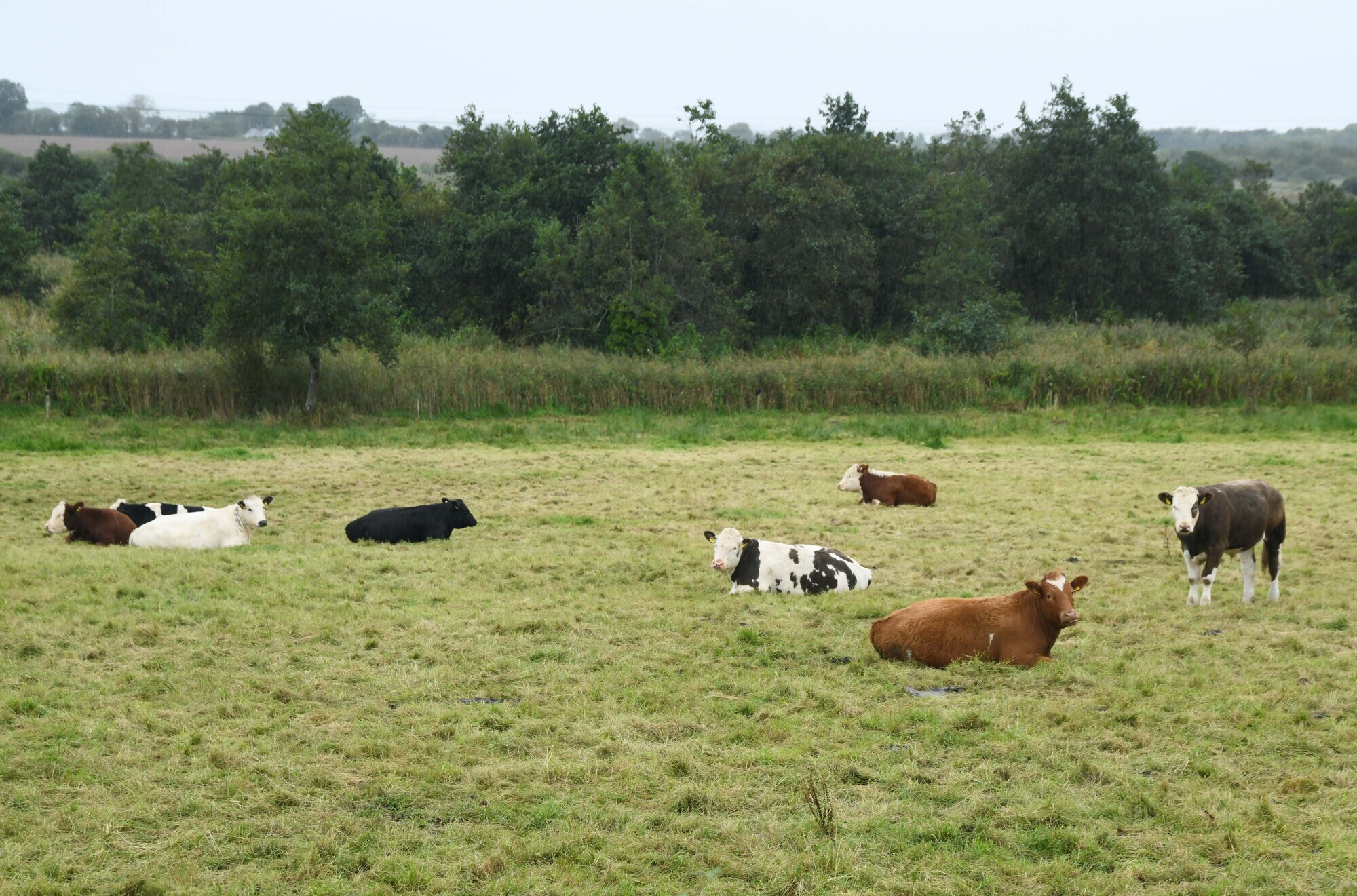
The CCAC carbon budget proposal highlights the difficulty Ireland faces in mitigating its substantial methane emissions. Picture: Denis Minihane
Addressing the country’s methane emissions will require cuts in animal numbers, which could be very challenging for Ireland, according to the climate advisory group tasked with proposing Ireland’s first ‘carbon budgets’.
The budgets allocate emissions ceilings to the likes of motorists, households, farmers, businesses, and industry over five years, with a view to lowering greenhouse gases. A 51% reduction is the 2030 target, as per the new Climate Bill.
The question of reducing methane has been contentious, as farming advocates resist talk of reducing animal numbers.
Beef and dairy cattle are among the biggest contributors to greenhouse gas emissions. Cows mainly generate methane through digestion and waste.
Realising the political hot potato that it may be, Government figures have been mindful in recent weeks about calling for herd culling.
Cork had the largest number of dairy cows at over 390,000 in 2020, while cattle numbers overall in Ireland were up 1.5% on 2019 to 7.3m, according to Central Statistics Office (CSO) data.
As late as last week, Tánaiste Leo Varadkar said it would be unfair to single out any sector, and that he is not in favour of culling livestock. Food and agriculture are “special, and need to be treated differently”, he said.
The publication of the budget sets the stage for a number of tough political decisions, as rural TDs in Fine Gael and Fianna Fáil warn that a reduction in the national herd could harm the rural economy.
The plan will be brought to Cabinet in the coming weeks, with pressure for a cut in emissions expected to be particularly keen on transport, agriculture and energy.
However, that pressure on agriculture may cause problems in the coalition, where the Green Party is understood to favour a cut in the national herd.
The Climate Change Advisory Council (CCAC), which submitted its proposed carbon budgets to the Government yesterday, said in its report the agriculture conundrum is going to be one of the hardest to solve.
Approximately 93% of Irish methane emissions come from livestock-based agriculture, which are particularly hard to mitigate without changing output levels, the CCAC said:
"Ireland’s biogenic methane from cattle [and sheep] is very difficult to mitigate at present, as there are very few technologies available yet in Ireland or globally to reduce it. However, research internationally and in Ireland is gathering pace, and some promising innovations [animal’s diet, additives, and genetics] are being researched.
“Nevertheless, the difficulty of mitigating enteric methane at present means that deep cuts in methane would require cuts in animal numbers, which could be very challenging for Ireland.”
Ireland’s methane production compared to the EU average is significant.
Ireland’s gas emissions in 2018, including land use, land-use change, and forestry, consisted of carbon dioxide (63%), methane (25.6%), and nitrous oxide (10%).
“This profile is in strong contrast to the emissions profile for the EU as a whole, where carbon dioxide accounted for 79% of emissions, methane 12.5%, nitrous oxide 5.7%,” the CCAC stated in its report.
Another area of contrast is the prominence of agriculture in Ireland as a source of emissions, most notably of both methane and nitrous oxide, the report states.
“In 2018, across the EU, agriculture accounted for 11% of total emissions, 52% of methane emissions, and 73% of nitrous oxide emissions,” it stated.
CLIMATE & SUSTAINABILITY HUB
CONNECT WITH US TODAY



Be the first to know the latest news and updates