AstraZeneca’s star rose and fell as vaccine rolled out
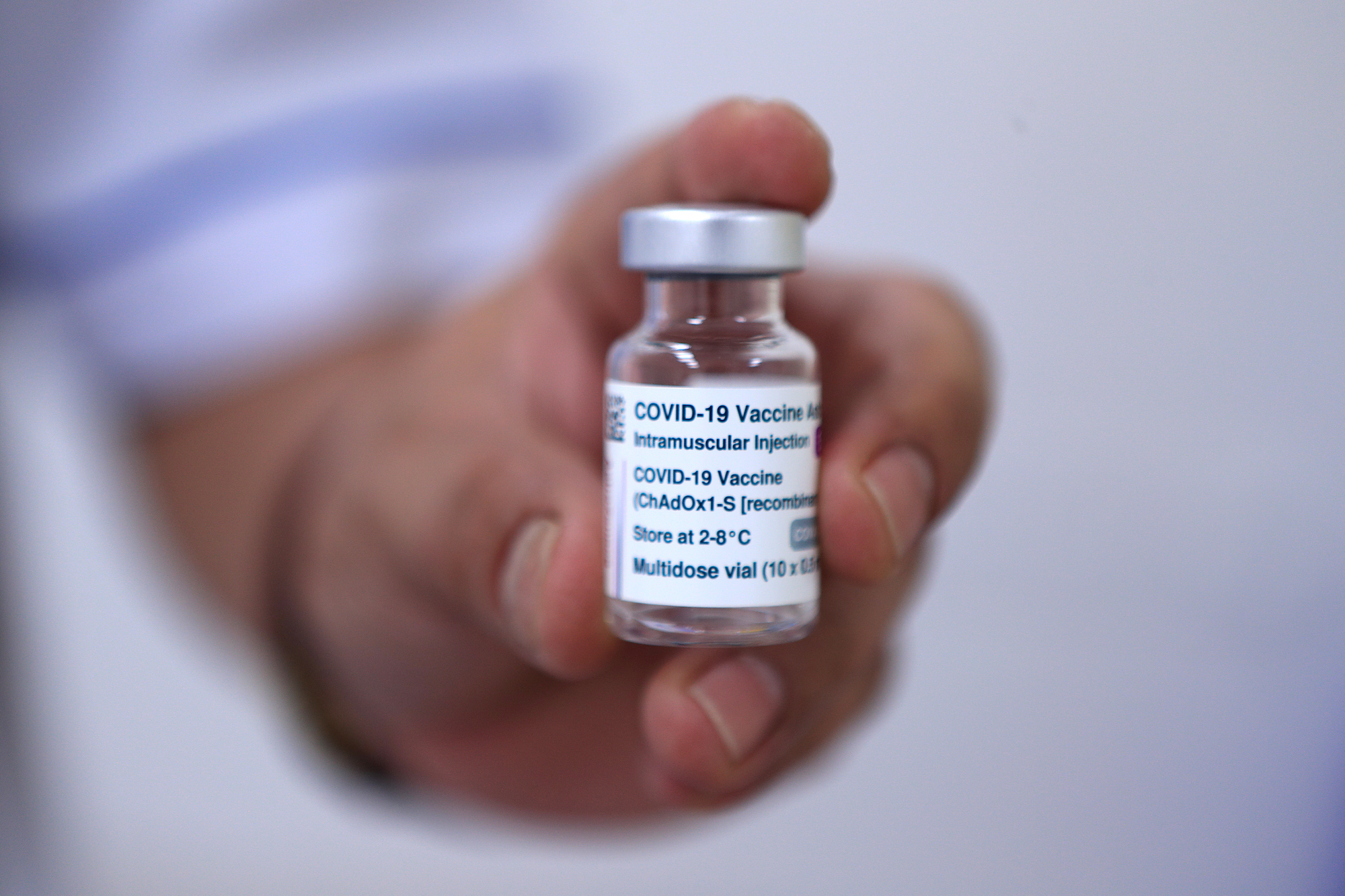
AstraZeneca was not the only vaccine-maker beset by problems, but this was on a large scale. Photo: AP/Hau Dinh
In the depths of the pandemic last year, scientists worked at breakneck pace to develop vaccines that saw the light far sooner than would usually be expected. Among the dozens of vaccines being tested was one developed by the University of Oxford and the British/Swedish multinational AstraZeneca.
This was watched closely in Ireland, not only because Irish scientists played a central role. The so-called “game changer” vaccine would be sold on a not-for-profit basis and did not require ultra-low refrigeration systems.
It has been a tumultuous 10 months for the AstraZeneca jab with supply issues and questions around clotting risks, but from the start the makers have insisted their vaccine should be globally available.
In November, its creators gave a “joint commitment to provide the vaccine on a not-for-profit basis for the duration of the pandemic across the world, and in perpetuity to low- and middle-income countries".
Dan Wygal, country president for AstraZeneca Ireland, said: “We recognised very early on that this pandemic would be global in nature, and that neither geography nor economic status would prevent anyone being affected by the virus itself.” This pledge remains in place despite concerns earlier this year it could end.
Kildare woman Professor Teresa Lambe was at the centre of the jab's development as an associate professor at the Jenner Institute in Oxford. She said on Friday: “It’s been a tremendous amount of work by an awful lot of people, but for me personally it’s been an incredible journey.”
Prof. Lambe started working on the vaccine in early January when the genetic code for the coronavirus was shared by Chinese scientists. Thanks to that early access, she had created a template even before the disease was officially named Covid-19 in February.
“It’s meant I’ve been able to do something to help get us out of the pandemic. It’s been a way to keep people safe and help get us back to seeing the people we love,” she said.
However problems with supply soon emerged. In January, a series of announcements from the European Commission and the vaccine-maker revealed original plans were wildly optimistic.
This deal involved up to 300 million vaccine doses between December and June 2021. First quarter deliveries were slashed by up to 60% and on March 12 projections again cut to 70 million doses for the second quarter.
A Belgian factory, blamed by AstraZeneca for many of the problems, went public saying it had produced what they were contracted to do. Looking back at this, Mr Wygal said: “It certainly has been a challenging time.”
AstraZeneca was not the only vaccine-maker beset by problems, but this was on a large scale. It led to a growing focus in Ireland on mRNA vaccines such as Pfizer and Moderna.
Delivery problems came to a crisis-point after a Belgian court ruled in June the company had committed a “serious breach” of contract. This was linked in the ruling to not using British production sites for EU supplies.
However AstraZeneca claimed victory as the delivery required in the ruling was lower than the EU had been seeking. Since then deliveries have ramped up, with Mr Wygal saying they have delivered “1.2bn doses of our vaccine to more than 170 countries”.
Prof. Lambe and Dublin-born director of The Jenner Institute Prof. Adrian Hill were honoured in June for their work.
Prof. Lambe, an honorary OBE, said: “I think it’s amazing to see science and vaccines on the front page of nearly every newspaper. It’s been really great to have people know more about what I do and be genuinely interested in discussing all the data.
"I especially like that its helping get children more excited about science."
But more challenges followed when the European Medicines Agency linked the vaccine to potentially serious heart conditions, including 18 tragic deaths up to April. This led to use being paused in Ireland and elsewhere.
When doctors learned more about these rare conditions, some countries resumed use with health warnings. Data from the UK, where it was widely given, shows it has a similar efficacy against the Delta variant to the Pfizer/BioNTech jab.
By July people here aged 18 – 34 were offered the option of AstraZeneca or Janssen instead of waiting for an mRNA vaccine. Up to Friday, 1.189 million doses were given in Ireland.
Now anyone who had a first jab of AstraZeneca can opt for a different vaccine in the second shot. This followed concerns from some in their 60s at being only offered AstraZeneca, and was made possible by extra deliveries from Pfizer.
“It is obviously quite a complex issue; all health authorities are working with the information they have at hand and looking after the best interests of their population,” Mr Wygall said.
“I think they made as informed a decision as they could make.”
He said for anyone with two doses of Astrazeneca there is no evidence to date indicating they need a third booster shot.
The company is also developing a variant vaccine AZD2816. While this is based around the Beta variant Mr Wygal said trials show efficacy against all variants of concern including Delta.
The delivery focus however is shifting to low- and middle-income countries through the COVAX partnership involving the World Health Organisation. AstraZeneca’s global deliveries include “greater than 122m doses to COVAX which has distributed the vaccine to 129 countries,” he said.
“When huge volumes of the world’s population remain unvaccinated from the virus, you are allowing circulation, you are allowing infection in, potentially you are allowing a rapid pace of mutation,” Mr Wygal said.
According to the Africa Centre for Disease Control and Prevention up to Friday just 3.27% of the population on the continent was vaccinated compared to the EU which hit 70% at the end of August.
CONNECT WITH US TODAY



Be the first to know the latest news and updates