Revealed: Data centres believe stark warnings on electricity supply 'over-estimated'
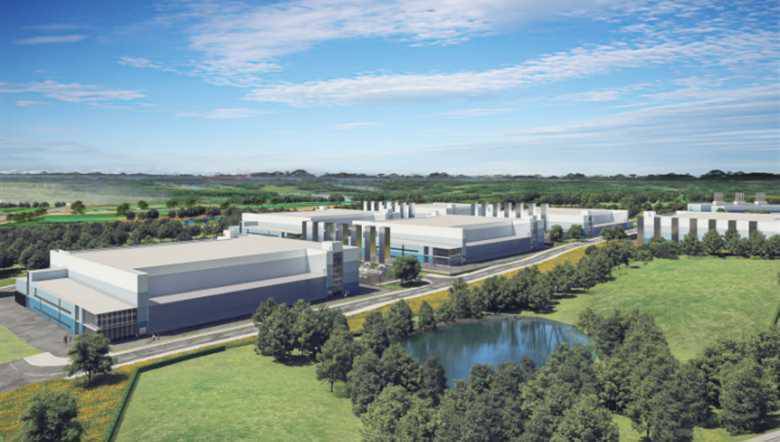
Internal briefings from the IDA describe how data centre operators in Ireland believed they were being blamed amid the crunch on Ireland’s electricity supply and they now had a 'negative profile'.
Data centres believed stark projections from EirGrid about the strain on the electricity network created by such centres were “over-estimated”.
Internal briefings from the IDA describe how data centre operators in Ireland believed they were being blamed amid the crunch on Ireland’s electricity supply and they now had a “negative profile”.
A briefing note prepared for the board of the IDA said recent concerns over so-called amber power alerts for electricity shortages had led to a number of “significant public interventions”.
This included a warning from EirGrid that data centres had sought 1,000MW of additional power in the space of 12 months, at a time when total energy demand in Ireland was 5,500MW.
EirGrid had also called for a review of data centre policy and said the centres would represent up to one-third of all electricity consumption by 2030 based only on existing connection agreements.
The IDA note briefing said: “Data centres view EirGrid’s figures as over-estimated. They are concerned about the negative profile that data centres continue to have and highlight how data centres are core to the evolving digital economy.”
The board note said despite concerns about the high electricity consumption of data centres, Ireland had the potential to deliver more than enough power.
It said: “It is worth noting that the country, in the long term, has the potential to support substantial growth in enterprise electricity demand, including from data centres, in particular if the country realises the full potential of offshore wind.”
The briefing went on to say that data centres had themselves become worried about the tightness of electricity supply, especially in the Dublin region.
They had “reluctantly” signed up to what were known as ‘flexible contracts’, which included obligations to have on-site power generation options.
However, data centres pointed out this directly contradicted their own “sustainability policies” as it mostly involved the burning of fossil fuels.
The note said: “This is a big issue, as investment in fossil-fuelled based generators is not viewed as an economical long-term investment.”
The IDA briefing also said that despite “concerns about the direction of power regulation” in Ireland, data centres still wanted to significantly invest in Ireland.
Discussion points for the meeting included the fact that the country had “so much” renewable power generation potential.
However, the briefing said this would mostly come from offshore wind and would require new maritime legislation to be passed quickly.
It added: “The country could accommodate all data centre investment that ‘comes its way’, and still have large quantities (and associated hydrogen) for export.”
The IDA note said it was hoped that the first major offshore wind operation off the east coast could be in place by 2026, although this was viewed as “optimistic”.
“In order to ensure this happens, all efforts need to be made to get the necessary [maritime] legislation in place,” said the briefing paper.
It said the largest data centres in Ireland viewed EirGrid forecasts about electricity demand as “over-estimated”, as they included speculative requests, rather than firm proposals.
However, the briefing said: “On the other hand, Host in Ireland data does show that the number of operational data centres has increased by 72% over the last three and a half years, ie an increase of 29 data centres, from 41 to 70.”
A list of recommendations in the paper acknowledged “increasing concern about the availability of power” but said there were a variety of reasons.
It was not just confined to data centres, but also maintenance at existing plants, the closure of plants, lower supply from market auctions, and the challenge of “integrating renewables into the power generation mix”.
The briefing recommended a joint approach between State agencies and data centres to ensure there was adequate power for all.
This would include significant investment in power infrastructure, better demand flexibility by encouraging off-peak use, additional auctions for electricity capacity, and a long-term plan setting out supply and demand.
A separate note also lamented the “huge levels of untapped green wind power offshore” that could be helping deal with any power shortages.
It said there was also a “further complication” around upgrading natural-gas powered stations to handle periods when wind power generation was lower.
“However, natural gas – being a fossil fuel – is opposed by many, and this may cause further issues with developing generation capacity,” said the note.

CONNECT WITH US TODAY



Be the first to know the latest news and updates