School principals contacting families directly on Covid cases
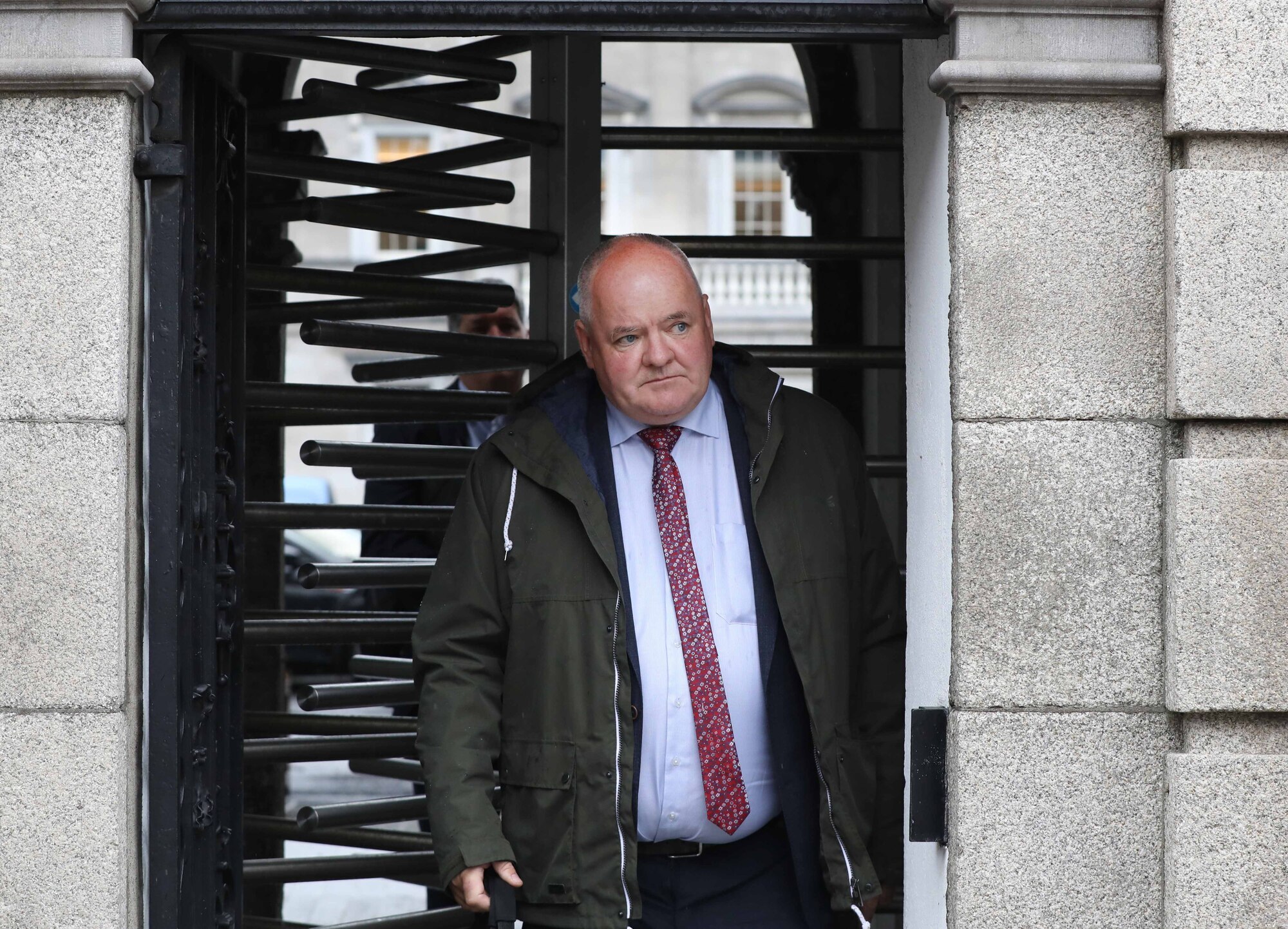
Irish Primary Principal’s Network former president Damien White said 'a bit more readiness might have been expected in terms of dealing with the numbers'. Picture: Leah Farrell
A primary school principal who had to contact families directly to alert them about a Covid-19 case has urged the HSE to move faster to help schools with outbreaks.
And the World Health Organisation’s Dr Mike Ryan has called on governments to invest in schools so they can stay open this winter.
Last week the HSE worked with 1,200 schools including 700 primary schools where over 10,000 close contacts were identified, meaning those unvaccinated children must miss school for at least 10 days until they get a negative test.
But as numbers rise, principals say they are making calls to families ahead of the HSE's contact tracing teams.
The Irish Primary Principal’s Network former president Damien White said he spent about three hours on Monday evening contacting parents after a case was identified in his school.
Mr White, principal at Scoil Shinchill in Tullamore, Co Offaly, said: “It was reasonably predictable that figures would go up as soon as schools reopened. I think that a bit more readiness might have been expected in terms of dealing with the numbers.”
In his experience, parents had learnt of the case via word of mouth and organised walk-in tests before being contacted by HSE doctors.
“It really needs sharper attention from the HSE, to make contact with the parents and the staff more quickly,” he said. “Parents and staff have been very proactive.”
He said the "massive" number of close contacts is disruptive for children.
“It is bound to have an effect on children,” he said. “For children at this stage of the year to miss out on 10 days of schoolwork, we acknowledge the difficulty this causes.” He also noted the challenges for parents who cannot ask a childminder to care for a pupil who may have Covid-19.
Mr White said access to walk-in testing locally is a positive change from last term. His school now also has three carbon dioxide monitors for 11 classes; to his knowledge the department of education sent three to every school, regardless of size.
“I hope it is the first three and that there is another package on the way,” he said.
Sinn Féin spokesman on education Donnchadh Ó Laoghaire criticised the lack of support for principals and said Mr White's experience appears to be a common one.
“I have spoken to many principals and school staff, who are extremely frustrated with delays to get through on the HSE principals helpline, leaving them having to do their own contact tracing and assessment.” The current situation is “not good enough”, he said.
“Clearly, the HSE teams working with schools are not being adequately resourced if it’s being left to principals to make these very difficult decisions on contact tracing,” he said.
Mr Ó Laoghaire called for better guidance around carbon dioxide monitors, saying the supply is “inadequate”.
According to Dr Ryan these concerns are echoed around the world. He called on governments to avoid closing schools
Speaking at a public briefing, he said: “Governments need to support schools in making those extra investments, creating the extra space. I’ve seen some school principals do the most remarkable work, but teachers and school boards need to be supported in doing that.”
The HSE said there are 150 Department of Education staff supporting public health teams to assess close contacts. The numbers on data processing and administration teams were increased before term started to collect contacts from principals and enter them into the system through an ‘enhanced testing pathway’.
A family should expect testing details from the HSE on the same day or day after their child is identified as a close contact. They should only call their GP if the child has symptoms.
A GP 'buddy survey' found a sore throat, cough and nasal congestion are now the most common symptoms in this wave of infections.
The Department of Health yesterday confirmed 1,470 more cases of Covid-19. There were 367 Covid patients in hospitals including 59 in ICU.
Read More

CONNECT WITH US TODAY



Be the first to know the latest news and updates