Nphet became 'de facto' decision-maker, rather than advisor to Government, report finds
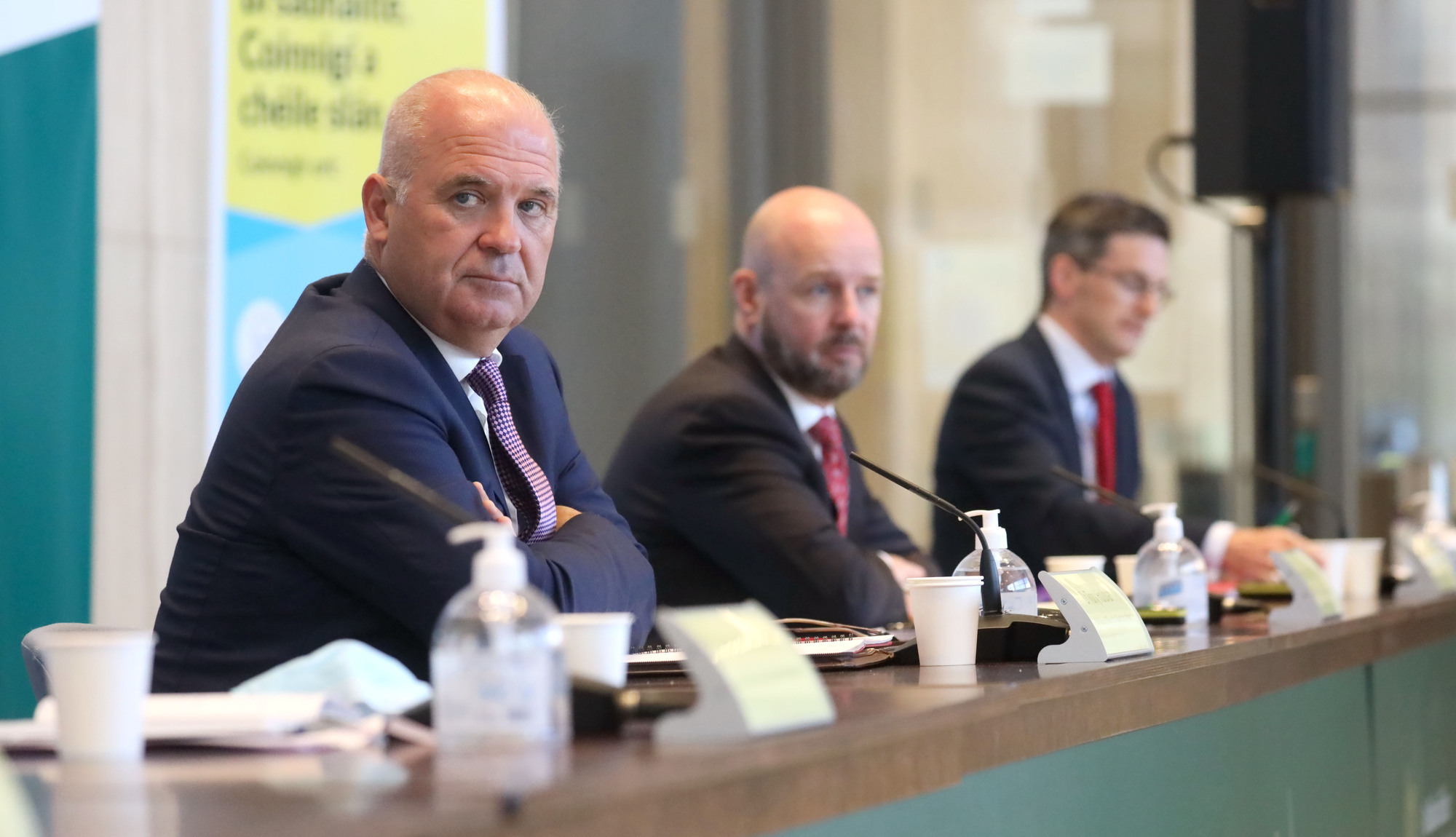
Concerns about the âvastâ influence of Nphet on Government and a lack of transparency in decision-making throughout the pandemic have been raised in a new report by the Covid-19 Law and Human Rights Observatory at Trinity College Dublin. Photo: Paddy Cummins/Collins
Sweeping powers to restrict citizensâ liberty in the name of public health were handed over by the Government to the unelected National Public Health Emergency Team (Nphet), a new academic report has claimed.
Concerns about the âvastâ influence of Nphet on Government and a lack of transparency in decision-making throughout the pandemic have been raised in a new report by the Covid-19 Law and Human Rights Observatory at Trinity College Dublin (TCD).
More than 303,000 cases of Covid-19 have been reported in Ireland since the first case was recorded here 18 months ago. Some 5,035 deaths have been attributed to the virus.
Clarity on the relationship between Government and Nphet has been called for by legal experts from TCD who say that the âlocus of powerâ between the two bodies has become unclear.
Despite being an advisory body, Nphet often became the "de-factoâ decision-maker, particularly from January 2021, the report suggests.
âThe foregoing picture raises the concern that, after sweeping statutory powers were delegated to the Government by the Oireachtas, the government hasâunofficially, but de factoâin many cases re-delegated these powers to unelected, technocratic public health experts," it says.
"If we do not have clear lines of decision-making and accountability, and a clear sense of the power resting with the government, then the idea that we can have even notional democratic oversight for these powers seems very remote.Â
"This is undoubtedly a cause for concern."
The report found that the Government and Nphet adopted a âDecide-Announce-Defendâ model, rather than inviting debate and pubic involvement in decision-making.
This contradicted basic democratic principles, it added.Â
Sarah Hamill, Assistant Professor in Law at TCD, said: âThe overarching finding of this report is a significant lack of transparency in how and why important decisions were made during the Covid-19 pandemic in Ireland.
âTransparency and clarity are key aspects of public health governance and one of our recommendations of this report is the need for far more. If we donât have clear lines of decision-making and accountability, and a clear sense of the power resting with the government, then the idea that we can have even notional democratic oversight for these powers seems very remote. This is undoubtedly a cause for concern.â
The report made 16 recommendations to improve governance.Â
One is to clarify the relationship between Government and Nphet and ensuring democratic oversight of public health measures.
The report also called for the Government to âurgently addressâ the lack of capacity in Irish public hospitals.