Garda boss apologises to domestic abuse victims whose 999 calls were cancelled
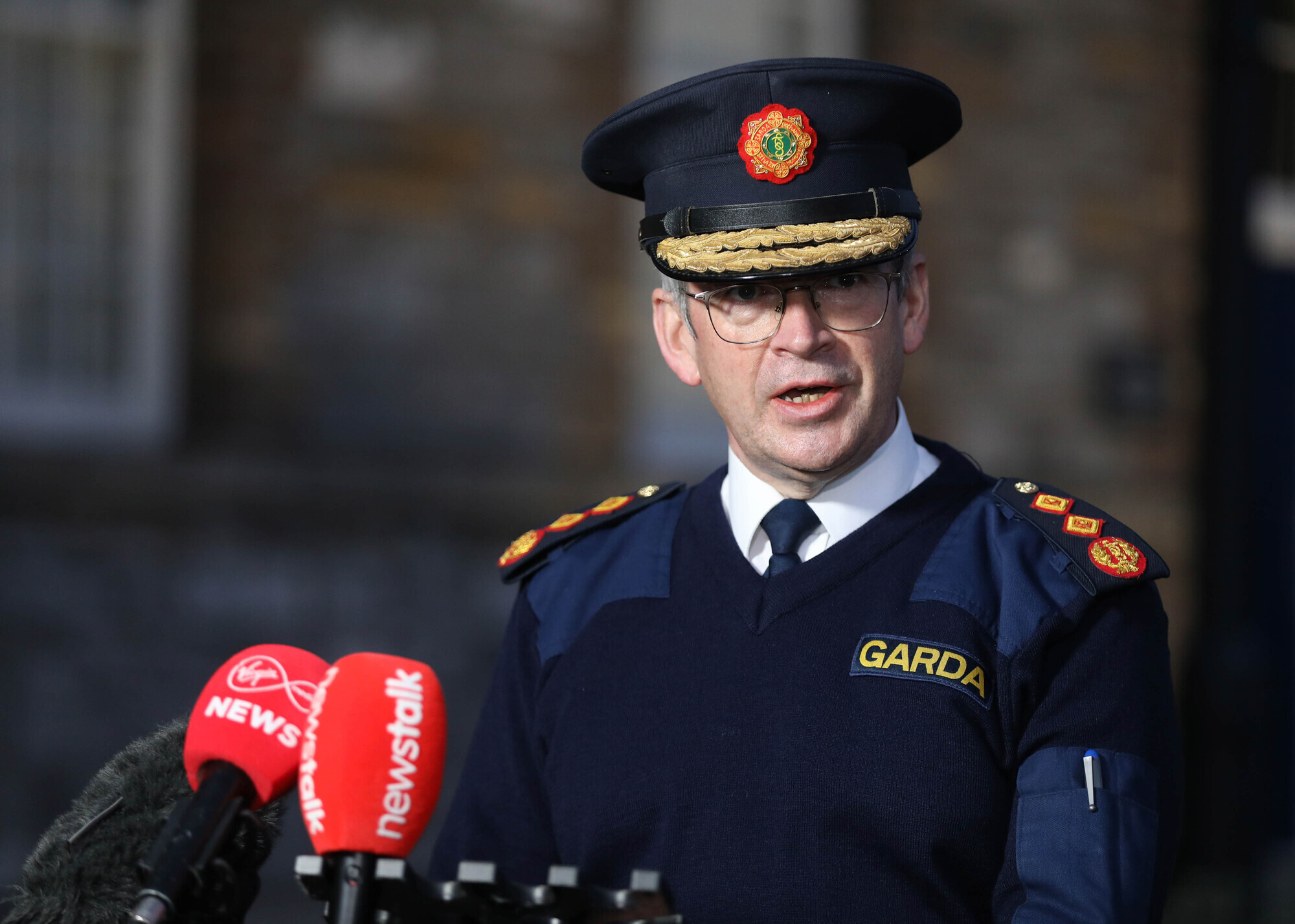
The Garda Commissioner acknowledged that the gardaí “knew crimes against the vulnerable would increase because of restrictions on movement”. Picture: Leah Farrell/RollingNews.ie
The Garda Commissioner has apologised to victims of domestic abuse who had their 999 calls cancelled inappropriately saying his force “did not provide the standard of service required”.
The apology from Commissioner Drew Harris comes as it emerged that more than 2,000 such emergency calls were cancelled by gardaí for “invalid” reasons.
Some 1,400 of those 2,030 calls have since been referred to the individual Garda divisions responsible as they merit further investigation. This follows an internal review undertaken by gardaí in October of last year, prompted by anecdotal evidence that calls were being cancelled without reason.
“On behalf of An Garda Siochana I want to apologise to those victims,” Commissioner Harris this afternoon told the latest meeting of the Policing Authority.
“They are among the most vulnerable people in society and when some victims of domestic abuse called for our assistance they did not always receive the professional service we aim to deliver and victims are entitled to expect,” he said.
He said the cancellation “issue”, where calls were cancelled before there was an appropriate policing response, had resulted from technological and procedural failings, but also because of “individuals not adhering to An Garda Siochana policies and procedures”.
The cancellation of calls can happen for many reasons, with the result that the calls in question are not recorded on the Garda PULSE system. This means follow-up inquiries are not necessarily required and the calls are not recorded either in official crime statistics or on the files of the child and family agency Tusla.
The review, which covered the period from January 2019 until the end of October 2020, and focused specifically on Domestic Violence / Sexual Abuse (DVSA) calls, noted an overall cancellation rate for all 999 emergency calls of 14%, or 202,931 calls.
Within that, more than 53,000 domestic violence calls were made during that period, with 4% of these cancelled for invalid reasons.
Examples of such invalid reasons in DVSA cases include the caller themselves requesting the call to be shut, a request to do so by the responding Garda, insufficient consideration of the issue, and the lack of an in-person check for high-risk cases. Valid reasons, meanwhile, can include instances where the call was duplicated or where another emergency service has requested the cancellation.
A Garda spokesperson said that to date, of the 3,120 DVSA calls which were cancelled, over 300 of the victims had been contacted, and admitted that the 2,028 calls closed for invalid reasons could relate to a significantly greater number of people given each incidence could relate to multiple persons being at risk.
As part of the review “anything that wasn’t a duplicate we assumed wasn’t valid”, they said, adding that the review was instigated by a probe into the governance of the Garda’s 40-year-old computerised dispatch system, as opposed to a complaint from a victim.
They said that since the review began last year the closure rate of 14% had dropped to 6% of calls.
They also acknowledged, however, that as a result of the wrongful cancellations incidents of domestic violence crime had been under-recorded by 4%.
The spokesperson added that “training” has been put in place since the beginning of the review to aid gardaí in correctly processing requests to cancel such incidents, while full files are to be created on PULSE for all the missed incidents of victims calling for help.
Commissioner Harris acknowledged that the gardaí “knew crimes against the vulnerable would increase because of restrictions on movement”.
“We are currently contacting victims of domestic abuse who may have been impacted, and will take whatever necessary action is required in terms of supports, prosecutions, or referrals to Tusla and other support agencies,” he said.
He added that An Garda Siochana has “invested significantly” in preventing and detecting domestic abuse cases in recent years.
Regarding the granularity of the investigation to date, the spokesperson confirmed that “some individuals have cancelled more calls than others, but then some dispatch centres are much busier than others”.
While a profile of the victims is “not available”, they said that DVSA calls “will generally involve someone who has been subject to such abuse in the past”.
They said that part of the investigation will focus on whether certain groups of people, such as foreign nationals or members of the Traveller Community, may have been “overrepresented” in the cancelled calls.
CONNECT WITH US TODAY



Be the first to know the latest news and updates